Mendelson secures deal with Commanders on RFK site under mounting pressure
A Revised Deal for RFK Stadium Redevelopment
D.C. Council Chairman Phil Mendelson (D) announced a revised agreement with the Washington Commanders to redevelop the RFK Stadium site, which he claims will save hundreds of millions of dollars in public funds over the next three decades. This development clears the way for an initial vote on a plan to bring the football team back to its “spiritual home.”
The deal preserves much of the original $3.7 billion agreement between the Commanders and Mayor Muriel E. Bowser (D) from earlier this year. However, it introduces several changes aimed at benefiting the city. These include redirecting certain tax revenues to the city’s general fund and securing $50 million in community benefits from the Commanders.
Despite these adjustments, the deal still needs to pass through a series of votes in the D.C. Council, which has mixed opinions about publicly financing a stadium. The first vote is scheduled for August 1, with testimony from residents, officials, and Commanders representatives set for Tuesday and Wednesday. A final vote is expected in September.
Mendelson faced pressure from Mayor Bowser, the Commanders, and even Republican Congressman James Comer (R-Kentucky) to move forward with the deal. Team executives warned that further delays could disrupt construction timelines, while the mayor expressed concerns that the team might abandon the D.C. stadium altogether. Additionally, President Donald Trump added uncertainty by suggesting he would block the deal if the Commanders did not revert to their former name.
Mendelson argued that the time pressure gave the council leverage. He emphasized that the team wanted the council to vote this month and was willing to improve the deal in return. Commanders President Mark Clouse praised the council’s collaboration, stating that city leaders are committed to building a strong future for the District.
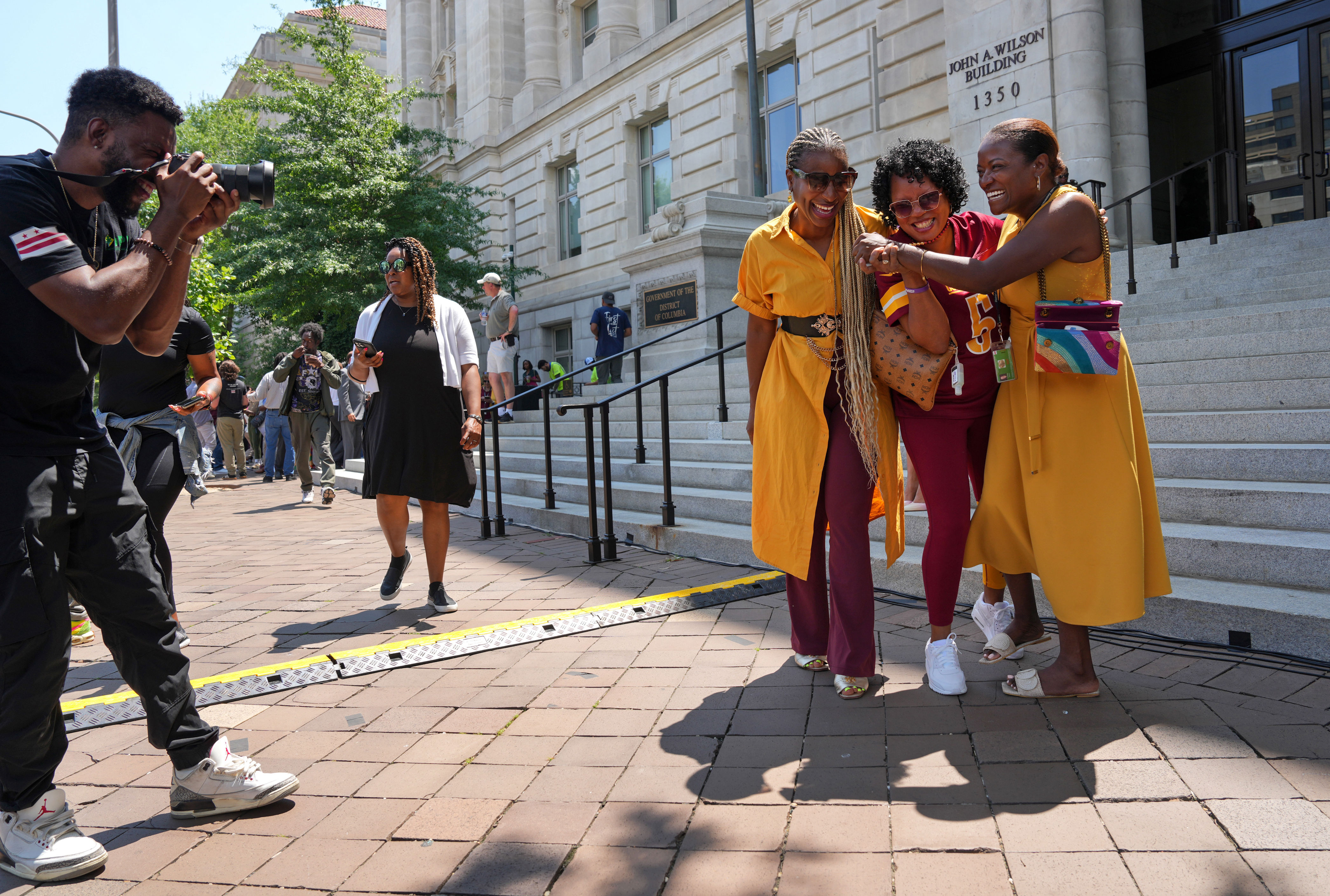
Mayor Bowser, who held a pep rally after the announcement, expressed optimism about the redevelopment of the RFK site. She used a football metaphor, saying that the deal had moved from the 1-yard line to the half-yard line. Bowser has long envisioned a D.C. football stadium, and the recent legislative change transferring control of the RFK site to the city made the vision more realistic.
The mayor’s agreement with the Commanders included a stadium, retail space, park space, affordable housing, and a Sportsplex. The Commanders would contribute $2.7 billion, while the city would add about a billion in taxpayer funds. Of this, $500 million would go toward stadium infrastructure, funded by a fee on businesses similar to the one used for Nationals Park.
Mendelson’s revisions maintain most of the original agreement but focus on recouping future revenue the city would have otherwise lost. He estimates the changes will provide $779 million in savings over 30 years. These include a parking tax, diverting revenue from refreshments and merchandise to the city’s general fund, and securing $50 million for community benefits.
The deal also includes $600 million for transportation improvements, such as possible Metro upgrades. It sets deadlines for the Commanders to complete affordable housing and retail projects, with penalties if they fail to meet them. The team will also relocate its senior leadership and sales office to D.C., though details remain unclear.
Mendelson explored additional demands, including eliminating the team’s rent exemption, but ultimately decided it was necessary to subsidize the promised affordable housing. The team will still be exempt from property taxes on the land under the stadium and parking, forgoing over $1 billion in tax revenue through 2059.
Nearly 500 people have signed up to testify at the council’s public hearing on the stadium deal next week. While some question whether the council will make substantive changes based on feedback, Mendelson and other lawmakers insist the hearings are meaningful. They note that public input has already influenced negotiations.
Mendelson remains pleased with the deal, believing it is popular among both lawmakers and residents. He acknowledged his personal opposition to funding football stadiums but worked toward a deal that could save the city money. He believes the majority of D.C. residents would like to see the Commanders located in the District.

Post a Comment for "Mendelson secures deal with Commanders on RFK site under mounting pressure"
Post a Comment