Marines Leave LA as Immigration Raids Reshape the City
Withdrawal of U.S. Marines from Los Angeles
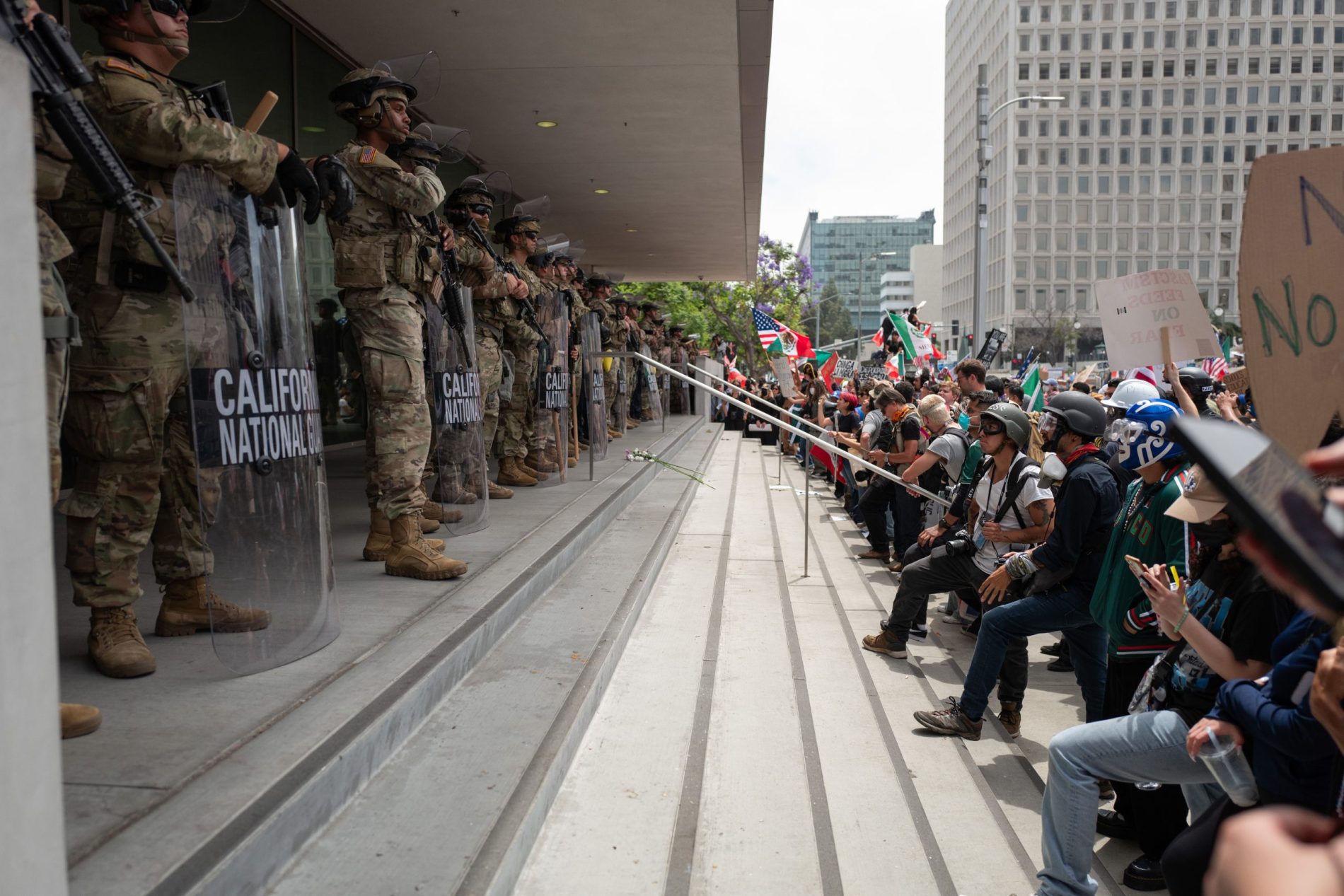
The 700 U.S. Marines that President Donald Trump deployed to Los Angeles over a month ago will begin their withdrawal from the city, according to Pentagon officials. This decision comes just weeks after the administration announced the removal of half of the nearly 4,000 National Guard soldiers stationed in the area.
Trump initially sent federal troops to LA in early June, claiming they were necessary to manage protests against immigration enforcement actions. However, the military presence was limited to guarding two federal buildings located in downtown Los Angeles and Westwood. A Pentagon spokesperson, Sean Parnell, stated that the Marines’ deployment sent a clear message: “lawlessness will not be tolerated.”
Despite this, local officials and law enforcement criticized the move, arguing that the show of force was unnecessary and only heightened tensions. State Senator Caroline Menjivar, a Marine veteran, expressed her frustration with the deployment, stating it felt personal and inflammatory. She emphasized that service members did not sign up to intimidate or take military action against Americans exercising their constitutional rights to protest.
Menjivar, whose parents are Salvadoran immigrants, noted that some service members were reluctant to support the mission, particularly regarding Immigration and Customs Enforcement (ICE) operations. She highlighted the emotional impact on immigrant families, saying, “Our pride can rip when a country turns its back on you.”
The withdrawal announcement came shortly after Menjivar and Los Angeles Mayor Karen Bass held a press conference at LA Mission College, where they denounced the military presence in the city. Bass expressed hope that the Marines would return to defend the nation rather than being deployed elsewhere inappropriately.
Impact of ICE Raids on Communities
Meanwhile, border czar Tom Homan has pledged to increase ICE presence in “sanctuary cities,” aiming to counter their resistance to deportation policies. This commitment followed the arrest of two undocumented men after a CBP officer was shot in New York. Homan claimed that sanctuary cities are unsafe and vowed to prioritize these areas for ICE operations.
Angelenos have faced significant challenges during this period, including fear-driven community disruptions. Despite protests, “Know Your Rights” trainings, and organized defense patrols, residents have experienced terror from masked individuals kidnapping people without warrants from schools, hospitals, and other public spaces.
Mayor Bass highlighted the economic toll of the raids, noting that the $130 million spent on deploying troops could have been used for public assistance or benefits to the city. She pointed out that the climate of fear is affecting businesses and daily life, with many undocumented residents staying home out of concern for their safety.
Legal Challenges and Community Resistance
However, there is growing hope as recent federal court orders have temporarily halted aggressive immigration sweeps. The order, filed by a coalition of civil rights and immigrant advocacy groups, argued that the raids violated constitutional protections by conducting warrantless stops targeting Latino individuals. It also cited due process violations in immigration detention centers.
State Senator Menjivar expressed optimism about legal victories, mentioning that two state laws are being developed to protect immigrants from unjust arrests. One proposed law would require federal immigration authorities to identify themselves by displaying badge numbers and avoiding masks, similar to local law enforcement requirements. Another would limit ICE access to protected areas like schools, churches, and hospitals—policies previously rolled back under the Trump administration.
Recent incidents, such as the forced removal of Milagro Solis Portillo from a hospital, have further fueled calls for reform. Despite medical concerns, she was relocated to a detention center, highlighting the need for stronger legal protections.
Ongoing Efforts for Change
Legislators are working closely with community organizers to adapt protections and address evolving needs. Menjivar emphasized the importance of flexibility, drawing parallels to the response during the COVID-19 pandemic. Her team continues to engage with community leaders to understand and meet the changing demands of those affected.
As the Marines prepare to leave Los Angeles, the focus remains on protecting vulnerable communities and ensuring that legal and ethical standards are upheld in immigration enforcement. The fight for justice and dignity continues, driven by the voices of those who refuse to be silenced.

Post a Comment for "Marines Leave LA as Immigration Raids Reshape the City"
Post a Comment