KY Supreme Court Blocks Lexington No-Knock Ban. What's Next for Louisville?
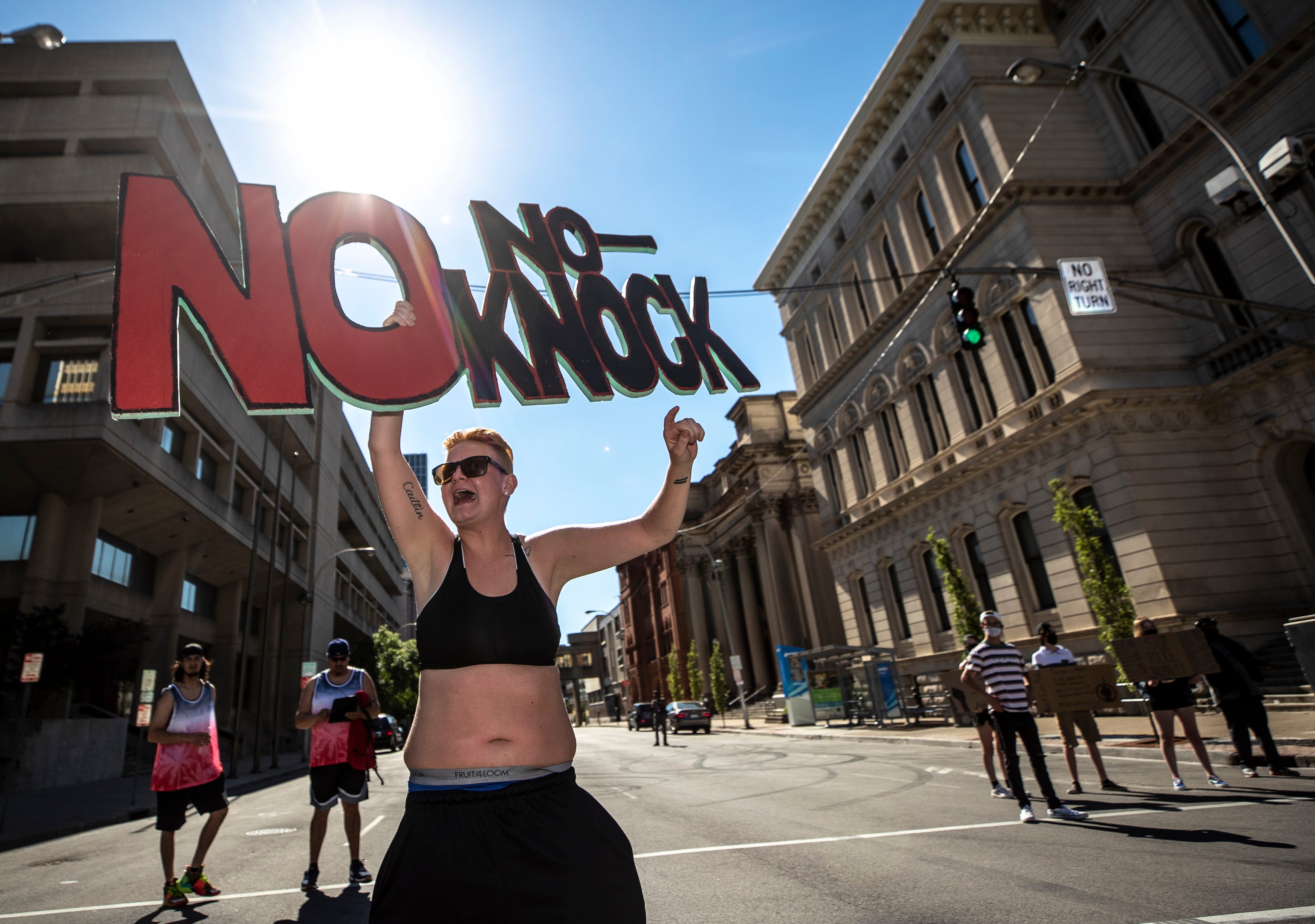
Kentucky Supreme Court Strikes Down Lexington’s No-Knock Warrant Ban
The Kentucky Supreme Court has ruled that Lexington’s ban on no-knock warrants is invalid, citing a conflict with state law. This decision has sparked discussions about the potential implications for Louisville’s own ordinance, which was enacted in response to the 2020 police killing of Breonna Taylor.
In a 4-2 decision, Justice Robert Conley wrote for the majority, stating that Lexington’s local law conflicts with Senate Bill 4, a statewide measure passed in 2021 that regulates but does not prohibit the use of no-knock warrants. Conley compared the legal conflict to a two-way street, emphasizing that while local governments can add additional safeguards beyond what the state mandates, they cannot entirely block the path.
“Applying this test, SB 4 controls and the ordinance is void,” Conley wrote in the ruling issued on Sept. 18. Justices Michelle Keller and Angela Bisig dissented from the majority’s decision, which reversed a lower court ruling that found Lexington’s ban lawful. Justice Pamela Goodwine did not participate in the case.
Impact on Louisville’s Ordinance
It remains unclear how the ruling might affect Louisville’s no-knock warrant ban, which has been in place since 2020. However, city officials have stated they have no immediate plans to make changes. Matt Mudd, a spokesperson for Louisville Mayor Craig Greenberg, said that while the mayor's office is aware of the ruling, "Louisville's ordinance has not been struck down. Lexington and Louisville have different ordinances, so LMPD will continue following our ban on no-knock warrants."
A Louisville Metro Police spokesperson added that the department has no intention of making policy changes at this time. They noted that many of their policies are more stringent than state law and will continue to review the ruling in consultation with their legal team.
Jefferson County Attorney's Office spokesperson Josh Abner mentioned that the office is reviewing the Supreme Court decision and will provide its findings to Metro Government upon completion. He also clarified that the suit on which the Supreme Court ruled did not challenge Louisville's no-knock ban.
Legal Perspectives and Reactions
University of Louisville law professor Ariana Levinson told The Courier Journal that the ruling could impact Louisville’s own no-knock ordinance. She explained that while Louisville’s ordinance would stand until challenged, it could face similar issues if tested in court.
“It makes another hurdle for police reform,” Levinson said.
No-knock warrants allow officers to serve a warrant without knocking or announcing themselves. Louisville’s Metro Council unanimously passed its ban against them on June 11, 2020, shortly after Taylor’s death and during a period of significant public unrest. Taylor was killed during a botched raid as Louisville Metro Police officers served a no-knock warrant on her apartment on March 13, 2020. However, officers maintained they knocked and announced themselves despite securing a no-knock warrant.
Lexington’s police union sued the city, claiming that the local law change was not properly consulted with the organization. In his ruling, Conley chose not to decide if the city violated collective bargaining rules and instead based the majority’s decision on the apparent conflict between state law and local ordinance.
“The ordinance prohibits what the statute allows, it makes illegal what the statute declares is legal, and therefore contravenes the public policy of the Commonwealth,” Conley wrote.
Dissenting Views and Ongoing Debates
In her dissent, Keller argued that the majority’s two-way street analogy was flawed. She emphasized that the question should be whether compliance with the ordinance violates SB 4, rather than the other way around. Keller also pointed out that by the time Senate Bill 4 was enacted, Louisville’s ban had already been in effect for months, and the bill did not contain any language invalidating Louisville’s ordinance.
“The General Assembly’s silence on this matter evinces a clear intention to permit further regulation by municipalities, and I therefore hold that the Ordinance is not preempted by state legislation,” Keller said.
Louisville’s police union, the River City Fraternal Order of Police, did not respond to inquiries about the Supreme Court decision and whether they plan to challenge Louisville’s ordinance. The ongoing debate highlights the complex interplay between local and state laws, particularly in the context of police reforms and community safety.

Post a Comment for "KY Supreme Court Blocks Lexington No-Knock Ban. What's Next for Louisville?"
Post a Comment