Jury Selection Begins in Trump Assassination Trial in Florida
The Trial of Ryan Routh Begins Amid Legal and Personal Controversies
The trial of Ryan Routh, the man accused of attempting to assassinate former President Donald Trump during a golf outing in South Florida, is set to begin. This case has drawn significant attention due to its high-profile nature and the legal challenges that have surrounded it.
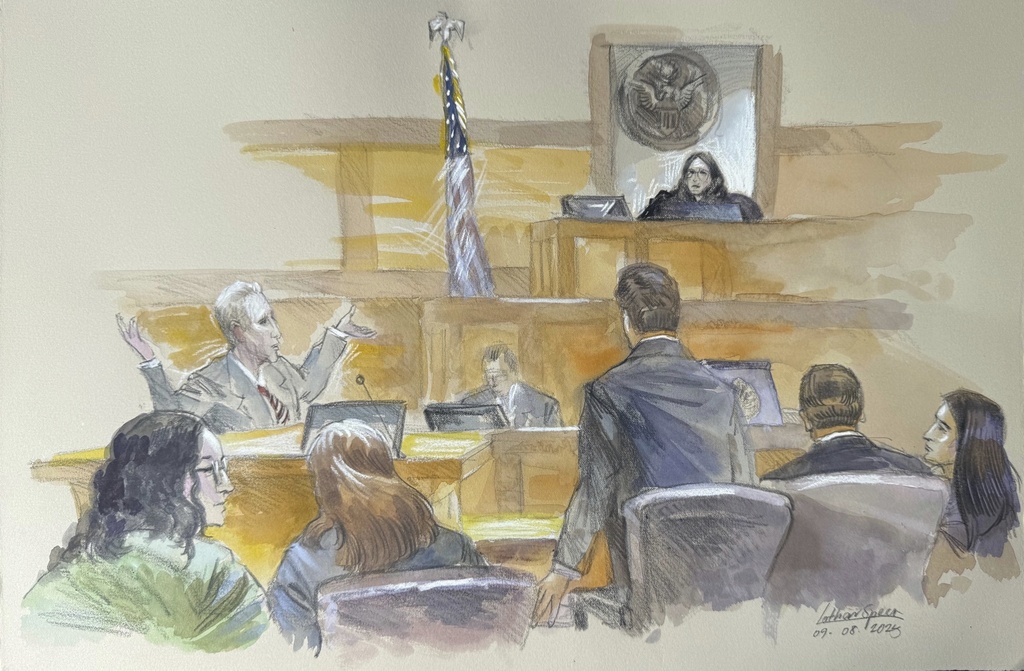
During the first day of jury selection, Routh sought to ask potential jurors about their views on the war in Gaza and the possibility of the United States acquiring Greenland. However, U.S. District Judge Aileen Cannon ruled these questions irrelevant. Despite this, Routh was allowed to represent himself, though court-appointed attorneys will remain as standby counsel. He also requested to ask jurors what they would do if they saw a turtle on the road, but this was not approved.
Routh appeared in court dressed in professional business attire, as instructed by the judge, and was partially restrained at the defense table. Three batches of 60 potential jurors arrived at the federal courtroom in Fort Pierce, Florida, on a staggered schedule, spending the morning completing questionnaires.
The trial has been scheduled to last four weeks, although attorneys expect it to be shorter. Jury selection was anticipated to take three days to find 12 jurors and four alternates. Opening statements are set to begin on Thursday, with prosecutors planning to present their case immediately afterward.
At a previous hearing, Judge Aileen Cannon explained that Routh would be permitted to use a podium while speaking to the jury or questioning witnesses. However, he would not have full access to the courtroom. Cannon, a judge appointed by Trump, faced scrutiny for her handling of a separate case involving Trump's alleged mishandling of classified documents at Mar-a-Lago. That case was eventually dismissed after she ruled that the special counsel investigating Trump was illegally appointed.
Routh's trial comes nearly a year after prosecutors allege that a Secret Service agent prevented him from shooting Trump during a campaign event. Routh, 59, has pleaded not guilty to charges of attempting to assassinate a major presidential candidate, assaulting a federal officer, and several firearm violations.
Just nine weeks prior to this trial, Trump survived another assassination attempt while campaigning in Pennsylvania. A gunman fired eight shots, with one bullet grazing Trump’s ear, before being shot by a Secret Service counter-sniper.
Prosecutors claim that Routh meticulously planned to kill Trump for weeks before aiming a rifle through the shrubbery as Trump played golf on September 15, 2024, at his West Palm Beach country club. A Secret Service agent spotted Routh before Trump came into view. Officials stated that Routh aimed his rifle at the agent, who opened fire, causing Routh to drop his weapon and flee without firing a shot.
Law enforcement received assistance from a witness who informed officers that he saw a person fleeing. The witness was then transported by helicopter to a nearby interstate where Routh was arrested, and the witness confirmed it was the person he had seen.
Judge Aileen Cannon recently unsealed a 33-page list of exhibits that could be introduced as evidence during the trial. The list includes photos of Routh holding the same model of semi-automatic rifle found at Trump’s club.
Routh, a construction worker from North Carolina who later moved to Hawaii, has a history of controversial behavior. A self-styled mercenary leader, he openly discussed dangerous and sometimes violent plans to involve himself in conflicts around the world. Witnesses have told the Associated Press about his actions.
In the early days of the war in Ukraine, Routh attempted to recruit soldiers from Afghanistan, Moldova, and Taiwan to fight against the Russians. In his hometown of Greensboro, North Carolina, he was arrested in 2002 for evading a traffic stop and barricading himself from officers with a fully automatic machine gun and a “weapon of mass destruction,” which turned out to be an explosive with a 10-inch fuse.
In 2010, police searched a warehouse owned by Routh and discovered over 100 stolen items, including power tools, building supplies, kayaks, and spa tubs. In both felony cases, judges imposed probation or suspended sentences.
In addition to the federal charges, Routh has also pleaded not guilty to state charges of terrorism and attempted murder. His trial is expected to shed more light on his past actions and the circumstances surrounding the alleged assassination attempt on Trump.

Post a Comment for "Jury Selection Begins in Trump Assassination Trial in Florida"
Post a Comment