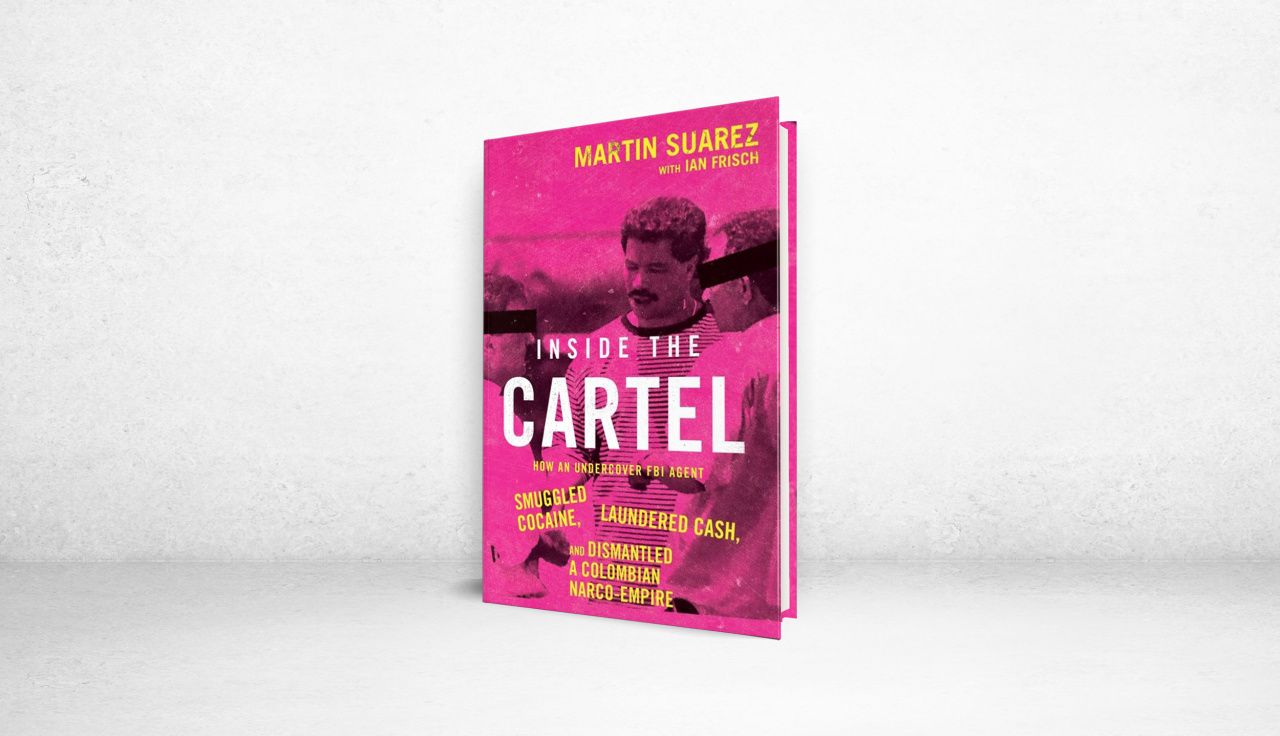
Inside the Cartel: When Martin Became Manny
A War That Never Ends
More than 50 years after President Richard Nixon declared a “war on drugs,” calling drug abuse “public enemy number one,” illicit drugs have become more accessible, potent, and dangerous than ever before. This ongoing conflict has seen various escalations, including recent actions by former President Donald Trump, who authorized the use of military force against Latin American drug cartels. One such operation involved a military strike on an alleged drug boat from Venezuela, resulting in the deaths of 11 individuals and raising serious legal questions.
The war on drugs is not just a battle against criminal organizations; it's also a struggle against human weakness. It's an impossible task to fully eliminate, as new challenges constantly emerge. This backdrop gives "Inside the Cartel" a sense of both excitement and futility, much like a Sisyphean effort.
The Man Behind the Mask
Martin Suarez, a decorated former FBI special agent, spent much of the 1990s undercover, infiltrating Colombia’s North Coast Cartel. His story, co-written with Ian Frisch, reads like a Hollywood script, capturing the gritty reality of life while wearing a wire among armed traffickers.
Suarez's mission involved dismantling the cartel's money-laundering operations. Based in Puerto Rico, he posed as a "dirty smuggler and money launderer," collecting millions of dollars in drug proceeds. Some of this money was used to fund further investigations, while other portions were broken down into smaller amounts—“smurfed”—and funneled back into the cartel through Aruban banks under the radar of American law enforcement.
The Tightrope Walk
Suarez's operation was so successful that the FBI worried about the political fallout if Congress discovered their collaboration with international drug traffickers. The potential headlines—“FBI Helps Colombian Cartel Launder Money”—could have been disastrous. The tightrope they walked risked their lives daily.
Suarez tells his story with confidence and self-awareness. As a resourceful former Navy officer, he had to leave his young family for weeks at a time, switching identities between Martin and “Manny.” His wife worried about his safety while his two sons grew up with only intermittent contact with their father.
The Persona of Manny
As Manny, Suarez adopted a new look: a thick mustache, Italian silk shirts, cowboy boots, and gold jewelry. He drove fancy Porsches to gain the trust of Colombian drug kingpins. He even had an undercover “girlfriend”—a pregnant FBI agent—and an “undercover dog.” He knew to order Johnnie Walker Black Label, “on ice, with no mixers,” a preference shared by the narcos. Choosing the wrong brand could have meant falling into a trap.
In an environment filled with paranoia, Suarez remained calm under intense pressure, though his emotional stability became increasingly fragile. Over time, his two personas, Martin and Manny, merged into a “dance between two personalities.” As time went on, he found himself identifying more with Manny.
Observations of Narco Culture
Suarez's descriptions of narco culture are sharp and insightful. The Colombian narcos adorned themselves with jewelry and gold Rolex watches, surrounded by glamorous women in stiletto heels, their red fingernails “sharpened like daggers.” Among the money launderers, there were highly educated individuals, including one who studied at Harvard. In contrast, some smugglers came from more modest backgrounds, such as José, a big-time smuggler who struggled with counting money—an essential skill in his profession.
The End of an Era
Ultimately, Suarez helped dismantle an entire network. His meticulous collection of information—often wearing a wire—provided evidence that led to the 1994 charges against 52 defendants for crimes ranging from trafficking to money laundering. According to Suarez, this case marked a significant breakthrough in understanding the cartels’ “shadow money market” following global efforts to tighten controls on illegal financial systems. However, the cartel eventually uncovered his scheme and sent an assassin to kill him.
The Futility of the Fight
Despite the success of his case, Suarez acknowledges that new drug cells always emerge. “No matter how much dope was seized in America, no matter how many international distribution chains were broken,” he notes, “the drug lords in Colombia just kept manufacturing more cocaine and finding new ways to smuggle.”
Yet, even if his efforts seemed as futile as fighting a forest fire with a lawn hose, Suarez viewed his work as part of a noble fight that filled him with pride. “I couldn’t think of anything else I’d rather do with my life,” he writes, admitting he couldn’t resist the pull of adrenaline. After an episode where his cover was almost blown, he found himself wondering, “who am I now? Manny, or Martin?” His ability to balance between them made for a productive career and brought us a compelling memoir.

Post a Comment for "Inside the Cartel: When Martin Became Manny"
Post a Comment