How 3 Justices on Pa. Supreme Court Decided Key Election Cases
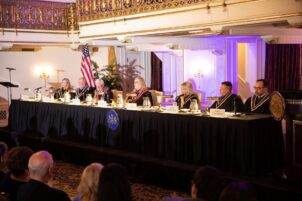
The Political Landscape of Pennsylvania’s Judicial Retention Elections
This November, Pennsylvania voters will face a significant decision as they cast their votes on the retention of three state Supreme Court justices. These elections are not just routine judicial reviews but have become increasingly political and contentious, reflecting broader debates over election laws and the role of the judiciary in shaping democratic processes.
The three justices up for retention—Christine Donohue, Kevin Dougherty, and David Wecht—are all Democrats. Their re-election could determine the balance of power on the seven-member state Supreme Court, which currently has five Democratic-appointed judges. While the Democratic Party is actively campaigning for their retention, the Republican Party is pushing back, arguing that these judges have issued rulings that favor liberal agendas and undermine fair elections.
Republicans argue that the current justices have made decisions that reflect partisan bias, particularly in cases involving mail-in voting, redistricting, and ballot procedures. They point to specific rulings, such as allowing late mail-in ballots and approving redistricting maps, as evidence of judicial overreach. James Markley, communications director for the Pennsylvania GOP, emphasized that Pennsylvanians should not support another decade of what he describes as liberal judicial influence.
On the other hand, Democratic leaders defend the justices' records, asserting that their rulings have been fair and balanced. Mitch Kates, executive director of the Pennsylvania Democratic Party, highlighted the court's decision to overturn an unfair congressional map, which led to a more competitive electoral landscape. He argues that the justices have maintained impartiality in their rulings, despite occasional disagreements with individual decisions.
The Pennsylvania Bar Association has recommended all three justices for retention, citing their qualifications and adherence to legal standards. However, the upcoming election has raised concerns about the potential for partisan influence in judicial decisions, especially given the high stakes involved.
Key Election Law Cases and Judicial Rulings
Several pivotal election law cases have shaped the current debate and influenced how the judges have ruled. One of the most significant was the 2020 election rules case, where Pennsylvania Democrats sought accommodations to facilitate mail-in voting during the pandemic. The court ruled in favor of allowing drop boxes and extending the deadline for returning ballots, though it did not require counties to notify voters of envelope errors or invalidate the secrecy envelope requirement.
Another critical issue has been the requirement for voters to write a date on their mail ballot return envelopes. This matter has been heavily litigated, with the state Supreme Court splitting on whether this requirement is constitutional. In one ruling, Donohue and two other justices ruled that mail ballots shouldn't be rejected for lacking a date, while Dougherty supported the opposite view. Wecht cast the tiebreaking vote, stating that the law required dates but that the 2020 election ballots should not be invalidated for this reason.
The "notice and cure" policy, which allows voters to fix errors on their ballots, has also been a point of contention. In a 2024 case, Commonwealth Court Judge Michael Wojcik ruled against Washington County’s practice of rejecting deficient ballots without notifying voters. The state Supreme Court has yet to rule on the matter, but earlier decisions have affirmed the right to cast provisional ballots.
Redistricting has also been a major focus, with the Supreme Court striking down a gerrymandered map in 2018. The court-appointed expert drew a new map that resulted in a more balanced congressional delegation. The same justices were involved in subsequent redistricting cases, including the 2020 census redraw, where the court again selected a map drawn by an outside expert.
Finally, the constitutionality of Pennsylvania’s 2019 no-excuse mail voting law, Act 77, was upheld by the court in 2022. Justice Donohue wrote the majority opinion, emphasizing that the legislature had the authority to implement universal mail voting under the state constitution.
These cases highlight the complex and often polarizing nature of judicial decisions in election law. As voters prepare to make their choices in November, the outcomes of these retention elections could have lasting implications for the future of Pennsylvania’s judiciary and its role in safeguarding democratic processes.

Post a Comment for "How 3 Justices on Pa. Supreme Court Decided Key Election Cases"
Post a Comment