House Stands Tense Ahead of CR Vote
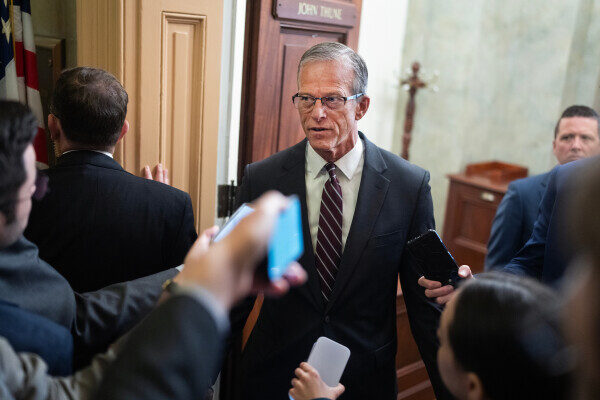
Congressional Leaders Engage in High-Stakes Funding Negotiations
As the U.S. Congress approaches a critical deadline, both Democratic and Republican leaders are locked in a high-stakes game of political brinkmanship over a short-term funding bill. The House is expected to vote on a seven-week stopgap measure by September 30 to avoid a government shutdown. This comes amid growing tensions over the fate of expanded health insurance tax credits, which are set to expire at the end of the year.
House GOP leaders are optimistic about passing their version of the continuing resolution (CR) in the coming days. However, they still need to address concerns from some members regarding the proposed $30 million in additional security funds for lawmakers. Despite these challenges, Republicans remain confident in their ability to secure enough support to move forward.
On the other hand, Democratic leaders are attempting to maintain a unified front against the GOP bill, though it remains unclear whether all members of their party will oppose it. A key point of contention continues to be the expiration of enhanced tax credits for health insurance purchased through federal and state exchanges. Speaker Mike Johnson, R-La., has dismissed this issue as a “December policy matter” rather than a September funding concern, urging Democrats to take a shutdown off the table before any meaningful negotiations can occur.
Democrats, however, have found support from independent analysts and the nonpartisan Congressional Budget Office (CBO), which warns that failing to extend these subsidies by September 30 could lead to significant consequences. The CBO estimates that up to 2 million people could lose coverage in 2026, particularly during the midterm election year. Open enrollment for health plans begins on November 1, making the timing of congressional action even more crucial.
In response, Democratic leaders have proposed an alternative stopgap bill that would extend the tax credit boost permanently and reverse Medicaid cuts included in the GOP’s recent reconciliation law. This proposal also aims to restore funding for foreign aid and public broadcasting, which were previously cut by the administration. However, the Democratic plan is seen as highly unlikely to gain support from Republicans, who view it as overly partisan and financially burdensome.
Senate Majority Leader John Thune, R-S.D., criticized the Democratic bill as “filthy,” claiming it is packed with policies aimed at appealing to progressive voters. Meanwhile, Senate Minority Leader Charles E. Schumer, D-N.Y., and House Minority Leader Hakeem Jeffries, D-N.Y., have repeatedly called on GOP leaders to engage in bipartisan negotiations. So far, their efforts have been met with silence.
“We have not heard one word about sitting down and talking about anything,” said House Appropriations ranking member Rosa DeLauro, D-Conn., after a recent caucus meeting. She emphasized that progress is only possible if Republicans agree to negotiate.
Schumer has suggested that the Senate could quickly schedule votes on both the GOP and Democratic versions of the CR once the House passes its bill. These votes could occur before senators leave Washington for the funeral of Charlie Kirk, a conservative activist who was recently killed. The senator urged Republicans to expedite the process and consider the broader implications of their decisions.
Congressional leaders are also mindful of the upcoming recess schedule. Both chambers will be out of session next week for the Rosh Hashana holiday and again for Yom Kippur on October 2-3. If both chambers can pass the stopgap bill by the weekend, lawmakers may not need to return to Washington until the week of October 6. However, a more likely scenario is that the Senate would need to reconvene later in the week to finalize the bill before the September 30 deadline.
Despite the urgency, both parties remain cautious about moving too quickly. Republicans risk alienating Democrats if they push for a shutdown without addressing health care concerns, while Democrats face criticism for appearing unwilling to compromise on funding issues.
Senate Republicans, including Appropriations Chair Susan Collins, have described the situation as “clear as mud.” Discussions continue among leaders, but no clear path forward has emerged. Meanwhile, Democratic senators remain tight-lipped about their positions, with many emphasizing the need for immediate negotiations on health care.
Only a few Democratic lawmakers have publicly supported the GOP CR, with Pennsylvania Senator John Fetterman being one of the most vocal. He has stated he will vote for the bill to avoid a government shutdown, despite acknowledging that Democrats have no leverage in the current negotiations.
As the clock ticks down to the September 30 deadline, the outcome of these negotiations could have far-reaching implications for both parties and the American public.

Post a Comment for "House Stands Tense Ahead of CR Vote"
Post a Comment