Happy Birthday, Air Force: 78 Years of Service
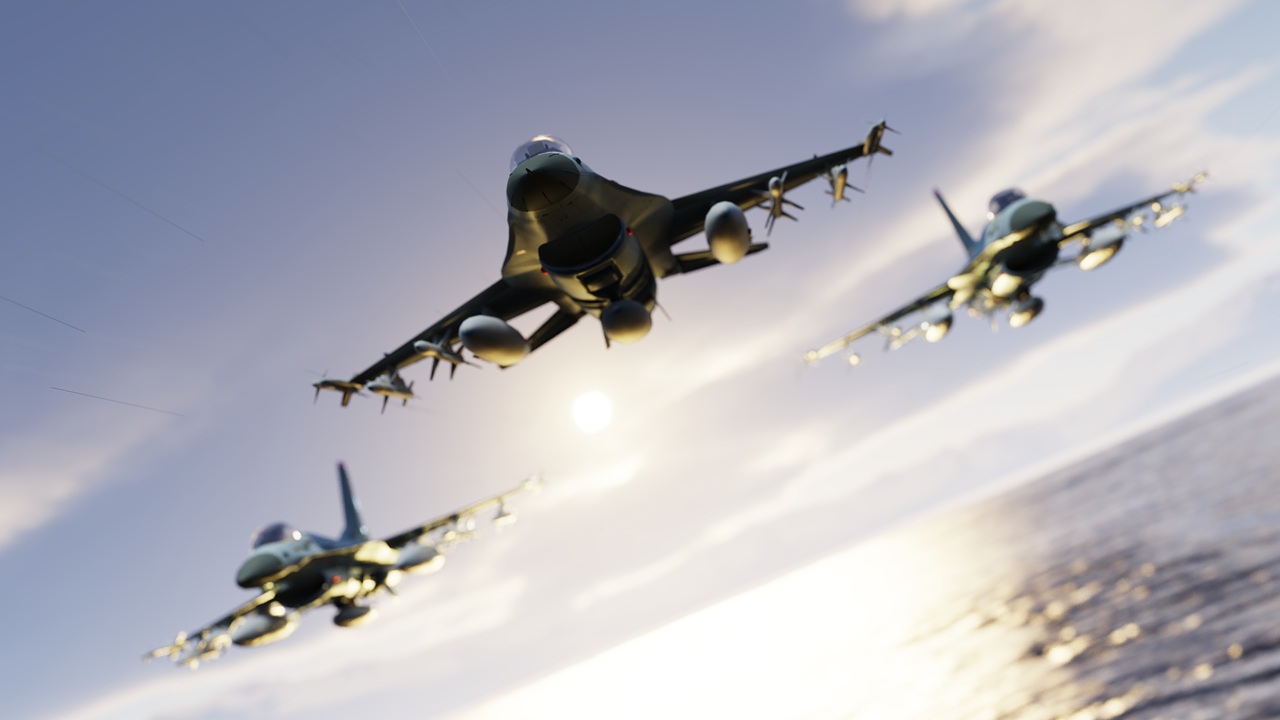
The Evolution of the United States Air Force
The creation of the United States Air Force on September 18, 1947, marked a pivotal moment in military history. This event came in the wake of World War II and the emerging Cold War, which underscored the need for a dedicated air service to counter the Soviet threat. Over the years, the Air Force has grown into a critical component of the U.S. defense strategy, playing a key role in maintaining national security.
General Eric M. Smith, Commandant of the United States Marine Corps, acknowledged this milestone in an official statement, highlighting the Air Force’s long-standing partnership with the Marine Corps. He emphasized that since its founding, the Air Force has been a steadfast ally, providing decisive power from the skies and dominating across multiple domains. This collaboration has been tested and strengthened through combat experiences, reinforcing the importance of joint operations.
While the 78th anniversary may not hold the same significance as the 75th anniversary three years prior, it is still a moment worth reflecting on. This year also marks the 250th anniversary of the United States Army, from which the Air Force evolved. This historical context underscores the deep roots of military aviation in American history.
Tracing the Origins of Military Aviation
Military aviation in the United States dates back to the American Civil War, when balloons were used for reconnaissance and directing artillery fire. These early efforts laid the groundwork for future advancements in aerial warfare. However, the true beginning of the Air Force can be traced to August 1, 1907, when the United States Army Signal Corps established its Aeronautical Division. This unit was created to manage all matters related to military ballooning and air machines.
Even though the Wright Brothers had made their historic flight just three years earlier, balloons were considered more important at the time. The Signal Corps later acquired a small dirigible, which was used at Fort Omaha, Nebraska. In May 1909, Lt. Frank P. Lahm and Lt. Benjamin D. Foulois became the first U.S. Army pilots to qualify for airship operations.
The Early Challenges of the Aeronautical Division
The early days of the Aeronautical Division were marked by both progress and setbacks. Testing of the first airplane took place at Fort Myer, Virginia, in August 1908. Tragedy struck just weeks later when Lt. Thomas E. Selfridge was killed in a plane crash while flying with Orville Wright. Despite this loss, the Army continued to invest in aviation, purchasing a second improved Wright Flyer designated as "Airplane No. 1" in 1909.
By October 1912, the Signal Corps had expanded its fleet to nine aircraft. However, the first Airplane No. 1 was later given to the Smithsonian Institution and is now displayed at the National Air and Space Museum in Washington, D.C. During this period, another test plane was lost in a crash, highlighting the risks involved in early aviation.
The Rise of Military Aviation Units
In 1913, the U.S. Army ordered its aviators to participate in the 2nd Division's maneuvers. This led to the formation of the "1st Provisional Aero Squadron," which was later redesignated as the 1st Aero Squadron. This unit became the first military aviation unit devoted exclusively to aviation and has remained active since its creation.
Assigned to the Punitive Expedition of the Mexican border in 1916, the 1st Aero Squadron became the first air combat unit of the U.S. Army. Today, the 1st Reconnaissance Squadron trains aircrews for the Lockheed U-2S Dragon Lady and pilots and sensor operators for the Northrop Grumman RQ-4 Global Hawk. It operates from Beale Air Force Base in California.
The Growth of the Air Service
As the United States entered World War I in 1917, it had only 35 pilots within the Signal Corps. Many American aviators volunteered to serve with the French military, forming the Lafayette Flying Corps. This group included the famous Lafayette Escadrille squadron, which played a crucial role in training American pilots and preparing them for combat.
The first U.S. aviation squadron joined the fight in February 1918, composed of pilots who had previously served with the French military. This was necessary due to the limited production of U.S. aircraft at the time. Experienced pilots from the Flying Corps helped train new aviators, forming the nucleus of the Army Air Service.
The Transformation of the Army Air Corps
In 1926, the Air Corps Act changed the name of the Army Air Service to the Army Air Corps (AAC). Despite this change, the AAC remained part of the U.S. Army due to a lack of support for an independent air force. The act did establish the Office of the Assistant Secretary of War for Air, which played a similar role to today’s assistant secretary.
During the Interwar Period, inter-service rivalry over the role of aviation in warfare began to emerge. The Air Corps championed new technologies, while Navy officials sought to maintain traditional naval dominance. This competition for limited military budgets often hindered joint operations.
The Creation of the United States Air Force
Following World War II, the U.S. military underwent significant reductions. At the same time, the Cold War highlighted the need for a capable air service to counter the Soviet threat. In 1946, the War Department reorganized the Continental Air Forces into the Strategic Air Command (SAC) and established the Air Defense Command and Tactical Air Command.
A year later, the National Security Act of 1947 was signed into law, separating the Air Force from the Army and establishing the Department of the Air Force. This act created the United States Air Force as the fifth branch of the U.S. military. W. Stuart Symington became the first Secretary of the Air Force on September 18, 1947, marking the anniversary that continues to be celebrated today.

Post a Comment for "Happy Birthday, Air Force: 78 Years of Service"
Post a Comment