F-16V vs. J-20: Who Triumphs in 4 Words
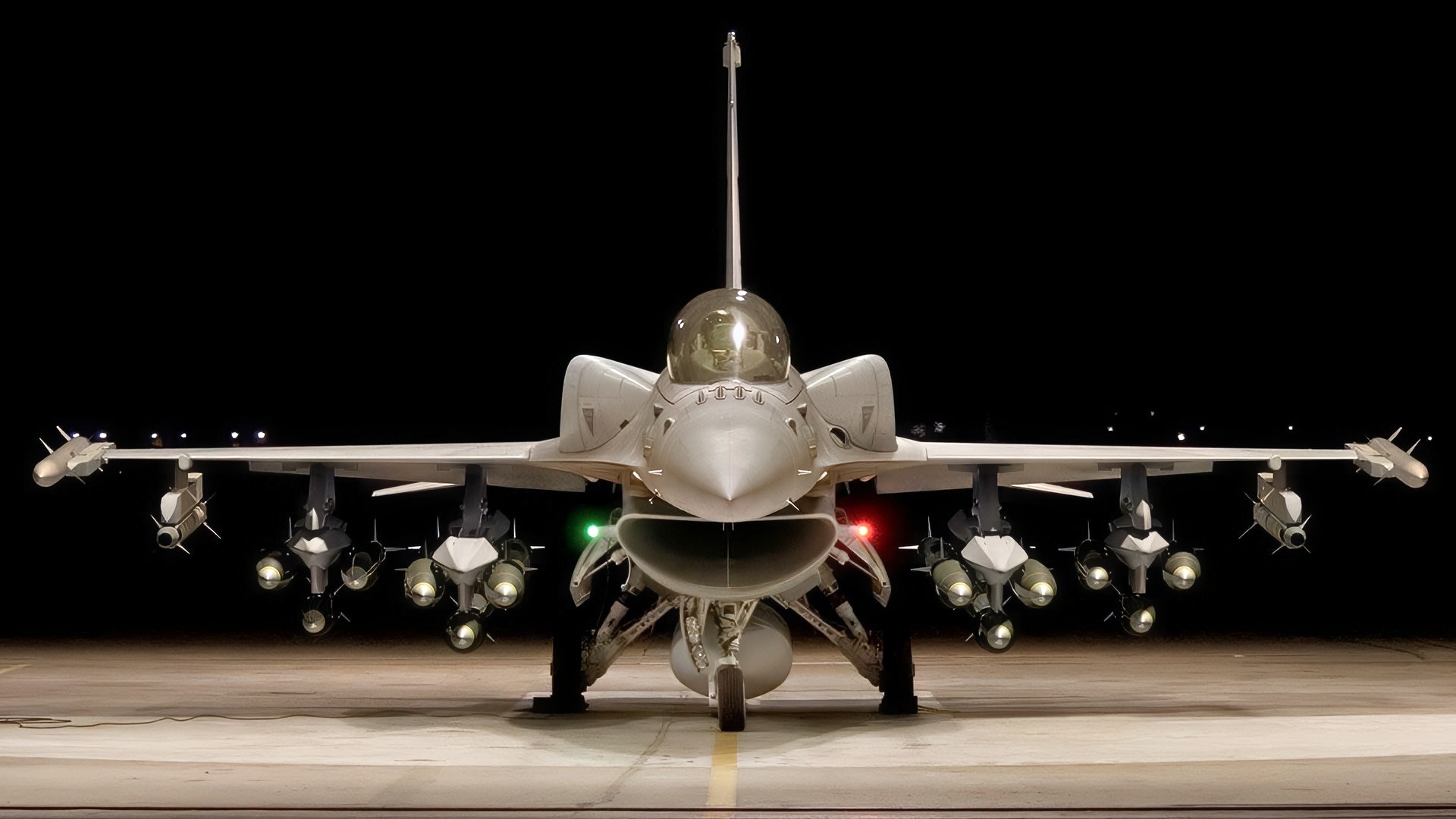
Overview of the F-16V and J-20
The F-16 Block 70/72, commonly known as the F-16V Viper, represents one of the most advanced iterations of the F-16 family. This variant includes modern avionics, an improved cockpit, and numerous enhancements from its predecessors. It is considered one of the most advanced fourth-generation fighters, with many air forces, including Taiwan's, upgrading their fleets to this version.
In contrast, the Chengdu J-20 Mighty Dragon is a fifth-generation stealth fighter that the People's Liberation Army Air Force (PLAAF) is mass-producing. In a potential conflict between China and Taiwan, these two aircraft could face each other in combat. The question remains: which one would prevail?
Design and Capabilities
The F-16V retains the classic airframe of the original F-16 but incorporates modern upgrades such as the AN/APG-83 AESA radar, advanced electronic warfare systems, and compatibility with the latest air-to-air and air-to-ground munitions. It is powered by either the GE F110-GE-129 or the Pratt & Whitney F100-PW-229 engine, allowing it to reach speeds over Mach 2 and offering a thrust-to-weight ratio of around 1.2.
Despite its agility and high roll rate, the F-16V has a relatively large radar cross-section of about 3 square meters, making it more detectable by modern radar systems. Its maneuverability and fly-by-wire system make it suitable for dogfights.
On the other hand, the J-20 is a larger and heavier aircraft, with a length of over 20 meters and a wingspan of 13.5 meters. Twin WS-10C or more advanced WS-15 engines power it, providing supercruise capability and a higher thrust-to-weight ratio. The J-20 emphasizes stealth with features like diverterless supersonic intakes, radar-absorbent materials, and internal weapons bays. Its median radar cross-section is estimated to be around 0.5 square meters, making it significantly harder to detect than the F-16V.
Avionics and Situational Awareness
The F-16V is equipped with the AN/APG-83 AESA radar, which offers a detection range of approximately 180 kilometers against a target with a 3-square-meter radar cross-section. It also features the Viper Shield electronic warfare suite, Link-16 data link, and optional infrared search and track (IRST) systems. These systems provide the F-16V with solid situational awareness when operating in conjunction with other assets like AWACS or F-35s.
The J-20, designed to operate independently in a networked battlespace, features an advanced AESA radar with a detection range exceeding 220 kilometers. It also includes passive sensors such as electro-optical distributed aperture systems and IRST, allowing it to detect and track targets without emitting radar signals. This gives the J-20 a tactical advantage by preserving its stealth and enabling it to engage without revealing its position.
Weaponry and Combat Effectiveness
The F-16V can carry a wide array of munitions, including the AIM-120D AMRAAM for beyond visual range (BVR) engagements and the AIM-9X Sidewinder for within visual range (WVR) combat. The AIM-120D has a range of around 120 kilometers, while the AIM-9X is effective up to 19 kilometers. The F-16V can also carry precision-guided air-to-ground weapons such as the AGM-65 Maverick, SLAM-ER, and JDAMs, with a total payload capacity of up to 7,700 kilograms.
The J-20’s primary BVR weapon is the PL-15 missile, believed to have a range exceeding 200 kilometers, significantly outmatching the AIM-120D. For WVR combat, the J-20 utilizes the PL-10E missile, which has a range of approximately 60 kilometers and high off-boresight targeting capability. These missiles are carried internally to preserve the aircraft’s stealth profile, though external pylons can be used if stealth is not a priority.
Engine Performance and Stealth
In terms of maneuverability, the F-16V benefits from a smaller and lighter airframe, but lacks the thrust vectoring and supercruise capabilities found in the J-20. The J-20’s maneuverability is enhanced by its canards and thrust vectoring, allowing it to perform advanced aerial maneuvers at high speeds and altitudes. While it may not be as nimble as the F-16V in a tight turning fight, its ability to maintain energy and position in combat gives it a significant advantage.
Stealth and survivability are critical factors in modern air combat. The F-16V relies on electronic warfare systems, chaff and flare dispensers, and support from other platforms to survive in contested environments. The J-20, designed to operate in high-threat environments with minimal support, uses stealth features to remain undetected and track targets without compromising its position.
Conclusion
In a hypothetical one-on-one engagement between the F-16V and the J-20, the outcome would heavily favor the J-20. In beyond visual range combat, the J-20 would detect the F-16V first due to its superior radar and stealth, launching PL-15 missiles from a distance the F-16V could not match. In a visual range combat scenario, the F-16V has a better chance of winning due to its maneuverability. However, the J-20’s stealth features make it formidable, and if the F-16V can get close enough, it might have a chance to counter. Ultimately, stealth plays a crucial role in determining the outcome of such encounters.

Post a Comment for "F-16V vs. J-20: Who Triumphs in 4 Words"
Post a Comment