Early immune system challenges harm oral health
Understanding the Oral Microbiome in Children Living with HIV
The oral microbiome, a complex community of microorganisms that resides in the mouth, plays a crucial role in overall health. Recent research has begun to uncover how this microbial ecosystem interacts with the immune system and influences both local and systemic conditions. A collaborative study led by Modupe O. Coker from the School of Dental Medicine at the University of Pennsylvania has shed new light on how early-life immune challenges, such as those caused by HIV, can shape the oral microbiome over time.
Once considered solely as harmful invaders, bacteria are now recognized as essential components of human health. The gut microbiome, for instance, has been widely studied for its impact on digestion, immunity, and disease prevention. However, the oral microbiome, which is the second most diverse microbial system in the human body, has received far less attention despite its critical role in initiating the digestive process and being constantly exposed to external environments.
Coker and her team explored the stability of the oral microbiome in children living with HIV, those who were perinatally exposed to the virus but not infected, and those who had no exposure. Their findings, published in Microbiome, challenge traditional views on microbiome stability and reveal important insights into how immune challenges affect oral and systemic health.
The Role of Oral Microbes in Health
Oral microbes are central to health, as they interact with food and help in nutrient absorption. However, these microbes do not remain confined to the mouth. They can influence other parts of the body, creating a bidirectional relationship between oral and systemic health.
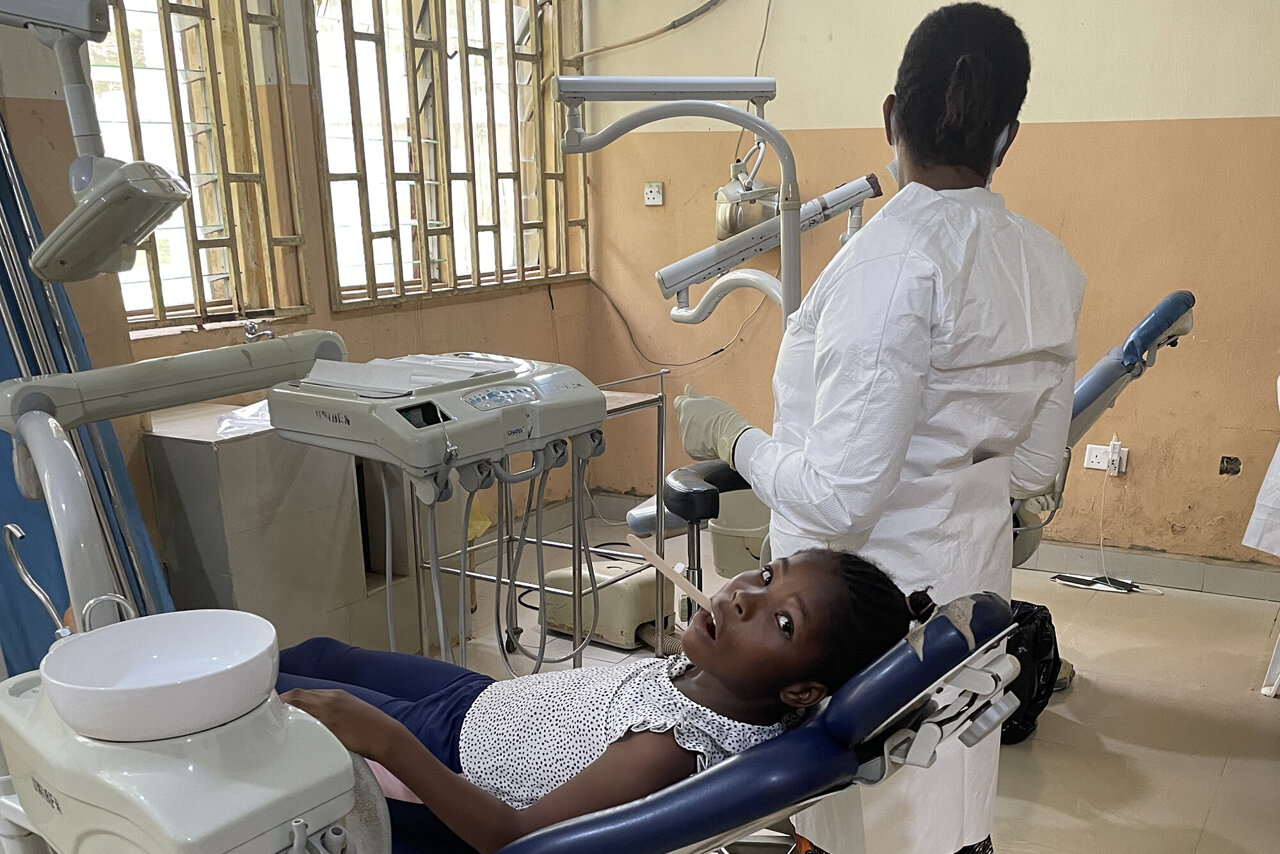
The researchers collected supragingival plaque samples—plaque above the gum line—from children in Nigeria across three time points. This included children with HIV, those exposed to the virus but uninfected, and those without any exposure. All children with HIV were receiving antiretroviral treatment during the study.
This population holds particular significance for the researchers, as studying them offers a unique opportunity to understand how early immune challenges impact the oral microbiome and, in turn, broader aspects of development, including growth and cognitive function.
Measuring Microbial Changes Over Time
To assess changes in the oral microbiome, the team mapped the spatial distribution of microbial communities in the mouth and examined the association between HIV status and cavity-related bacterial species. They also measured taxonomic turnover, which refers to how much the microbial community changes over time.
"Taxonomic turnover is about measuring the same microbial community at different times and seeing how different they are," explains Allison E. Mann, a researcher involved in the study. "Higher turnover indicates greater volatility, while lower turnover suggests more stability."
In the gut, stability over time is generally seen as positive. However, the study found that in the mouth, higher turnover was associated with better adaptability. Children unexposed to HIV showed higher taxonomic turnover compared to those who had been exposed, suggesting that their oral microbiomes might be less stable and more adaptable to environmental changes.
Implications for Oral and Systemic Health
The study also revealed that the microbial communities in children infected with HIV were more homogeneous, meaning the front and back of the mouth had similar bacterial clusters. In contrast, healthy children typically have distinct differences between the front and back of the mouth.
Vincent P. Richards, another co-senior author of the study, highlights the importance of this finding. He notes that the disruption in microbial diversity could indicate how the virus affects salivary flow and the acidity of saliva in children with HIV.
These results contribute to a growing understanding of how early-life disruptions, such as prenatal exposure to HIV, can influence the oral microbiome. Coker emphasizes that the relationship between oral and systemic health is cyclical, with each influencing the other.
Future Directions and Research
The findings open up new avenues for research into how early immune challenges affect long-term health outcomes. By understanding the mechanisms behind these changes, scientists hope to develop novel strategies for preventing or treating diseases linked to the oral microbiome.
As Coker states, "We know that oral microbes affect systemic health, but systemic health also shapes oral health. This interplay is critical to explore further."
This research underscores the importance of continued investigation into the oral microbiome and its role in shaping health throughout life. By deepening our understanding of these microbial communities, scientists may uncover new ways to improve public health and address complex medical challenges.

Post a Comment for "Early immune system challenges harm oral health"
Post a Comment