Democrats prepare for shutdown as budget talks intensify
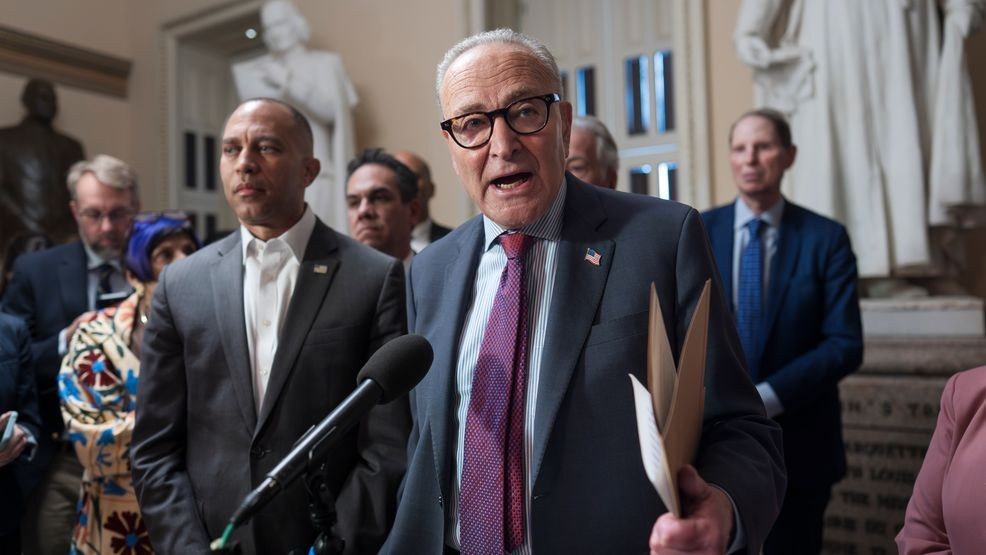
The Political Stalemate and the Risk of a Government Shutdown
Senate Democratic Leader Chuck Schumer has found himself in a delicate position as the U.S. government faces the looming threat of a shutdown at the end of September. Earlier this year, he faced criticism from within his own party for voting alongside Republicans to keep the government running. However, he is now prepared to take a different stance, risking a potential shutdown if Republicans do not meet Democratic demands.
Schumer has aligned with House Democratic Leader Hakeem Jeffries in opposing any legislation that does not include critical health care provisions and a commitment to not roll them back. He argues that the political landscape has shifted since March, when he initially supported a government funding bill. At that time, he believed that a shutdown would give President Donald Trump more power to make decisions about federal workers. Now, he feels that the situation has evolved, and he believes Republicans and Trump will be held accountable if they fail to reach a bipartisan agreement.
"Things have changed" since the March vote, Schumer said in an interview with The Associated Press. He pointed out that Republicans have passed significant legislation, including Trump's tax cuts and spending reductions, which have impacted programs like Medicaid. Democrats, on the other hand, are now unified in their opposition to such measures, unlike in March when some members of the party, including Jeffries, voted against the funding bill.
The Potential Consequences of a Shutdown
A government shutdown would mean that non-essential federal agencies would halt operations, and millions of federal employees, including military personnel, would not receive paychecks. While the immediate impact may be severe, Schumer argues that the situation would likely worsen regardless of whether a shutdown occurs. "It will get worse with or without it, because Trump is lawless," he stated.
The decision to risk a shutdown comes as Republicans are considering a short-term spending measure to avoid a shutdown by September 30. However, Democrats face difficult choices if no deal is reached: either support Republican efforts to keep the government open or allow it to shut down indefinitely without a clear path forward.
Partisan Tensions Escalate
The political environment in the Senate has become increasingly tense, with negotiations over the confirmation process breaking down for the second time in recent weeks. Republicans are also changing Senate rules to bypass Democratic objections to many of Trump’s nominees. Meanwhile, Democrats are frustrated by the administration’s decision to reclaim $4.9 billion in foreign aid that had been approved by Congress just as spending negotiations were intensifying in late August.
Republicans, however, argue that Democrats would be to blame if a shutdown occurs. President Trump has dismissed the idea of negotiating with Democrats, stating that they would not support even the most favorable terms. "If you gave them every dream, they would not vote for it," he said, adding that Republicans would find a way to pass funding through without Democratic support.
Key Issues and Negotiation Deadlines
One of the central issues in the current standoff is the extension of government tax credits for Americans who purchase health insurance through the Affordable Care Act. While some Republicans are open to extending these credits, Senate Majority Leader John Thune has indicated that he is unlikely to include such provisions in a short-term spending bill. Instead, he favors a "clean" stopgap measure that avoids divisive issues while Congress works on its budget legislation.
Schumer, however, insists that his party is prepared to oppose any stopgap measure that does not include Democratic priorities. He believes that the majority of his caucus would vote against such a proposal if Republicans do not engage in meaningful negotiations.
Another major point of contention is the rollback of Medicaid cuts included in the recent Republican tax and spending legislation. Democrats want a guarantee that the White House will not reverse any approved funding, especially after the administration cut $9 billion from the budget and blocked additional foreign aid.
The Broader Implications
Congress is facing a funding deadline on September 30 due to ongoing disagreements over several annual budget bills. In recent years, partisan differences have stalled individual bills, forcing lawmakers to rely on large omnibus packages or temporary spending measures. A shutdown would disrupt essential services and could have long-term economic consequences.
Schumer’s earlier vote in March to support the government funding bill placed him at odds with his party's base. He faced backlash from activists and even temporarily lost the support of Jeffries, who distanced himself from the move. However, he maintains that his decision was based on what he believed was the best course of action at the time.
Now, he says the situation is different, and he is confident that public opinion would hold Trump accountable for a potential shutdown. "I did what I thought was right" in March, he said. "It's a different situation now than then."

Post a Comment for "Democrats prepare for shutdown as budget talks intensify"
Post a Comment