Dave Portnoy's Secret Pact to Stay Silent on Politics Before Charlie Kirk Scandal
The Controversy Surrounding Jimmy Kimmel's Suspension
The recent suspension of Jimmy Kimmel from his show, Jimmy Kimmel Live!, has sparked a heated debate about the boundaries of free speech and the consequences of public statements. Kimmel was suspended indefinitely by ABC after making controversial remarks regarding Charlie Kirk’s killer. His comments suggested that supporters of former President Donald Trump were attempting to distance themselves from the individual responsible for the murder, which led to significant backlash.
This incident has brought attention to the broader issue of how public figures handle sensitive topics, especially those involving politics and social issues. Dave Portnoy, the founder of Barstool Sports, has weighed in on the controversy, sharing his own experiences with corporate restrictions on political commentary.
Portnoy’s Experience with Corporate Restrictions
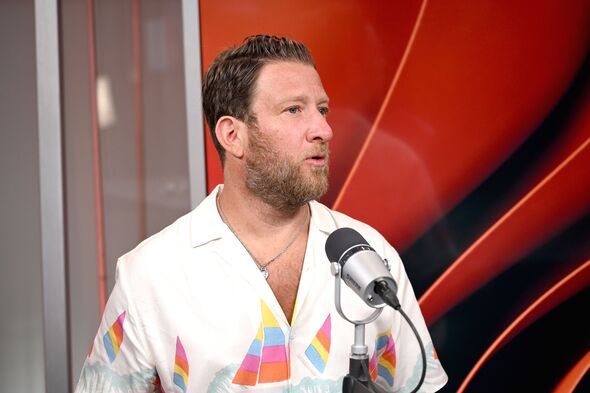
Portnoy, who once sold Barstool Sports to Penn Entertainment for $388 million, revealed that during the company’s ownership under Penn, he was not allowed to make jokes about politics or government employees. This restriction was part of an agreement made when he sold the company. He explained that such limitations were put in place due to the potential impact of government regulations, particularly related to gambling licenses.
"During the time Penn owned Barstool, I wasn’t allowed to mock politics or government employees," Portnoy stated in a video posted on X. "That’s because the government controls the gambling licenses and they didn’t want to create headaches. So, I agreed to that. That’s part of being in business."
Portnoy emphasized that these restrictions were a necessary compromise for maintaining the company’s operations. He noted that if he had violated these rules, it would have resulted in serious consequences, including possible termination.
Kimmel’s Comments and the Debate Over Cancel Culture
Kimmel’s remarks about the Charlie Kirk case were seen by many as crossing a line, particularly given the sensitive nature of the topic. In an episode of his show, Kimmel suggested that Trump’s supporters were trying to “score points” by associating the killer with the MAGA movement. This statement was met with criticism from both fans and critics alike.
Portnoy, however, does not view Kimmel’s suspension as an example of “cancel culture.” Instead, he argues that Kimmel’s actions had real consequences, rather than being a result of targeted efforts to undermine him.
“To me, cancel culture is when people go out of their way to dig up old tweets, videos, etc., looking for dirt on somebody they don’t like in an effort to get them fired,” Portnoy wrote on X. “But when a person says something that a ton of people find offensive, rude, or dumb in real time and then that person is punished for it, that’s not cancel culture. That is consequences for your actions.”
The Broader Implications
Portnoy’s comments highlight the tension between free speech and the responsibilities that come with public visibility. While many argue that individuals should be able to express their opinions without fear of retribution, others believe that certain topics require careful consideration, especially when they involve real-world consequences.
This debate extends beyond Kimmel and Portnoy, touching on the role of media, the influence of social media, and the expectations placed on public figures. As the conversation continues, it remains to be seen how society will balance the right to speak freely with the need for accountability.
Public Reaction and Ongoing Discussion
While some fans of Kimmel have criticized the decision to suspend him, others have supported the move, arguing that his comments were inappropriate and disrespectful. The situation has also drawn attention to the broader issue of how media outlets handle controversial content and the potential impact on their audiences.
As the discussion unfolds, it serves as a reminder of the complex relationship between public opinion, media responsibility, and the power of words in shaping perceptions. Whether one views Kimmel’s suspension as a fair consequence or an overreach, the incident underscores the ongoing challenges of navigating sensitive topics in today’s media landscape.

Post a Comment for "Dave Portnoy's Secret Pact to Stay Silent on Politics Before Charlie Kirk Scandal"
Post a Comment