Court Strips $5M Payment from Mike Lindell in Election Case
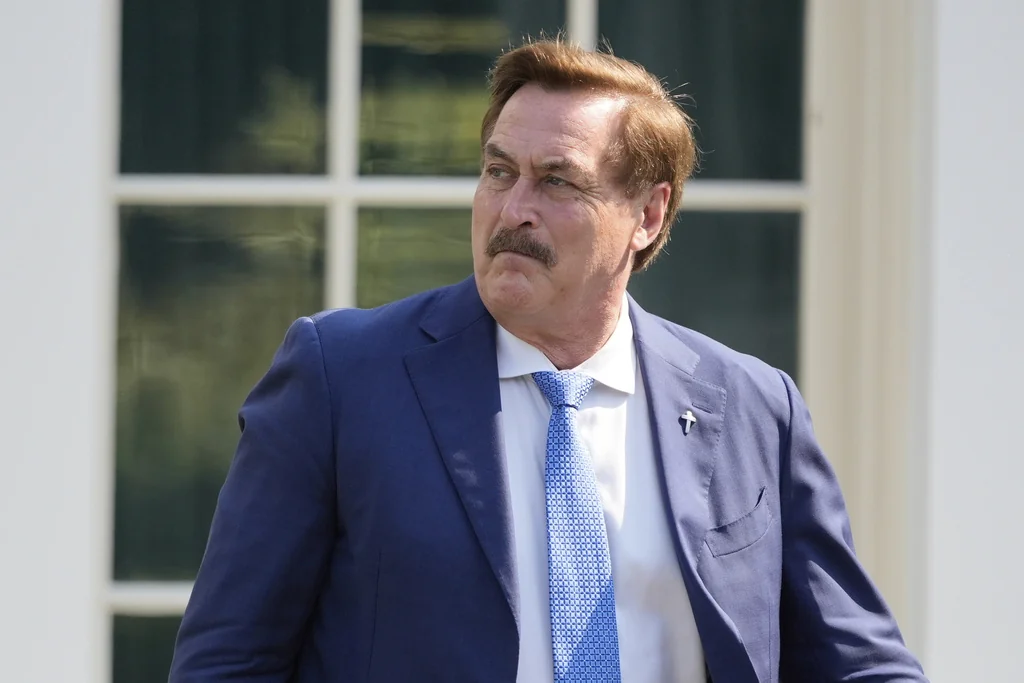
The Legal Battle Over Mike Lindell's Election Claims
A recent decision by a federal appeals court has brought an end to a legal dispute involving Mike Lindell, the CEO of MyPillow, and a software developer who claimed to have disproven Lindell’s allegations of foreign interference in the 2020 presidential election. The case centered around a $5 million prize that Lindell had offered at a 2021 "Cyber Symposium" event in South Dakota.
Lindell challenged anyone to refute his data, which suggested Chinese involvement in the election. Robert Zeidman, a software developer, accepted the challenge and produced a 15-page report that contradicted Lindell’s claims. However, the contest judges did not award the $5 million, leading Zeidman to pursue the matter through arbitration.
The arbitration panel ultimately ruled in favor of Zeidman, but the decision was later overturned by the United States Court of Appeals for the 8th Circuit. A three-judge panel found that the arbitration panel had exceeded its authority by misinterpreting the contractual language of the contest rules. According to the court, the contract required contestants to "unequivocally" disprove Lindell’s data, and this requirement was clear and unambiguous.
U.S. Circuit Judge James Loken emphasized that while the arbitration panel’s reasoning might be debatable, it violated Minnesota law. He stated that fair or not, the terms of the contract could not be modified by the panel or the court. The appeals court ordered a lower court to vacate the arbitration award, citing that the panel had effectively amended the contract by introducing extrinsic evidence that required specific types of data.
The arbitration panel had argued that Lindell did not provide packet capture data, which Zeidman claimed proved the data was not related to the 2020 election. A federal district judge had previously supported the arbitration panel’s ruling, but the appeals court reversed that decision, highlighting the importance of adhering to the original contract terms.
Lindell celebrated the ruling as a significant victory, stating that it could lead to the replacement of electronic voting machines with paper ballots. He described the decision as a win for the country and an opportunity to address concerns about election integrity.
In response to the new opinion, Zeidman’s attorney defended the arbitration panel’s decision. Brian Glasser encouraged people to evaluate whether the Eighth Circuit’s decision was more persuasive than the unanimous ruling of the arbitrators who reviewed all the evidence, including one appointed by Lindell.
This case comes shortly after Lindell lost a defamation case brought by a former employee of Dominion Voting Systems. A federal jury in Colorado ordered Lindell to pay $2.3 million in damages to Eric Coomer, whom he accused of treason. Lindell is currently appealing that decision while awaiting the outcome of another defamation lawsuit filed by Dominion in 2021, which seeks $1.3 billion in damages.
Implications of the Ruling
The court’s decision underscores the importance of clear contractual language and the limits of arbitration panels in interpreting such agreements. It also highlights the ongoing legal challenges faced by individuals like Lindell, who have made controversial claims about election integrity. As these cases continue to unfold, they may have broader implications for how disputes are resolved and how election-related claims are addressed in the legal system.
The case also reflects the complex interplay between private disputes and public policy. Lindell’s comments about replacing electronic voting machines with paper ballots illustrate how personal legal victories can influence broader discussions about election security and reform. However, the court’s emphasis on contract law and procedural fairness suggests that such issues must be addressed through established legal frameworks rather than through individual claims or public statements.
As the legal landscape continues to evolve, the outcome of these cases will likely shape future debates over election integrity, the role of arbitration, and the responsibilities of those who make public claims about political events. For now, the appeals court’s decision serves as a reminder of the importance of clarity, adherence to legal principles, and the need for careful scrutiny of contractual obligations in high-stakes disputes.

Post a Comment for "Court Strips $5M Payment from Mike Lindell in Election Case"
Post a Comment