Columbia University to Pay Over $220 Million in Deal with Trump to Restore Federal Funding
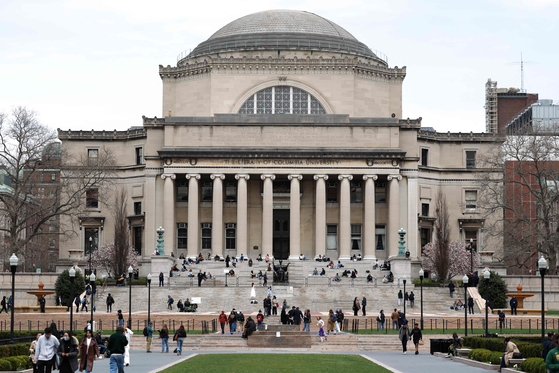
Columbia University Settles with Trump Administration Over Antisemitism and Federal Funding
Columbia University has reached a significant agreement with the Trump administration, paying over $220 million to the federal government to restore federal research funding that had been canceled due to concerns about antisemitism on campus. This deal marks a major development in the ongoing tensions between the university and the administration, which had threatened to cut off billions of dollars in government support.
Under the terms of the agreement, Columbia will pay a $200 million settlement over three years and an additional $21 million to address alleged civil rights violations against Jewish employees following the October 7, 2023, Hamas attack on Israel. The university emphasized that this agreement does not include an admission of wrongdoing but codifies reforms aimed at addressing the issues raised by the administration.
Acting University President Claire Shipman stated that the agreement represents a step forward after a period of sustained federal scrutiny and institutional uncertainty. The university had faced the potential loss of more than $400 million in grants canceled earlier this year, as the administration claimed that the university failed to address antisemitism on campus during the Israel-Hamas conflict.
In response, Columbia agreed to a series of demands from the Republican administration, including overhauling its student disciplinary process and applying a contentious, federally endorsed definition of antisemitism to both teaching and disciplinary committees investigating students critical of Israel. These changes are part of broader efforts to ensure compliance with federal standards and maintain access to critical funding.
Education Secretary Linda McMahon praised the deal, calling it “a seismic shift in our nation’s fight to hold institutions that accept American taxpayer dollars accountable for antisemitic discrimination and harassment.” She highlighted that Columbia’s reforms could serve as a roadmap for other elite universities seeking to regain public trust by reaffirming their commitment to truth-seeking, merit, and civil debate.
As part of the agreement, Columbia committed to several changes, including reviewing its Middle East curriculum to ensure it is “comprehensive and balanced” and appointing new faculty to its Institute for Israel and Jewish Studies. The university also pledged to end programs that promote unlawful efforts to achieve race-based outcomes or diversity targets.
Additionally, Columbia will have to issue a report to a monitor confirming that its programs do not promote unlawful DEI (diversity, equity, and inclusion) goals. The pact comes after months of uncertainty and intense negotiations at the 270-year-old institution, which was among the first targets of President Donald Trump’s crackdown on pro-Palestinian campus protests.
Columbia’s own antisemitism task force found that Jewish students faced verbal abuse, ostracism, and classroom humiliation during the spring 2024 demonstrations. However, some Jewish students also participated in the protests, and protest leaders maintain they are not targeting Jews but criticizing the Israeli government and its actions in Gaza.
The university's leadership, marked by a revolving door of three interim presidents in the past year, has acknowledged the need for change in the campus climate. As part of the settlement, Columbia agreed to ask prospective international students questions designed to elicit their reasons for studying in the United States and establish processes to ensure all students are committed to civil discourse.
Another key component of the agreement involves providing the government with information about disciplinary actions involving student-visa holders resulting in expulsions or suspensions. This could potentially make it easier for the Trump administration to deport students who participate in protests.
In May, Columbia announced it would suspend, expel, or revoke degrees from over 70 students involved in a pro-Palestinian demonstration inside the main library and an encampment during alumni weekend last year. The pressure on Columbia began with funding cuts, followed by the detention of Mahmoud Khalil, a former graduate student and visible figure in the protests, who became the first person detained under the Trump administration’s push to deport pro-Palestinian activists.
Further scrutiny came with searches of university residences as part of a federal Justice Department investigation into whether Columbia concealed “illegal aliens” on campus. The interim president at the time affirmed the university’s commitment to upholding the law.
Columbia was an early test case for the Trump administration, which sought closer oversight of universities seen as bastions of liberalism. However, it soon faced competition from Harvard University, which became the first higher education institution to challenge the administration’s demands in court.
The Trump administration has used federal research funding as a primary tool to reshape higher education. Over $2 billion in funding has been frozen at Cornell, Northwestern, Brown, and Princeton universities. In March, $175 million was pulled from the University of Pennsylvania over a dispute regarding women’s sports, and it was restored after the university updated records related to transgender swimmer Lia Thomas and revised its policies.
The administration has also expanded its focus beyond private universities. University of Virginia President James Ryan resigned under pressure from a U.S. Justice Department investigation into diversity, equity, and inclusion practices. A similar investigation has now been launched at George Mason University.

Post a Comment for "Columbia University to Pay Over $220 Million in Deal with Trump to Restore Federal Funding"
Post a Comment