CNBC's The China Connection: How a Trading Hub Marks China's Shift from the U.S.
The Quiet Shift in Yiwu's Global Trade
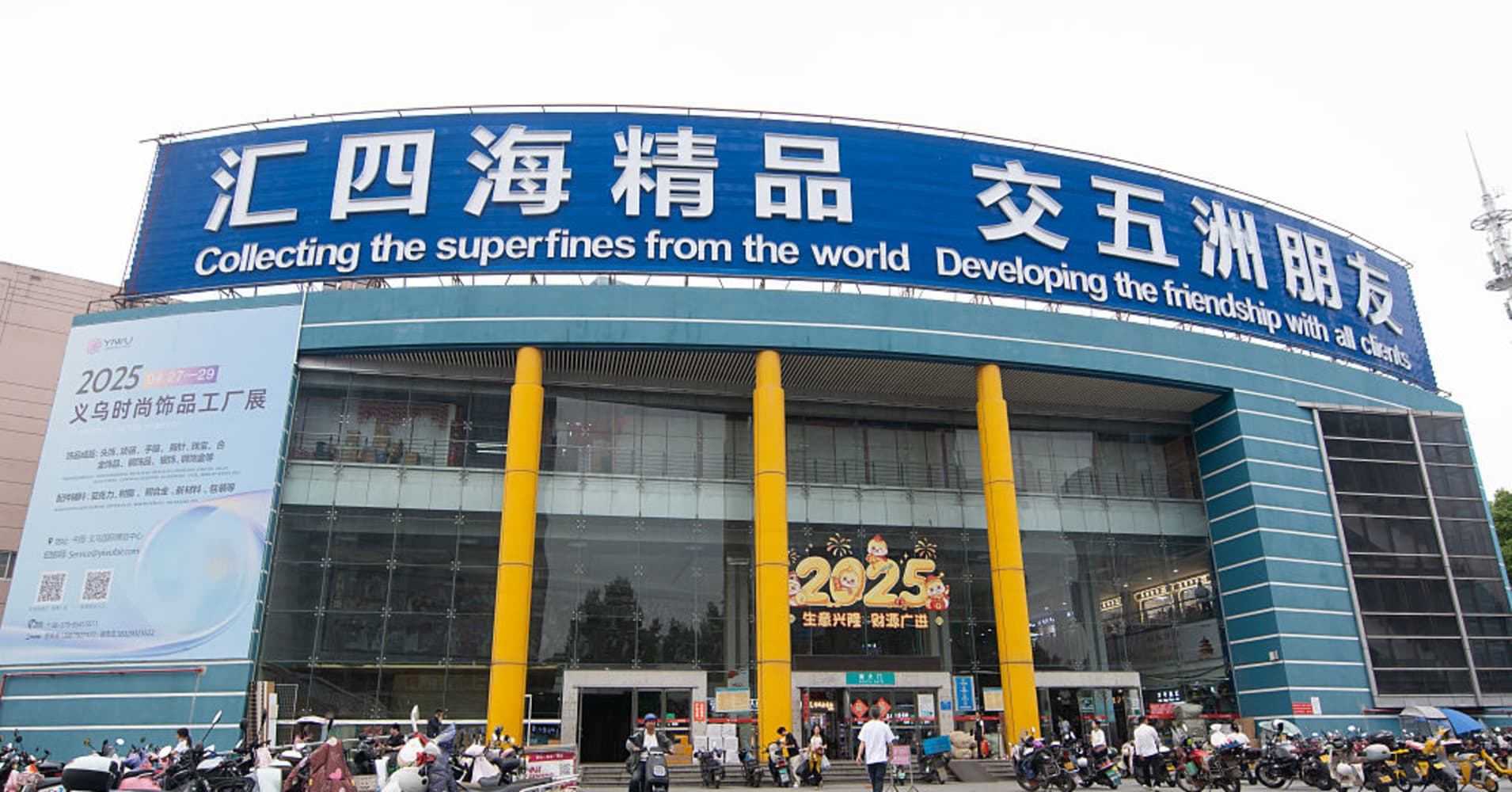
When I visited Yiwu, one of the world’s largest wholesale markets, I noticed something unusual. There were more children than buyers. This was during late August, just days before the end of summer vacation in China. The iconic Yiwu "International Trade Market," known for shipping the majority of the world's Christmas decorations, felt unexpectedly quiet.
Inside the five-story building, three young boys eating lollipops joined me on the elevator. They ran out before I reached my floor. At the store entrances, Lego pieces lay scattered, and escalators were halted — signs said it was “for the safety of children.” The marketplace, often referred to as the “world’s supermarket,” seemed to be in a state of stillness, both in terms of activity and energy.
Was this silence due to the U.S.-China trade war? Li, a seller of sponges and cleaning supplies, claimed it wasn’t the peak season for foreign buyers. He mentioned that his customers were primarily from the Middle East and Southeast Asia, not the U.S. According to Ashish Monga, founder and CEO of trading firm IMEX Sourcing Services, exports to the U.S. from Yiwu have dropped from about 20% eight years ago to 15% last year, and are now even lower.
This decline mirrors a broader trend in China’s exports to the U.S., which have fallen by 12% through July. Meanwhile, exports to the 10 largest economies in the Middle East have increased by 13% during the same period. This shift is not just about replacing U.S. orders; it’s about finding new markets that offer stability, even if they come with slower growth rates.
A New Customer Base
The customer base at Yiwu has clearly shifted. I noticed more signs in Arabic, Korean, and Russian instead of the usual English and Chinese. On one floor, large sections of scarves were focused on headscarves or hijabs, reflecting changing consumer preferences. For many businesses, meeting EU compliance standards has limited their ability to sell in Europe. However, demand from Latin America has grown so much that Yiwu officials have even supported Spanish classes for local merchants.
Despite these changes, the U.S. remains a significant market for China. As of July this year, the total value of China's exports to the U.S. stood at $251.4 billion, far higher than the $116.5 billion to the Middle East. However, Beijing has also increased its shipments to Europe and Southeast Asia, which is now China's largest regional trading partner.
Challenges in the U.S. Market
For businesses, the roughly 55% U.S. tariffs on most Chinese goods remain a major hurdle. These tariffs are still well above the 25% rate faced during Trump's first term. Many U.S. companies have ramped up orders ahead of the increased tariffs, helping to support China's exports and avoid a potential Christmas crunch.
However, planning can only go so far. Experts predict that U.S. businesses will have to start raising prices significantly in the coming months. Additionally, new fees affecting China-made cargo ships arriving in the U.S. will kick in on October 14, potentially costing millions of dollars.
For Chinese suppliers, tapping into different markets may be the safer bet. The shift away from the U.S. is not just a temporary response to trade tensions but a strategic move toward more stable and diverse markets.
Broader Implications
The U.S.-China trade talks in Madrid this week did not yield progress on tariffs. Instead, both sides highlighted a framework agreement on the TikTok divestiture. U.S. President Donald Trump is set to speak with Chinese President Xi Jinping to finalize details.
Meanwhile, other economic challenges persist. China’s economic slowdown continues, with retail sales growing by just 3.4% in August, missing forecasts. Fixed asset investment for the first eight months of the year barely grew as the real estate sector struggles.
In addition, there has been an uproar over processed food. A fast-casual chain, Xibei, faced backlash after an internet celebrity criticized the restaurant for selling expensive, pre-made dishes. The company’s initial response further angered consumers, revealing that industry standards for processed food are looser than many believed.
Looking Ahead
As the global trade landscape continues to evolve, the shift in Yiwu’s market reflects a larger transformation in China’s economic strategy. While the U.S. remains a key player, the focus is increasingly turning to emerging markets and new opportunities.
With upcoming events such as the annual Xiangshan Forum in Beijing and the launch of Nio’s latest SUV, the dynamics of global trade are constantly shifting. For businesses in Yiwu and beyond, adapting to these changes will be crucial for long-term success.

Post a Comment for "CNBC's The China Connection: How a Trading Hub Marks China's Shift from the U.S."
Post a Comment