China's J-20 Dragon Unleashes Swarm Beast Attack
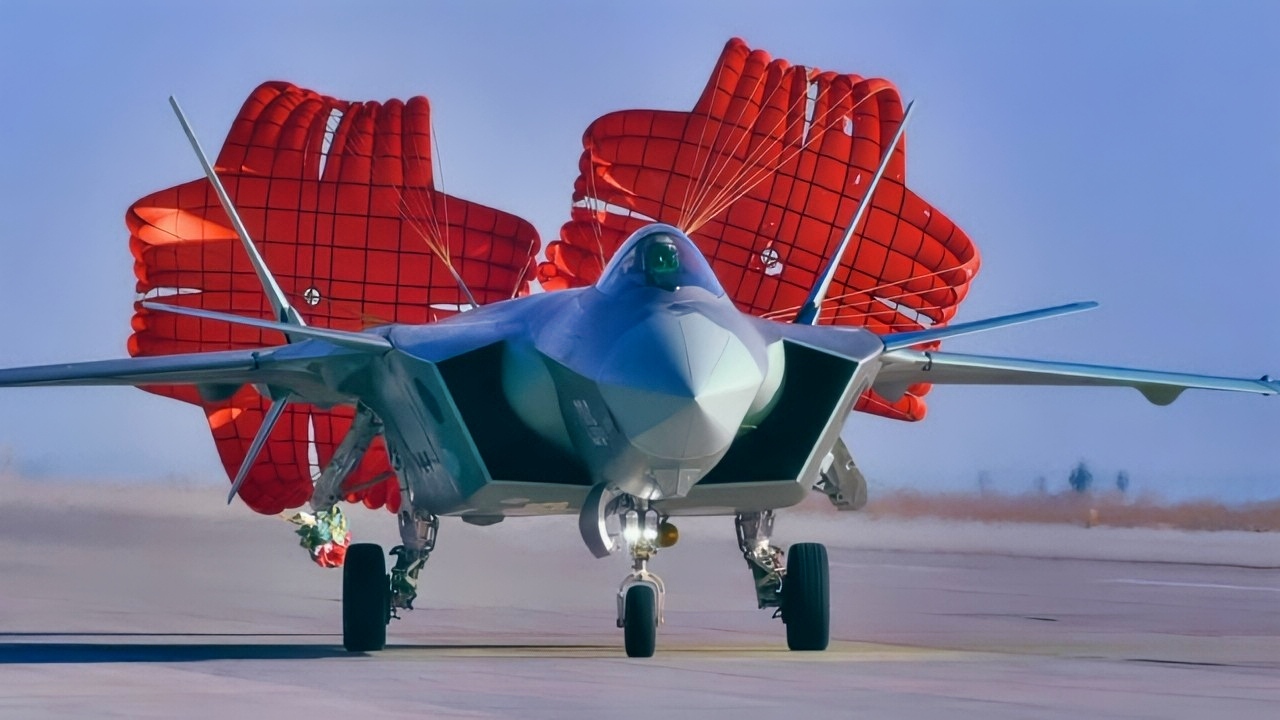
China’s J-20 “Mighty Dragon” Fighter: A Game-Changer in Modern Air Combat
China’s J-20 “Mighty Dragon” has emerged as a formidable addition to the People's Liberation Army Air Force (PLAAF). With hundreds of units now deployed, this fifth-generation stealth fighter combines advanced radar-evading capabilities with a powerful arsenal. The J-20 is not just a single aircraft; it represents a strategic shift in how China approaches air superiority and long-range combat.
The J-20’s core strength lies in its beyond-visual-range (BVR) combat capabilities. It features internal weapon bays that can carry up to six PL-15 air-to-air missiles, which have a range of over 124 miles. These missiles are equipped with active radar homing, making them highly effective for long-range engagements. Additionally, the aircraft can deploy PL-10 short-range infrared-guided missiles for close-in dogfights. This dual capability allows the J-20 to dominate both long and short-range combat scenarios.
Beyond its air-to-air prowess, the J-20 is also capable of ground strikes and suppressing enemy air defenses. It can carry precision-guided munitions such as the LS-6 series bombs and anti-radiation missiles, giving it a versatile role in modern warfare. The aircraft’s total weapons capacity is impressive, reaching up to 24,000 pounds, which makes it a significant threat on the battlefield.
One of the most concerning aspects of the J-20 is its potential to operate in "beast mode." In this configuration, the aircraft can carry additional weapons on external hardpoints, sacrificing some stealth for increased firepower. This flexibility allows the J-20 to overwhelm enemy defenses with a heavy load of missiles and bombs, making it a dangerous opponent in any conflict.
Strategic Implications for Regional Security
The J-20’s deployment raises significant concerns for regional security, particularly for Taiwan. The island’s current fleet of F-16V Viper fighters, while advanced, lacks the stealth capabilities of the J-20. The F-16V is equipped with AESA radar and night-vision imaging systems, allowing it to detect and track multiple targets. However, its lack of stealth makes it vulnerable to the J-20’s long-range missiles.
In a potential conflict between China and Taiwan, the J-20 would likely be used on Day One to establish air superiority. Analysts suggest that BVR tactics and missile defense will be crucial in determining the outcome of any engagement. The J-20’s ability to launch a large number of PL-15 missiles at high altitudes could overwhelm Taiwanese defenses, creating a significant advantage for Chinese forces.
While the United States and its allies have their own advanced fighters like the F-22 Raptor and F-35 Lightning II, the sheer numbers and firepower of the J-20 pose a unique challenge. U.S. pilots undergo rigorous training, but the PLAAF frequently engages in simulated attacks on Taiwan using grey war tactics. This preparation could give Chinese pilots an edge in real combat scenarios.
The Future of Air Combat
The J-20’s development highlights the growing importance of BVR combat in modern warfare. As technology advances, the ability to engage enemies from a distance becomes increasingly critical. The PL-15 missile, demonstrated in the May 2023 aerial battle between India and Pakistan, showcases the effectiveness of BVR weapons. In that engagement, Pakistani pilots using PL-15 missiles achieved notable success against Indian Rafales, indicating the potential impact of such weapons in future conflicts.
The J-20’s design also reflects China’s focus on long-range missile warfare. By eliminating the need for an internal short-range cannon, the PLAAF emphasizes the use of long-range missiles to secure victories. This strategy aligns with broader trends in military doctrine, where speed, range, and precision are prioritized over traditional close-combat tactics.
As China continues to build more J-20s each month, the implications for global security become more pronounced. The United States and its allies must adapt their strategies to counter the J-20’s capabilities, focusing on evasive maneuvers, improved missile defense, and enhanced training programs. The J-20 is not just a fighter jet; it is a symbol of China’s growing military power and a key player in the evolving landscape of modern air combat.

Post a Comment for "China's J-20 Dragon Unleashes Swarm Beast Attack"
Post a Comment