Chicago churches call for peaceful resistance amid expected federal action
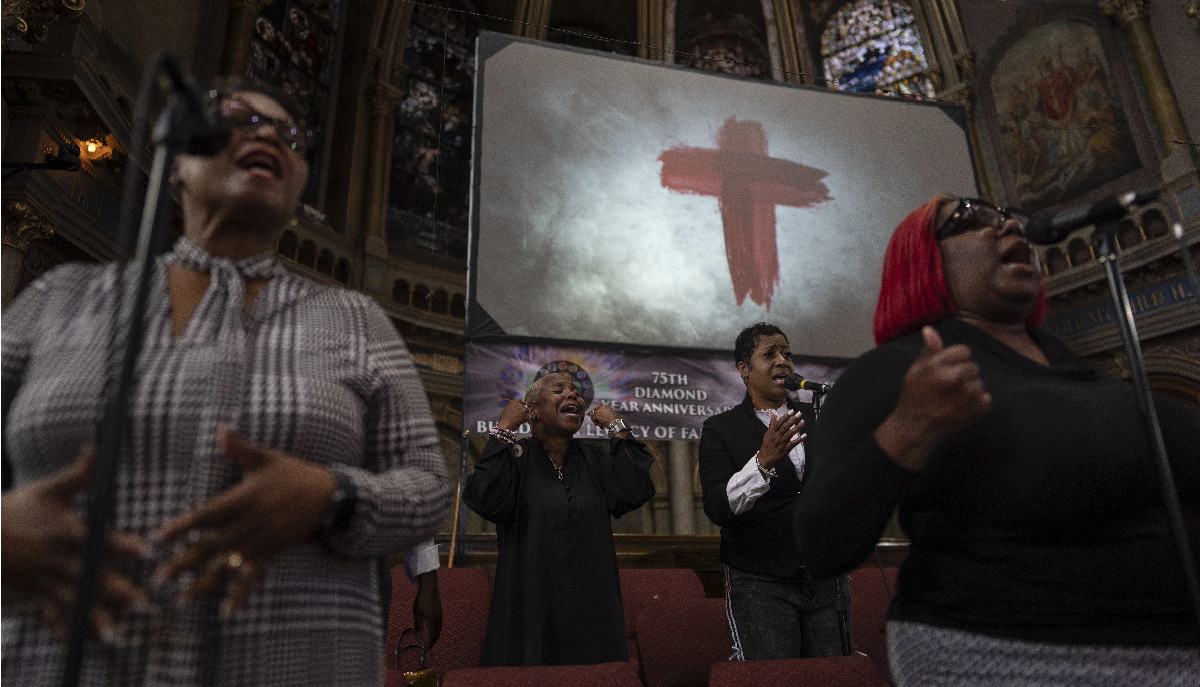
Preparing for the Unknown: Chicago Churches Respond to Federal Intervention
As the city of Chicago prepares for an anticipated federal intervention, local churches have become a critical source of support and guidance for residents, particularly within Black and Latino communities. Reverend Marshall Hatch, pastor of New Mount Pilgrim Missionary Baptist Church on Chicago’s West Side, has urged congregants to stay informed, carry identification, and maintain close connections with family members. His message was clear: “We’re not going to despair. We’re not going to feel threatened. We’re not going to give up and give in to fascism and authoritarianism.”
The tension in the city stems from President Donald Trump’s repeated threats of federal action in Democratic strongholds, including Chicago. He has warned of using “apocalyptic force” to combat crime and increase deportations, despite fierce opposition from local leaders and residents who view the plan as unnecessary and unwelcome.
Rising Fears and Community Response
Since Trump’s re-election, fears among immigrant communities have been high, but the prospect of increased federal enforcement has added new layers of anxiety. This is especially true in neighborhoods where trust in law enforcement is already fragile. For many, the idea of military presence or National Guard deployment feels like a direct threat.
Lester Burks, a 74-year-old U.S. Army veteran, expressed his concerns about soldiers being stationed in Chicago. “I don’t want soldiers here,” he said. “They are trained to fight.” His sentiment reflects the unease felt by many in the community.
In response to these growing concerns, churches across the city have ramped up their efforts. Some focus on educating congregants about their rights during interactions with immigration agents, while others work to calm fears about detention and deportation. The goal is to ensure that people know what to do if they encounter law enforcement or immigration officials.
The Role of Sanctuary Cities
Chicago is one of several sanctuary cities targeted by the Trump administration. While there is no official definition of what constitutes a sanctuary city, the term generally refers to policies that limit cooperation between local authorities and Immigration and Customs Enforcement (ICE). Despite this, the administration has repeatedly tried to challenge Chicago’s sanctuary laws, which are considered some of the strongest in the country.
Recent operations have included raids at places like a Hyundai plant in Georgia, where over 475 people were detained. The Trump administration has also announced plans to use Naval Station Great Lakes, a military base in suburban North Chicago, as a processing center for immigration operations that could last up to 45 days. Meanwhile, the president has hinted at sending National Guard troops to New Orleans before Chicago.
A Call for Resources, Not Force
Reverend Hatch emphasized that the church’s approach is not about calling for military intervention, but rather for more resources to address the root causes of violence. “We know that there is a correlation between resources and violence,” he said. This message resonates deeply in neighborhoods like West Garfield Park, where systemic disinvestment and high crime rates have long been issues.
New Mount Pilgrim has also been involved in broader efforts to combat violence. The church recently celebrated the groundbreaking of an arts and activism center, which it sees as part of the solution to the city’s challenges.
Impact on Daily Life
The expected federal operation has cast a shadow over daily life in Chicago, even affecting cultural events like Mexican Independence Day celebrations. Church leaders noted that the January immigration operation had a chilling effect on attendance at immigrant-heavy churches, as many people stayed home out of fear.
Rev. Paco Amador of New Life Community Church in the predominantly Mexican Little Village neighborhood described the feeling of uncertainty. “It feels like anything can happen at any moment,” he said. “It would be irresponsible not to talk about this.”
As the city waits for the next phase of federal action, the role of faith communities remains vital. They continue to serve as both a source of comfort and a voice for those who feel vulnerable in the face of potential upheaval.

Post a Comment for "Chicago churches call for peaceful resistance amid expected federal action"
Post a Comment