California Republicans Fired Up by Opposition to Newsom's Redistricting Election
A Moment of Unity for California Republicans
In the heart of the nation’s political landscape, Republicans are experiencing a surge of energy and influence. President Trump continues to shape the White House with his distinctive style, while the GOP maintains control over both chambers of Congress. Additionally, two-thirds of the Supreme Court justices were appointed by Republican presidents, reinforcing the party's presence in the federal government.
However, the situation in California presents a stark contrast. The state has been dominated by Democratic leadership for years, with the GOP struggling to gain traction. For nearly two decades, the party has not elected a statewide candidate, and Democrats hold a significant voter registration advantage. Despite this, recent events have brought a glimmer of hope for California Republicans.
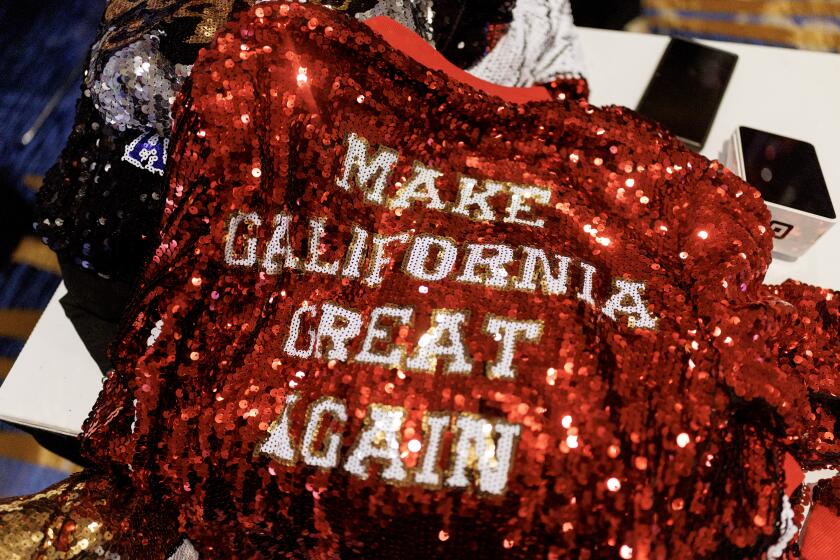
At their fall convention in Orange County, members of the California GOP found themselves united in their opposition to Proposition 50, a ballot measure aimed at redrawing the state’s congressional districts. This initiative, supported by Governor Gavin Newsom and other Democratic leaders, seeks to counter gerrymandering efforts in GOP-led states. Newsom accused Republicans of attempting to "rig" the 2026 election at Trump's behest to maintain control of Congress.
The outcome of this proposition will be decided in a special election on November 4, with voters receiving mail ballots approximately four weeks prior. This issue has brought together a traditionally fragmented group of Republicans, creating a rare moment of unity among party members.
Shawn Steel, a member of the Republican National Committee and chairman of the anti-Proposition 50 campaign, emphasized the significance of this unity. He noted that for the first time in years, individuals who had previously clashed due to ego and differences were working together. This collaboration is seen as crucial for the party's survival in the coming months.
If passed, Proposition 50 could cost Republicans five seats in the closely divided U.S. House of Representatives, potentially determining control of Congress during Trump’s final two years in office. The stakes are high, with over $40 million already invested in campaigns supporting and opposing the measure.
Campaigns have been active, with glossy pamphlets opposing the effort arriving in voters' mailboxes even before lawmakers voted to place Proposition 50 on the ballot. During the football game between the University of Michigan and the University of Oklahoma, ads supporting the measure aired, highlighting the growing attention on this issue.
At the state GOP convention, which attracted 1,143 registered delegates, alternates, and guests, the focus on Proposition 50 was evident. Republican candidates running for governor next year, typically focused on building support among donors and activists, instead highlighted their opposition to the measure during the convention.
Chad Bianco, a GOP gubernatorial candidate, emphasized the importance of opposing Proposition 50, urging supporters to start every conversation with “No on 50.” This message resonated with the crowd, underscoring the urgency of the issue.
Despite the challenges faced by California Republicans, there have been successes on ballot measures. Since 2010, the party has won more than 60% of the propositions it has taken a position on, according to data from the state GOP. This record highlights the potential for future victories.
State Assemblyman David Tangipa urged party activists to engage with their communities, emphasizing the need to focus on broader issues rather than the complexities of redistricting. His message was clear: ask whether Gov. Newsom and the legislative body in Sacramento deserve more power.
Legal challenges are expected if the measure passes, but panelists at the convention focused on defeating the measure at the ballot box. Voter outreach trainings were conducted during the event, with similar virtual classes scheduled to begin soon.
While the focus on Proposition 50 has dominated the convention, gubernatorial candidates also engaged with various caucuses, greeting delegates, and holding private meetings. Over 80 people have signaled their intent to run for governor next year, though some have since withdrawn.
Bianco and Steve Hilton, two prominent candidates in the race to succeed Newsom, maintained a cordial relationship despite their rivalry. Hilton argued that the support for Trump in the 2024 election indicates a path for a Republican to win the governorship. He criticized Newsom's record, highlighting high unemployment, poverty, taxes, and gas prices.
Bianco emphasized his law enforcement background as a key factor in his ability to attract Democratic votes. He promised that voters would support him for public safety without necessarily identifying as Republicans.
As the convention continued, Hilton shared stories about his family's salami business in Hungary, highlighting his hands-on experience in making sausage. This lighthearted moment underscored the diverse backgrounds of the candidates and the spirit of the event.
In conclusion, the California GOP's brief moment of unity around Proposition 50 offers a glimpse of hope for the party's future. While challenges remain, the energy and determination displayed at the convention suggest that the GOP is ready to fight for its place in the state's political landscape.

Post a Comment for "California Republicans Fired Up by Opposition to Newsom's Redistricting Election"
Post a Comment