Berkeley to Disband Homeless Camp as Street Goes to Bayer
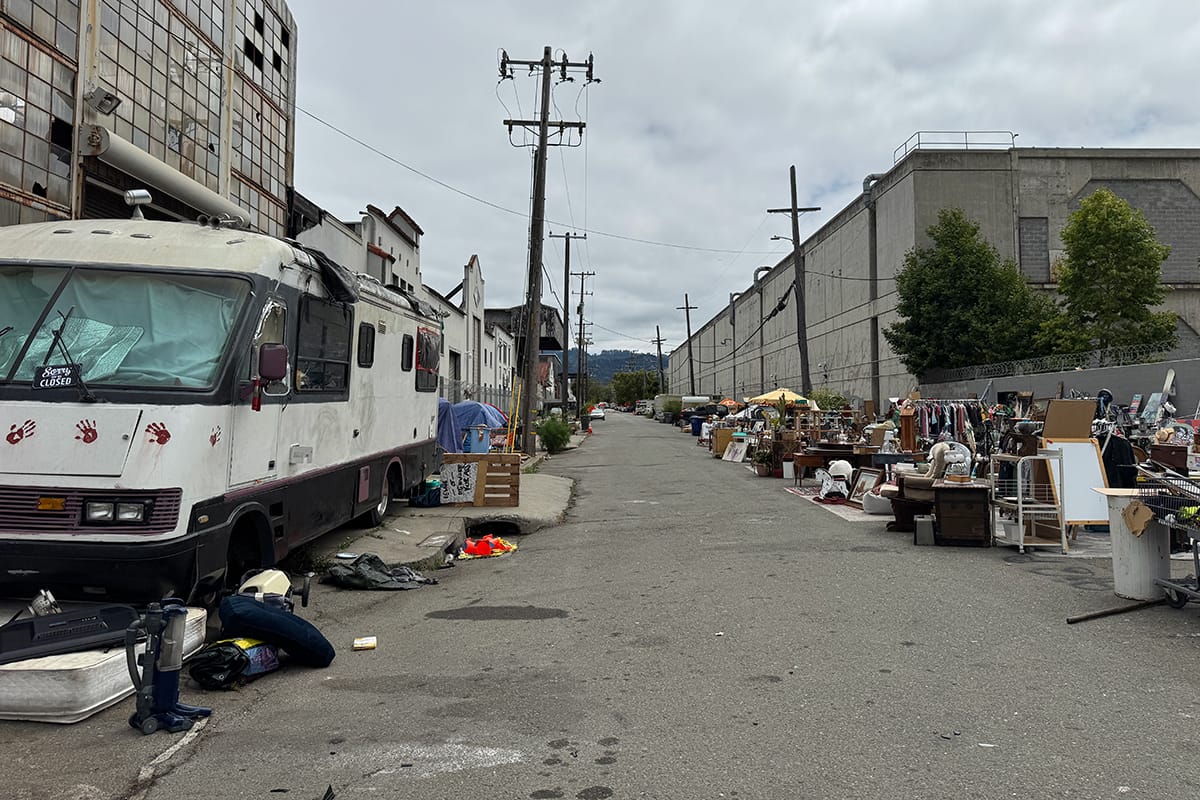
Berkeley Officials Approve Dead-End Street Transfer Amid Homelessness Concerns
Berkeley officials recently made a controversial decision to transfer a dead-end street to one of the city's largest taxpayers, Bayer. This move came in response to concerns about a sprawling homeless encampment located on Carleton Street, west of Seventh Street. The encampment has raised significant safety and public health issues, prompting local leaders to take action.
Bayer, which already owns properties on both sides of the block, plans to construct a stormwater treatment feature on the street where the encampment currently resides. A Bayer spokeswoman, Jennifer Cogley, highlighted the risks associated with the encampment, noting that there had been "multiple fires" on the block and that quality control workers had reported smoke in their nearby building. She emphasized that the fire risk posed a serious threat to Bayer’s properties.
According to Cogley, workers at Bayer’s 46-acre Berkeley campus produce medicine for people in 50 countries. The company also contributes significantly to the community through its annual donations of about $1 million to local organizations, as part of a longstanding development agreement with the city.
During public comment sessions, more than a dozen residents and encampment advocates urged the city to find solutions that didn’t involve sweeping or closing camps. Amber Whitson, who has lived on Berkeley streets for decades, has long advocated for a sanctioned camp site in the city. She criticized the city for "herding its unhoused constituents into shrinking overcrowded corners of the city," pointing out that many lack access to basic amenities like 24-hour bathrooms or dumpsters.
Whitson argued that the city is passing the buck by giving property with a large unhoused population to Bayer. Other speakers called for more compassion, stability, and support for unhoused residents, noting that the city has increased enforcement efforts since the closure of a large encampment at Ohlone Park earlier this month. These efforts include posting signs warning people not to store private property in public spaces.
In the last fiscal year, Berkeley spent over $30 million on homelessness initiatives, according to the city. Gordon Gilmore of the Berkeley Homeless Union said that unhoused residents are now under constant threat of having their belongings taken if they move away from their tents. He pointed out that people have found safety on Carleton Street because it is one of the few places that is both out of the public right-of-way and public property.
Other speakers referenced a recent city audit that identified areas needing improvement in the Homeless Response Team. They also noted that there aren't enough beds for everyone living on Berkeley streets. Former Berkeley Councilwoman Cheryl Davila criticized the city’s approach, stating that it should provide services and treat unhoused individuals with humanity rather than force them to leave.
Davila had several heated exchanges with Mayor Adena Ishii during the meeting, accusing her of not caring about humanity and making rude comments. Despite the tension, the council ultimately voted 8-0, with an abstention by Cecilia Lunaparra, in favor of the street vacation.
City Manager Paul Buddenhagen explained that if approved, the item would return for a final vote next week, with Homeless Response Team staff visiting the block to offer assistance. He acknowledged the city's ongoing housing and shelter crisis, emphasizing the need for more resources to address the issue.
The city also highlighted potential benefits of the transfer, including saving money on maintenance and service needs and reducing liability by converting the area from public to private space. Additionally, Bayer has paid appropriate fees related to the street vacation, with no negative fiscal impact to the city.
Later in the night, officials celebrated news that the Alameda County Board of Supervisors pledged to use 80% of its Measure W revenue—estimated at about $170 million annually—to address homelessness. Mayor Ishii reiterated the city’s recognition of the crisis and thanked those who attended the meeting.
On Wednesday morning, the dead-end of Carleton Street remained calm, with a handful of tents and vehicles inhabited. Some residents expressed hope for financial help when it comes time to move. Travonnie Stokes, who attended the City Council meeting, shared his experience of struggling with PTSD after a shooting and his desire for stability in his life.
Cowboy, a resident of the encampment, described the community as one that enforces rules and keeps each other’s behavior in check. He emphasized that the encampment is not bothering anyone and that he hopes to eventually move to Florida to be closer to his children.
Residents of Carleton Street continue to face challenges, but they remain determined to survive and thrive in their current environment. Their stories highlight the complex issues surrounding homelessness and the need for compassionate, sustainable solutions.

Post a Comment for "Berkeley to Disband Homeless Camp as Street Goes to Bayer"
Post a Comment