Bay Adapt Summit unites leaders to tackle shoreline planning amid budget cuts
Bay Area Leaders Confront Climate Challenges Despite Federal Setbacks
Despite the efforts of the Trump administration to downplay the significance of human-caused global warming, climate change continues to be a pressing reality. In the Bay Area, local leaders remain committed to preparing cities for rising sea levels and increasing environmental threats. This commitment was on full display at the 2025 Rising Together: The Bay Adapt Summit, an event that brought together government officials, environmental groups, urban planners, and social justice consultants.
The summit, which sold out quickly, featured walking tours in cities vulnerable to flooding and an all-day meeting at the Exploratorium science museum in San Francisco. Gregg Castro, culture director for the Association of Ramaytush Ohlone, emphasized the importance of the work during the opening land acknowledgment. “We're saving ourselves and we need to take that seriously,” he said. “The planet will be fine. We are doing this work to save ourselves.”
A major development since last year’s summit was the release of the Regional Shoreline Adaptation Plan by the San Francisco Bay Conservation and Development Commission (BCDC). This plan outlines a regionwide vision for adapting to rising sea levels and includes guidelines for local governments to follow when developing their own plans. According to the report, the cost of adaptation projects by 2050 is estimated at $110 billion, while the cost of inaction could reach $230 billion.
City councils have been actively seeking proposals from civil engineers, landscape architects, and community engagement organizations to prepare their plans. Dana Brechwald, assistant planning director for climate adaptation with BCDC, noted that conversations with 75% of required jurisdictions have already begun. Projects currently under consideration include wetland habitat restoration, adding public access trails, and creating open spaces.
Funding Shifts After Federal Cuts
The climate resilience efforts in America saw a significant boost in 2021 when the Biden administration passed the Bipartisan Infrastructure Law. This law doubled federal funding for communities to prepare for natural disasters and expanded the Building Resilient Infrastructure and Communities (BRIC) grants program. However, these efforts were significantly curtailed under the Trump administration, which terminated the BRIC program and canceled funded awards.
New approaches to financing were discussed at a breakout workshop during the summit. Len Materman of San Mateo County's OneShoreline suggested connecting sea level adaptation projects to other urgent issues like housing. He proposed a countywide property tax based on square footage per building, as well as requiring developers to fund infrastructure improvements that align with city plans.
Entrepreneur Zach Knight of Blue Forest uses projection models to calculate the cost of climate change for utility companies and compares it to the expense of preventative measures such as forest maintenance. This reframing of corporate investment as cost-saving has gained traction among investors.
State-level funding options have also emerged. The Senate Bill 1 Sea Level Rise Adaptation Planning Grant Program provides planning grants for local, regional, and tribal governments. Proposition 4, a bond measure passed by voters, is expected to generate about $10 billion statewide for climate resilience, water, and natural resources management programs. The state legislature recently reauthorized the cap-and-trade program through 2045, ensuring continued funding for climate mitigation, affordable housing, and transportation projects.
Balancing Resilience and Displacement Risks
Seasonal flooding is a frequent occurrence in the Bay Area, particularly in communities built on infilled landforms. Subsiding land combined with rising seas increases the risk of displacement through evacuation. However, new infrastructure projects, such as landscaped shoreline parks, can raise the value of low-valued land and lead to gentrification.
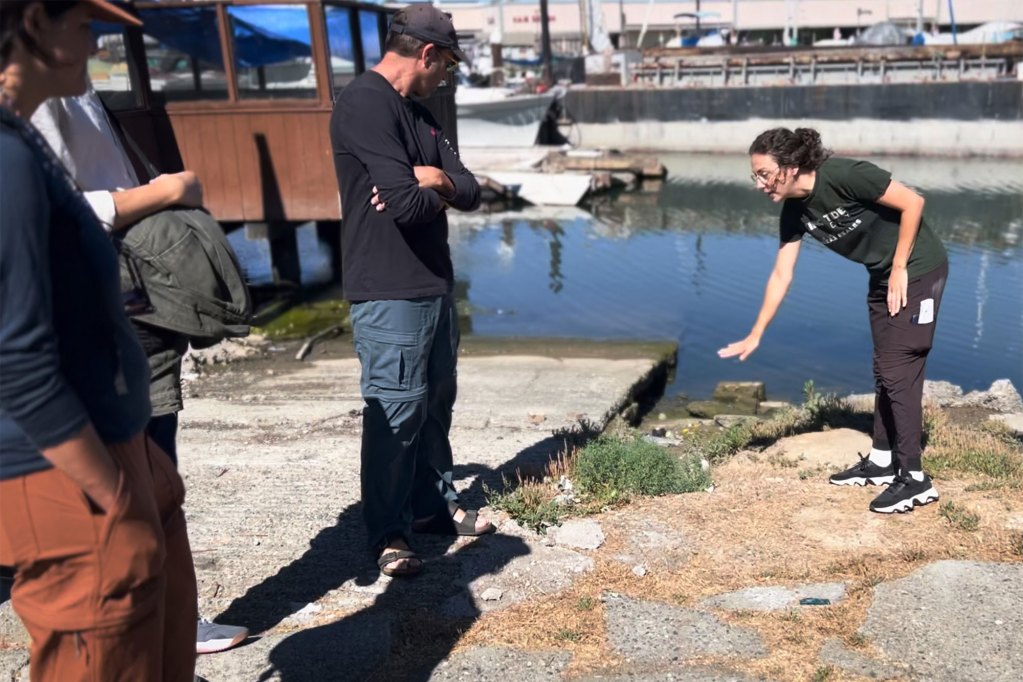
During a walking tour of the Canal neighborhood in San Rafael, participants learned about the risks facing this vulnerable Latino community. Carly Finkle, senior policy manager at the Canal Alliance, described the area as a "hidden catastrophe waiting to happen." She highlighted the potential for 4 to 6 feet of standing water in parts of the neighborhood during extreme weather events.
Irene de Leon, a resident of the Canal neighborhood, shared the challenges of living in a densely populated renter community. Her children's drawings illustrated their hopes for a planned public space. John Gibbs of WRT Planning and Design, who will work with San Rafael on a specific plan for the Canal district, expressed hope that the clarity of the residents' stories would serve as a key factor in securing funding.
For more information, the BCDC's Regional Shoreline Adaptation Plan is available online.

Post a Comment for "Bay Adapt Summit unites leaders to tackle shoreline planning amid budget cuts"
Post a Comment