Appeals Court Deals New Setback to Trump's Birthright Citizenship Push
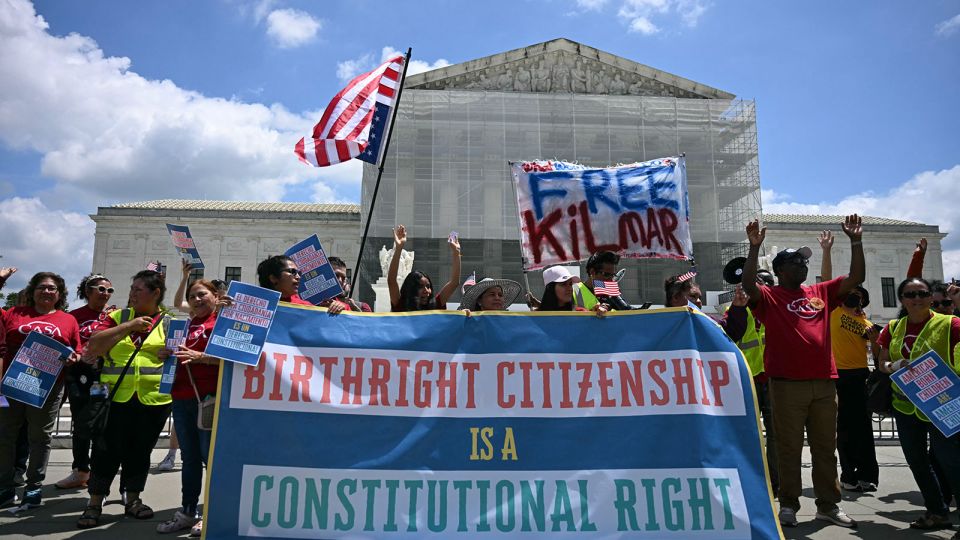
Legal Challenge to Trump’s Executive Order on Birthright Citizenship
A recent ruling by a federal appeals court has dealt another significant blow to President Donald Trump’s executive order aimed at ending birthright citizenship. The decision, issued by the 9th US Circuit Court of Appeals, declared the policy unconstitutional and upheld a nationwide block against its implementation. This ruling highlights ongoing legal battles over the interpretation of citizenship rights in the United States.
The 2-1 decision came as part of a broader effort to review a set of nationwide injunctions that have prevented the enforcement of Trump’s Day One order. The Supreme Court recently directed lower courts to reassess these injunctions to ensure they were not overly broad. The San Francisco-based appeals court determined that one such injunction, issued by a federal judge in Seattle, did not constitute judicial overreach and was necessary to provide complete relief to the states involved.
In his opinion, Judge Ronald Gould, an appointee of former President Bill Clinton, emphasized that the district court had correctly concluded the need for a universal preliminary injunction. He stated that a geographically-limited injunction would require the states challenging the law to overhaul their eligibility verification systems for various social services programs. This could lead to significant administrative burdens and irreparable harm to the states.
This ruling marks the first time an appeals court has fully concluded that Trump’s executive order is unconstitutional. While the Trump administration still has the option to seek a review from the full 9th Circuit or appeal directly to the Supreme Court, the current decision underscores the legal challenges facing the policy.
Judge Gould, joined by appeals court Judge Michael Hawkins, both Clinton appointees, agreed that the executive order’s proposed interpretation denying citizenship to many individuals born in the U.S. is unconstitutional. They argued that the order contradicts the Citizenship Clause of the Constitution, as established in the 1898 Supreme Court case United States v. Wong Kim Ark and decades of executive branch practice.
The order is already under a nationwide block following a ruling by a federal judge in New Hampshire, which barred enforcement of the policy against any babies affected by it. This decision came after a class-action lawsuit brought by the American Civil Liberties Union (ACLU). Such lawsuits are one of the ways plaintiffs can attempt to broadly block Trump’s order, as noted by the Supreme Court.
However, not all judges agree with the majority ruling. Appeals court Judge Patrick Bumatay, a Trump appointee, partially dissented. He argued that the states challenging the order lacked standing to bring the lawsuit, making it premature to address the merits of the citizenship question or the scope of the injunction.
US District Judge John Coughenour, a Ronald Reagan appointee in Seattle, was the first federal judge to block Trump’s order. When he initially issued an emergency order preventing its enforcement in late January, he described it as “blatantly unconstitutional.”
As the legal battle continues, the implications of this ruling extend beyond the immediate policy. It raises important questions about the balance between executive authority and constitutional protections, as well as the role of the judiciary in shaping national policies. The outcome of future appeals and potential Supreme Court involvement will likely determine the long-term fate of Trump’s executive order on birthright citizenship.

Post a Comment for "Appeals Court Deals New Setback to Trump's Birthright Citizenship Push"
Post a Comment