Appeals Court Blocks AP Access to White House
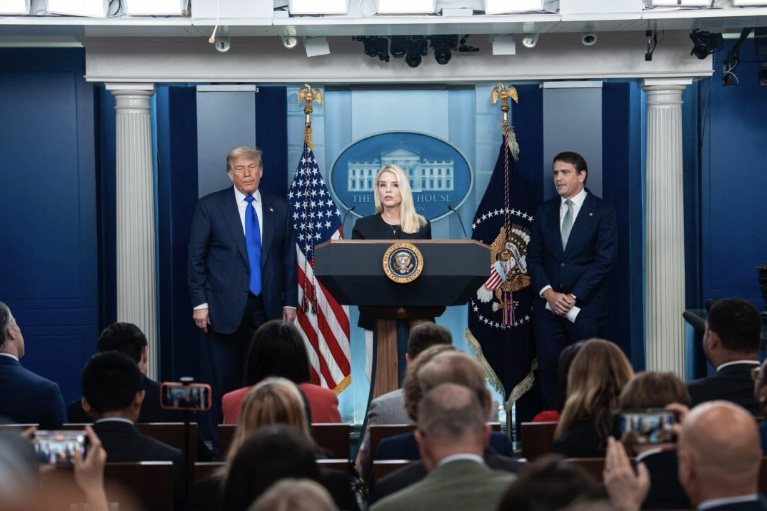
The Legal Battle Over AP’s Access to the White House
A recent decision by an appeals court has once again highlighted the ongoing legal struggle between The Associated Press (AP) and the Trump administration over access to key areas of the White House. The Court of Appeals for the District of Columbia rejected the AP’s request for a full review of its case, leaving in place a previous ruling that allowed the administration to restrict access to certain spaces.
The court’s one-page order came after the AP sought an en banc review, which would have involved all 11 active judges hearing the case. However, the court found that the standard for such a review was not met. Judge Justin Walker, who wrote a concurring opinion, stated that the previous ruling did not create a lasting conflict within the circuit and did not establish a binding legal principle that would justify full-court intervention.
This decision preserves the earlier ruling from a three-judge panel, which determined that the administration could legally limit the AP’s access to specific locations, including the Oval Office and Air Force One, while the case continues.
Background of the Lawsuit
The lawsuit was filed in February after President Donald Trump barred the AP from entering the Oval Office and Air Force One as part of a press pool. This action was taken in response to the AP’s refusal to adopt the administration’s renaming of the Gulf of Mexico as the Gulf of America in its style guide.
The AP’s complaint names several White House officials, including White House press secretary Karoline Leavitt, deputy chief of staff Taylor Budowich, and chief of staff Susan Wiles, as defendants. It argues that the administration’s actions violate the First and Fifth Amendments of the Constitution, specifically claiming that the government is attempting to control speech and retaliate against the AP for its editorial choices.
The AP asserts that the right to choose language and avoid government retaliation is fundamental to American freedoms. The lawsuit also points out that the AP’s style guide is widely used by other media organizations, and while it refers to the Gulf of Mexico by its original name, it acknowledges the new name proposed by the president in his January executive order.
The Administration’s Argument
The Trump administration has defended its position by stating that the decision to grant journalists special access to the White House is a “quintessentially discretionary presidential choice” that does not infringe on any constitutional rights. They argue that the White House has the authority to set the rules for press access based on its own policies and preferences.
In April, District Judge Trevor N. McFadden ruled that the government could not retaliate against the AP’s decision not to follow the president’s executive order. He ordered the administration to lift the restrictions placed on the news agency. However, the D.C. Circuit panel paused this order in its June ruling, finding that the lower court injunction “impinges on the president’s independence and control over his private workspaces.” The panel also noted that the White House was likely to succeed in defending against the AP’s lawsuit.
Reaction to the Ruling
AP spokesman Patrick Marks expressed disappointment with the court’s latest decision but emphasized that the news agency remains focused on the district court’s strong support for free speech. He reiterated that the press and the public have a fundamental right to speak freely without government retaliation.
The White House, on the other hand, described the AP’s lawsuit as baseless and criticized what it called the news agency’s “self-absorbed actions.” The administration maintains that its policies are within its legal authority and that the AP’s resistance to changing its style guide is an unnecessary disruption.
Ongoing Implications
As the case continues, the outcome will have significant implications for press freedom and the relationship between the media and the White House. The AP’s fight highlights the broader issue of whether government entities can influence or restrict the way the press reports on matters of public interest. The court’s decision to uphold the administration’s restrictions suggests that the legal battle is far from over, and further developments may shape the future of press access to the executive branch.

Post a Comment for "Appeals Court Blocks AP Access to White House"
Post a Comment