A Bold Queer "Hedda" Makes Its Debut at TIFF
A New Vision for a Classic
Nia DaCosta was deeply moved when she first encountered Henrik Ibsen’s “Hedda Gabler” during her time in drama school. However, when she saw a production of the play, something felt off. “I was like, ‘Oh, that’s not as crazy as I thought it would feel,’” DaCosta recalls. “I thought: I guess I knew what I wanted to pull out of it as a text.”
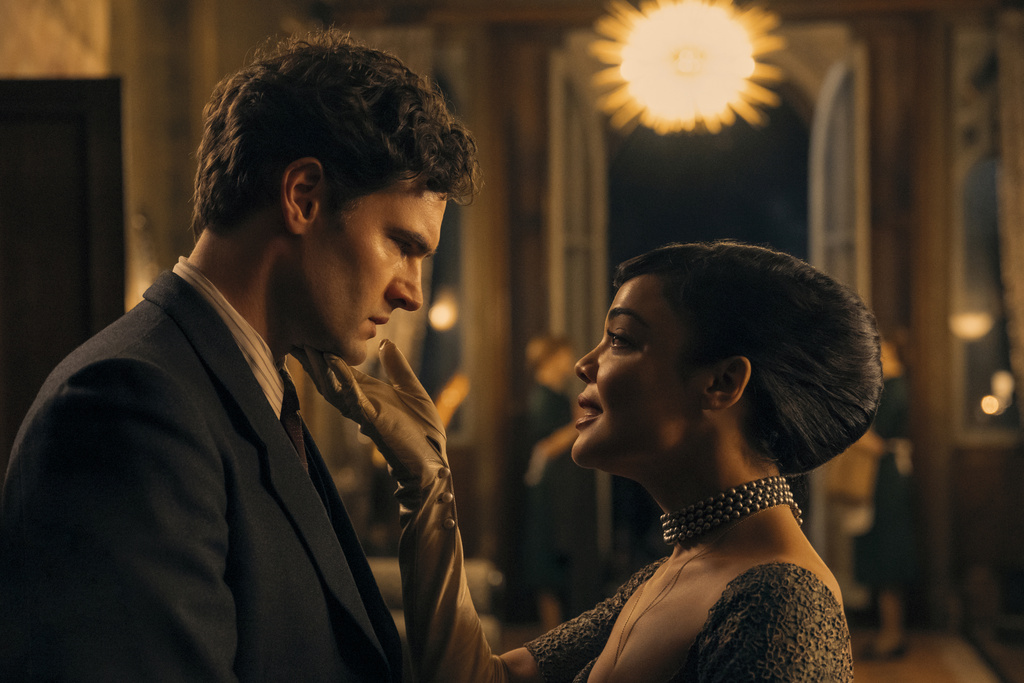
More than a decade after this initial encounter, and following the success of her Marvel Studios film “The Marvels,” DaCosta is set to premiere her adaptation of “Hedda” at the Toronto International Film Festival. The film, starring Tessa Thompson, is part of a long line of adaptations of the 1890 play, but DaCosta brings a fresh perspective to the story.
“Even though I love Hedda, she’s unforgivable and undefendable,” DaCosta says in an interview. “But she’s valid.” The film, which will be released in theaters on October 22 and stream on Prime Video a week later, shifts the setting from 19th-century Norway to 1950s England. However, this isn’t the most significant change DaCosta makes. She also wrote the script, reimagining the story with a new layer of complexity.
In DaCosta’s version, Hedda Gabler is queer, though not openly. She recently married George (Tom Bateman) out of convenience, on a whim. When they host a party at their sprawling mansion, Hedda artfully manipulates her guests over a single, calamitous evening filled with martini glasses, sharp quips, and more sinister threats.
Among the guests are Eileen Lovborg (played by the extraordinary German actor Nina Hoss), who is a former lover of Hedda’s and a character who, in the original play, is a man. In this adaptation, Lovborg arrives newly sober and ascendant in her career as a writer and professor, accompanied by a new girlfriend, Thea Clifton (Imogen Poots).
This creates a dynamic of competing portraits of women, all constrained by societal pressures and responding to their plight with varying degrees of honesty, courage, and tragedy.
“I wanted to center three women as opposed to it being Hedda and all of these men,” DaCosta explains. “Everyone tries to give Hedda a reason why she’s the way she is, but I’m like: Look at this other woman who has similar issues in terms of what she’s been told to do, how to live her life, marrying someone. Hedda hates that she’s done what she could never do.”
“For me, the question is: What happens to a woman? What’s womanhood?”
A Grand Role for Tessa Thompson
The film was one of the most anticipated premieres at TIFF, partly because it gives Tessa Thompson, the 41-year-old actor known for roles in “Creed,” “Passing,” and DaCosta’s 2018 directorial debut “Little Woods,” a grand and complex role.
“What Ibsen did really brilliantly at the time he was writing was paint a portrait of a woman who was stuck between a life that in some ways she chose and in some ways was chosen for her, a woman hemmed in by societal expectations, a woman hemmed in by her own fear of scandal,” Thompson says.
“And I think in our adaptation there are still colors of that,” she adds. “But what Nia has done brilliantly is to widen the story, especially in making Lovborg a woman in this case, too, so you really get a trifecta, a triangle, of these three women and you get to explore three different paths to female agency.”
A Filmmaker’s Journey
DaCosta, the filmmaker behind “Candyman” (2021) and the upcoming “28 Years Later: The Bone Temple,” has carved out a unique path in the film industry, resisting pigeonholing. She initially wrote a draft of “Hedda” in 2018 but waited until she had the clout to make it.
“I put it in a drawer,” she says. “Did ‘Candyman.’ Did ‘Marvels.’ ‘Marvels’ was supposed to be 22 months. It ended up being three and a half years.”
Making “Hedda” continued to be a passionate goal for DaCosta, a movie that in many ways she’s been building toward.
“I think a lot about what freedom looks like. Not just as an artist but as a person of color, as a Black person in America,” she says. “How do you live free? For me personally, as it relates to my career, I was very preoccupied with getting to a point where I’d be free enough to make what I want to make without a ton of interference, without compromising so much that it’s not my vision.”

Post a Comment for "A Bold Queer "Hedda" Makes Its Debut at TIFF"
Post a Comment