7 Powerful Malcolm X Quotes on Justice
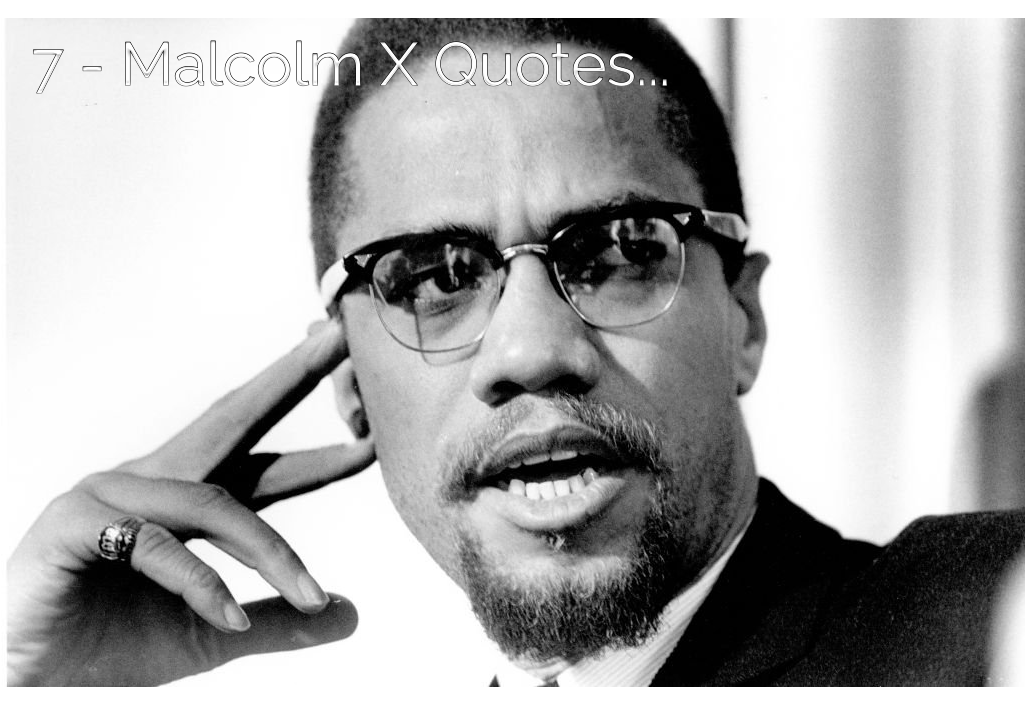
The Enduring Legacy of Malcolm X
Few voices in modern history echo with as much power, urgency, and raw honesty as that of Malcolm X. A man who rose from the margins of American society—scarred by racial violence, systemic poverty, and imprisonment—Malcolm transformed into one of the most unflinching truth-tellers of the 20th century. His speeches and writings not only confronted the hypocrisy of American democracy but also offered a radical rethinking of freedom, justice, and dignity.
Malcolm X’s words still resonate decades after his assassination in 1965, not because they belong to a bygone era, but because they pierce through the persistent realities of racial inequality, political corruption, and cultural erasure. His sharp critiques and fearless affirmations of Black identity and power remain central to debates on justice today. To revisit his quotes is to revisit timeless warnings and enduring wisdom. Below are seven quotes from Malcolm X that demand attention, each revealing layers of meaning that are just as relevant in the present as they were during his lifetime.
“You Can’t Separate Peace from Freedom”
This quote captures Malcolm X’s fundamental understanding of the inseparability of justice and tranquility. In a society where oppression exists, peace is only superficial—it is the silence of domination rather than the harmony of equality. Malcolm was speaking to the American tendency to emphasize “order” over justice, especially when confronting Black protests. To him, the peace promised by politicians and enforced by police was meaningless if Black people remained disenfranchised, segregated, and subject to daily violence.
Today, this insight remains strikingly relevant. Calls for “law and order” often ring louder than calls for justice, particularly when marginalized communities demand change. We hear echoes of Malcolm’s warning whenever peaceful protests are criticized for disrupting public life, while the underlying injustices sparking those protests remain ignored. His words remind us that peace is not merely the absence of conflict but the presence of justice.
The quote also challenges the modern notion of “peacekeeping” in global politics. Nations often claim to bring peace through military intervention, while denying the very freedoms of the people they say they are protecting. Malcolm’s logic forces us to rethink whether peace can ever be genuine if it is not rooted in liberation, whether abroad or at home.
At its heart, the statement underscores that peace without freedom is an illusion—a mask worn by systems that prefer compliance over equality. For Malcolm X, freedom was not negotiable; without it, all claims to peace were hollow.
“Education Is the Passport to the Future”
Malcolm X’s belief in education was not a call to conformity but a radical assertion of self-determination. Having educated himself in prison through relentless reading, he understood firsthand the power of knowledge to transform the mind and liberate the spirit. In this quote, he likens education to a passport—a tool for crossing barriers and entering new worlds of opportunity.
This message resonates deeply in a time when access to quality education is still uneven across racial and economic lines. The “passport” metaphor remains apt: students in underfunded schools are often denied the very preparation needed to navigate the global economy. To Malcolm, education was not merely academic but cultural and political, equipping individuals to resist systems designed to limit their potential.
In today’s world of rapid technological change, Malcolm’s statement feels prophetic. Those who embrace lifelong learning are better prepared to adapt, while those denied access are left behind. His vision suggests that education is not optional; it is the foundation of empowerment.
Perhaps most importantly, Malcolm reminds us that education is not just about survival within a system, but about reshaping the system itself. His words encourage marginalized communities to see learning as a weapon of resistance, a way to claim a future on their own terms.
“The Future Belongs to Those Who Prepare for It Today”
This quote, often paired with the one on education, broadens Malcolm’s vision of preparation beyond the classroom. For him, preparation meant readiness in every aspect—cultural, political, spiritual, and economic. The future is not a gift bestowed by those in power; it is seized by those who prepare themselves to lead.
This statement remains profoundly relevant in the context of community organizing and political activism. Movements for justice rarely succeed without years of groundwork: building institutions, educating the people, and creating a shared vision. Malcolm understood that preparation is the unseen labor that makes visible change possible.
In contemporary terms, this message speaks to the importance of building sustainable strategies rather than chasing quick victories. Social media can amplify voices overnight, but lasting progress demands preparation, education, and discipline—the very qualities Malcolm advocated.
Ultimately, the quote is a call to agency. It refuses fatalism and insists that the future is not determined by fate but by preparation. For those fighting for justice today, it serves as a reminder that every step of preparation is an investment in freedom.
“The Media’s the Most Powerful Entity on Earth”
Malcolm X was among the first leaders to expose the outsized influence of media on public perception. Long before the rise of digital platforms, he recognized how newspapers, television, and radio shaped narratives that justified oppression. By controlling images and stories, the media could distort reality itself—branding Black leaders as dangerous, framing police violence as justified, and masking systemic racism behind “objective” reporting.
This insight is even more urgent in today’s age of mass communication and social media. Misinformation spreads faster than ever, and corporate media often frames stories in ways that protect entrenched power. Malcolm’s words remind us that narratives are never neutral; they either reinforce the status quo or challenge it.
Consider how protests are often depicted. When Black Lives Matter demonstrations occur, coverage frequently emphasizes looting or disorder, while downplaying the systemic violence that inspired the protests. This mirrors the same distortions Malcolm railed against in the 1960s, showing how enduring his critique remains.
Malcolm’s quote challenges us to think critically about the stories we consume. If the media has the power to define guilt and innocence, then liberation requires reclaiming the power to tell our own stories. His words foreshadowed today’s battles over representation, truth, and accountability.
“We Declare Our Right on This Earth…”
Few phrases are as closely associated with Malcolm X as “by any means necessary.” This declaration is not a reckless endorsement of violence but a radical insistence on dignity. He was affirming that the struggle for freedom would not be bound by the comfort of oppressors. When peaceful demands were met with brutality, Malcolm argued that self-defense and self-determination were moral imperatives.
This stance continues to resonate because oppressed communities are often told to wait patiently for justice, to protest politely, and to negotiate endlessly. Malcolm’s phrase cuts through these expectations, insisting that human dignity cannot be indefinitely postponed. It challenges the moral double standard that condemns oppressed people for defending themselves while excusing the violence of the state.
The phrase also speaks to a broader philosophy of determination. “By any means necessary” is not only about defense but about persistence—the refusal to accept defeat or compromise when human rights are at stake. It is a rallying cry for those who understand that liberation requires courage and sacrifice.
In our present struggles, Malcolm’s words serve as both warning and inspiration. They remind us that history favors those who refuse to settle for half-measures. Justice must be secured, not begged for, and freedom must be demanded, not politely requested.

Post a Comment for "7 Powerful Malcolm X Quotes on Justice"
Post a Comment