Statistical Breakdown of NBA MVP Candidates
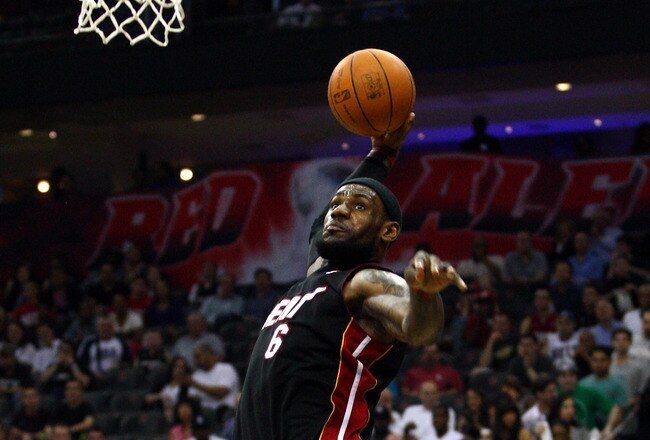
Statistical Standouts: Deconstructing the NBA MVP Race Through Numbers.
Hey there, basketball fanatics! Ever find yourself arguing with your friends about who deserves the NBA MVP trophy, armed with nothing but gut feelings and highlight reels? Yeah, we've all been there. It's like trying to pick the best pizza topping – everyone has their own (often strong) opinion. But what if we could move beyond the subjective and delve into the cold, hard numbers? What if we could trulydeconstructthe MVP race, stripping it down to the statistical bones?
The MVP award, that shining beacon of individual achievement, is often shrouded in mystery. Is it about pure stats? Team success? Narrative? Clutch moments? The answer, frustratingly, is usually "all of the above, but it depends." And that's precisely why a statistical breakdown is so valuable. It cuts through the noise, providing a foundation of objective data upon which to build our arguments (or, you know, settle those pizza topping debates).
Think of it this way: imagine you're trying to decide which car to buy. You wouldn't just go by looks alone, would you? You'd probably check the MPG, the horsepower, the safety ratings – the stats that tell a more complete story. The MVP race is no different. We need to look under the hood, examine the engine, and see what's really driving these players to greatness.
Now, I know what you might be thinking: "Stats are boring! I just want to see crazy dunks and game-winning shots!" And trust me, I get it. But the beauty of basketball is that even the most electrifying plays can be quantified. A soaring dunk increases a player's scoring efficiency. A clutch three-pointer elevates their win probability. It's all connected, and it's all trackable.
So, are you ready to dive deep into the numbers? To uncover the statistical truths behind the MVP candidates? To finally have the ammo you need to win those basketball debates once and for all? Then buckle up, my friends, because we're about to embark on a statistical journey that will change the way you look at the NBA's most prestigious award. Get ready to have your assumptions challenged, your biases exposed, and your basketball IQ elevated. Let’s get started!
Statistical Breakdown of NBA MVP Candidates
The NBA MVP award is one of the most coveted individual accolades in all of sports. While narratives and team success often play a role, the award is ultimately rooted in a player's statistical performance. Let's break down the key statistical categories and how they relate to the leading MVP candidates.
Key Statistical Categories for MVP Consideration
To truly understand the statistical landscape of the MVP race, we need to consider more than just points per game. Here's a breakdown of the essential metrics:
• Points Per Game (PPG): This is the most basic and widely recognized statistic. It reflects a player's scoring ability and overall offensive contribution. While not the only factor, a high PPG is almost always a prerequisite for MVP consideration. Think of it as the baseline – you gotta score to be in the conversation.
• Rebounds Per Game (RPG): Rebounding is crucial for controlling possession and limiting opponents' opportunities. A high RPG demonstrates a player's hustle, positioning, and overall impact on the glass. It's not just about grabbing boards; it's about securing extra possessions for your team.
• Assists Per Game (APG): This statistic measures a player's ability to create scoring opportunities for their teammates. A high APG indicates strong court vision, passing skills, and an unselfish playing style. It shows that a player isn't just focused on scoring themselves but is also making those around them better.
• Player Efficiency Rating (PER): PER is a comprehensive, per-minute rating developed by John Hollinger that takes into account a wide range of statistics, including points, rebounds, assists, steals, blocks, and turnovers. It attempts to summarize a player's overall contribution in a single number. It's a great tool for comparing players across different positions and eras.
• Win Shares (WS): Win Shares estimates the number of wins a player contributes to their team based on their individual statistics. It's a cumulative statistic, meaning it increases as the season progresses. A high Win Shares total indicates that a player is having a significant positive impact on their team's success.
• Box Plus/Minus (BPM): BPM is a box score-based metric that estimates a player's points per 100 possessions above the league average. It takes into account a player's offensive and defensive contributions, providing a more complete picture of their overall impact.
• Value Over Replacement Player (VORP): VORP estimates a player's total contribution to the team above what a replacement-level player would provide. It's a valuable tool for assessing a player's overall worth and impact on their team's success.
• True Shooting Percentage (TS%): TS% measures a player's shooting efficiency, taking into account field goals, three-pointers, and free throws. It provides a more accurate representation of a player's scoring ability than field goal percentage alone.
• Usage Rate (USG%): USG% estimates the percentage of team possessions a player uses while on the court. A high usage rate indicates that a player is heavily involved in the team's offense. It's important to consider usage rate in conjunction with other statistics to get a complete picture of a player's efficiency and impact.
Analyzing the Statistical Profiles of Current MVP Candidates
Now that we've outlined the key statistical categories, let's take a look at how the leading MVP candidates stack up in each area. Remember, these are just snapshots in time, and the numbers can change dramatically as the season progresses.
• Dominant Scorers: Look at players consistently at the top of the PPG list. Beyond just scoring, we'll examine their TS% to see how efficiently they're putting up those points. Are they relying heavily on free throws, or are they converting at a high rate from the field?
• All-Around Statistical Monsters: Some players stuff the stat sheet across multiple categories. We need to analyze RPG, APG, and even steals and blocks to assess their overall impact. These players often have high PER and Win Shares due to their well-rounded contributions.
• Efficiency Experts: Some players may not lead the league in scoring, but they excel in efficiency. We will use TS%, USG%, and BPM to evaluate their contributions. These players often make a significant impact without dominating the ball.
• Impact on Winning: Ultimately, the MVP award often goes to a player on a winning team. We'll look at Win Shares, VORP, and on/off court statistics to assess how much a player contributes to their team's success. Do their teams perform significantly better when they're on the floor?
Beyond the Box Score: Context Matters
While statistics are crucial, it's important to remember that they don't tell the whole story. Context is key. We need to consider factors such as:
• Team Performance: Historically, the MVP award almost always goes to a player on a team with a strong record. While individual brilliance is important, team success is often a prerequisite.
• Strength of Schedule: Playing against tougher opponents can impact a player's statistics. It's important to consider the strength of schedule when evaluating a player's performance.
• Injuries: Injuries can significantly impact a player's statistics and availability. A player who misses a significant portion of the season is unlikely to win the MVP award.
• Narrative: The "narrative" surrounding a player can also influence the MVP voting. This includes factors such as overcoming adversity, leading a team to unexpected success, or having a particularly compelling backstory.
Future Predictions: Using Stats to Forecast the MVP
Can we use statistics to predict the MVP winner? While it's not an exact science, we can certainly use data to identify potential frontrunners. By tracking the key statistical categories and considering the contextual factors mentioned above, we can get a sense of which players are most likely to be in the mix.
• Monitoring Rising Stars: We should keep an eye on players who are showing significant improvement in their statistics. A player who takes a major leap forward in their performance can quickly enter the MVP conversation.
• Adjusting for Regression: It's also important to be aware of potential regression. A player who is overperforming early in the season may not be able to sustain that level of performance.
• Predictive Models: Some analysts use advanced statistical models to predict the MVP winner. These models typically incorporate a wide range of statistics and contextual factors.
By combining statistical analysis with a deep understanding of the game, we can gain valuable insights into the NBA MVP race and make informed predictions about who is most likely to take home the coveted trophy.
Frequently Asked Questions
Got some burning questions about the statistical side of the MVP race? Let's tackle a few common queries.
• Question: Are points per game themostimportant stat for winning MVP?
Answer: While PPG is definitely important, it's not theonlyfactor. Efficiency, overall impact (measured by stats like Win Shares and VORP), and team success all play a role. A player averaging 35 points on a losing team might not be as valuable as a player averaging 28 points on a championship contender.
• Question: How much does team recordreallymatter for MVP consideration?
Answer: Historically, it matters a lot. It's rare for a player on a team with a losing record to win the MVP. Voters tend to favor players who are leading their teams to success. However, a truly exceptional individual performance on a slightly above .500 team could still be in the running.
• Question: Can a defensive-minded player ever win MVP?
Answer: It's tough, but not impossible. A defensive-minded player would need to be absolutely dominant on that end of the floor, while also contributing significantly on offense. They'd likely need to lead the league in steals or blocks and have a major impact on their team's defensive rating.
• Question: How do I use these stats to win arguments with my friends?
Answer: The key is to use the stats to support your overall argument, not just throw numbers around randomly. Explain why a particular statistic is relevant and how it demonstrates a player's value. And remember, it's all in good fun!
Conclusion
Alright, friends, we've reached the final buzzer on our statistical deep dive into the NBA MVP race! We've dissected the key metrics, analyzed the contenders, and explored the importance of context. Now, hopefully, you're feeling more equipped than ever to engage in those heated basketball debates with your friends, armed with knowledge that goes beyond just highlight reels and gut feelings.
Remember, the MVP award is a complex and often subjective decision. But by understanding the statistical landscape, we can gain a more objective perspective on which players are truly having the most impactful seasons. We've explored Points Per Game (PPG), Rebounds Per Game (RPG), Assists Per Game (APG), Player Efficiency Rating (PER), Win Shares (WS), Box Plus/Minus (BPM), Value Over Replacement Player (VORP), True Shooting Percentage (TS%), and Usage Rate (USG%), understanding that each plays a significant part in how we evaluate a player's contribution.
So, what's your next move? Don't just let this newfound knowledge gather dust! Dive into the latest NBA stats, track the progress of the MVP candidates, and form your own informed opinions. Share your insights with your friends, participate in online discussions, and become a more engaged and knowledgeable basketball fan.
I challenge you to pick one MVP candidate and track their key stats over the next few weeks. See how their numbers evolve, how their team performs, and whether their narrative strengthens or weakens. You might be surprised at what you discover!
The world of basketball is constantly evolving, and the MVP race is always full of surprises. By staying informed and engaged, you can become a true expert and contribute to the ongoing conversation about the game we all love.
Now go out there and dominate those basketball debates! And remember, even if your favorite player doesn't win the MVP, the journey of following the season and appreciating the incredible talent on display is a reward in itself. So keep watching, keep learning, and keep celebrating the game!
Ready to put your newfound statistical knowledge to the test? Which MVP candidate are you most excited to watch in the coming weeks?

Post a Comment for "Statistical Breakdown of NBA MVP Candidates"
Post a Comment