Zelensky Returns to Washington Amid Putin's Pressure
A Delicate Balance: Zelensky's Challenge in Washington
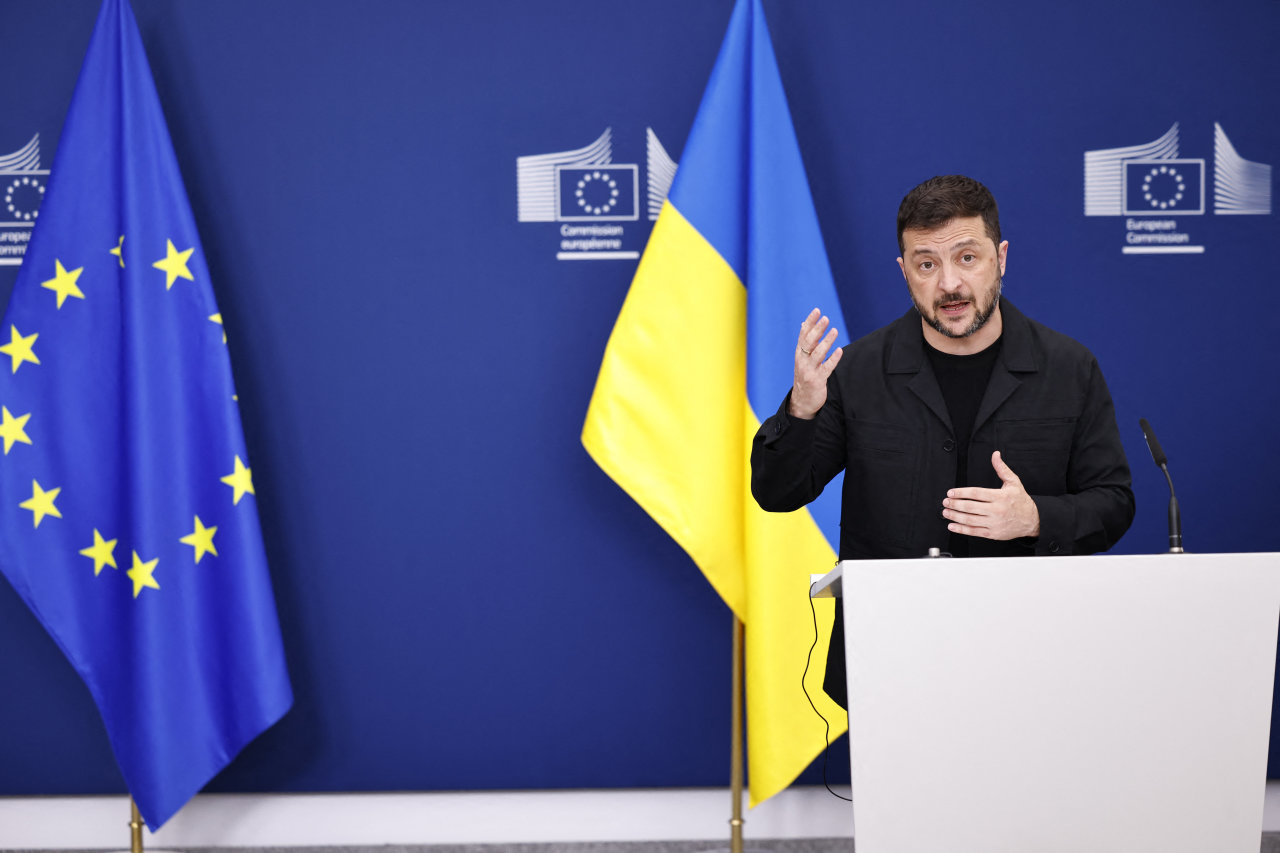
Ukrainian President Volodymyr Zelensky is set to return to the Oval Office, this time with a more complex set of challenges than he faced nearly six months ago. During his previous visit, Zelensky was asked to leave the White House after a tense televised confrontation with then-President Donald Trump over security guarantees for any peace agreement with Russia. Now, while the gap on security guarantees has narrowed, the chasm over Moscow’s territorial demands remains wide. This presents Zelensky with a difficult dilemma: how to maintain Trump’s support while responding to Russian territorial proposals that he feels compelled to reject.
Zelensky will not be alone in Washington. He will be accompanied by leaders from the United Kingdom, France, Germany, Italy, Finland, and the European Union. Additionally, NATO Secretary-General Mark Rutte, who has developed a personal rapport with Trump, will also attend the meeting. These allies underscore the importance of the upcoming discussions, as they aim to ensure a unified Western stance on Ukraine.
Despite these alliances, the diplomatic landscape remains fraught with challenges. While Trump administration officials have expressed renewed, albeit vague, support for providing security guarantees, the White House has abandoned its previous demand that Russian President Vladimir Putin agree to an immediate cease-fire or face harsher economic sanctions. This shift comes in the wake of Trump’s Alaska summit with Putin, raising the stakes for Ukraine and its European supporters.
The situation is further complicated by the recent drone attack on an apartment block in Kharkiv, which killed four people, including a child, and injured 17 others. This incident highlights the ongoing dangers facing Ukrainian civilians and underscores the urgency of finding a lasting solution.
One of the most contentious issues is Putin’s territorial demands, which include the possibility of exchanging territory within Ukraine to adjust the front line. Steve Witkoff, a special envoy, stated that it is up to Ukrainians to decide how they might engage in land swaps. However, many in Ukraine believe that Putin is attempting to drive a wedge between Kyiv and Washington by using negotiations with Trump to pressure Zelensky into making concessions.
Analysts like Kostyantyn Batozsky argue that Putin’s goal is not just territory but to weaken Ukraine’s position. Batozsky emphasized that Ukraine would continue to fight even if Trump walked away from the negotiations.
Under a deal outlined by Putin, Ukraine would surrender its eastern Donbas region, including parts of Donetsk that Ukrainian forces still control. In exchange, Russia would freeze the conflict along the current contact line in Zaporizhzhia and Kherson and give up some area in those regions. However, experts warn that ceding such defenses could create vulnerabilities for Ukraine militarily.
Acknowledging Russia’s legal sovereignty over the region is also a political and constitutional nonstarter for Zelensky. The Ukrainian Constitution forbids trading land, and such a matter could only be discussed in trilateral talks between Russia, Ukraine, and the U.S.
Polls show that a majority of Ukrainians oppose even territorial concessions to Russia after more than three years of full-scale war. However, the prospect of intensified U.S. economic leverage on Moscow in the near term is uncertain. Before the Alaska summit, Trump had threatened “very severe consequences” if Putin did not agree to end the war. But after Putin balked at a cease-fire, Trump shifted focus to forging a finished peace agreement.
Secretary of State Marco Rubio indicated that the threat of additional sanctions against Moscow would likely only come into play if efforts to forge a peace completely broke down. Accepting Russia’s de facto control of Ukrainian territory would be less of a burden for Zelensky if it came with U.S. security guarantees and did not involve a permanent redrawing of Ukraine’s borders.
The U.K. and France have proposed deploying troops as part of a “reassurance force” in western Ukraine if a peace agreement is reached. However, they seek a limited U.S. role, dubbed a “backstop” by British officials, to safeguard European forces should they be in danger. Military analysts suggest that this role could involve indirect support such as having U.S. Air Force fighters ready, providing air-defense systems, flying drones, sharing military intelligence, and transporting European troops and equipment.
Rubio emphasized that fleshing out the details of security guarantees will be a key topic during the meeting. Witkoff suggested that the guarantees could be modeled on NATO’s principle of collective defense, though they would be issued by individual countries rather than NATO itself.
Zelensky, who has sought to repair his relationship with Trump through meetings at the Vatican and the NATO summit, will be joined by European leaders who have navigated the unpredictable White House. Zelensky thanked them for their support, stating on X: “It’s necessary to cease fire and work quickly on a final deal. We’ll talk about it in Washington, D.C. Putin does not want to stop the killings. But he must do it.”

Post a Comment for "Zelensky Returns to Washington Amid Putin's Pressure"
Post a Comment