Zach Cregger's Horror Mastery Shines in 'Weapons'
The Rise of Zach Cregger: A New Voice in Horror
Zach Cregger has made a name for himself as a writer and director who brings fresh, terrifying stories to the horror genre. His second feature film, Weapons, recently hit theaters and quickly became a standout in the world of horror. Much like other original horror films released this year, it has received both critical acclaim and commercial success, with a strong opening weekend at the box office and glowing reviews from critics. Given that this is only his second film, it’s impressive how Cregger has managed to captivate audiences with two distinct yet equally chilling movies.
Both Barbarian and Weapons showcase a consistent storytelling technique that sets them apart from traditional horror films. This technique involves drastic shifts in perspective and point of view (POV), which provide new insights into the story and often subvert audience expectations. While most films maintain a singular external perspective, allowing viewers to act as passive observers, Cregger thrives on chaos. He structures his films in a way that keeps audiences on edge, using unreliable narration or introducing new characters late in the game to create tension and uncertainty.
Barbarian: A Masterclass in Perspective Shifts
One of the standout elements of Barbarian is the dramatic shift in perspective halfway through the film. For the first half of the movie, viewers are introduced to Tess (played by Georgina Campbell), a woman who rents an Airbnb that is also occupied by Keith (Bill Skarsgård). Their friendship develops, but strange events begin to unfold in the house. The typical three-act structure usually features a major twist at the midpoint, and in Barbarian, that twist comes in the form of a monstrous older woman living beneath the house who kills Keith.
At first, viewers expect Tess to be the protagonist fighting for survival, but the film takes a sharp turn when the story shifts to AJ (Justin Long), an actor in Los Angeles facing sexual assault allegations. This unexpected change in perspective leaves audiences questioning where the story is heading and why they’re following a narrative that seems disconnected from what they’ve just witnessed. However, Cregger’s screenplay carefully connects the dots, making the return to the house feel all the more intense.
Eventually, it’s revealed that AJ is the owner of the property and completely unaware of what happened in the house. This clever use of perspective allows the audience to see what AJ is walking into, a technique that Cregger later uses in Weapons. By the time everything comes together in the third act, Tess and AJ’s stories collide in a powerful and emotionally resonant conclusion. Barbarian not only delivers scares but also offers commentary on themes such as the abuse of power, the long-lasting effects of trauma, and the ongoing relevance of the #MeToo movement.
Weapons: Expanding the Horrific Narrative
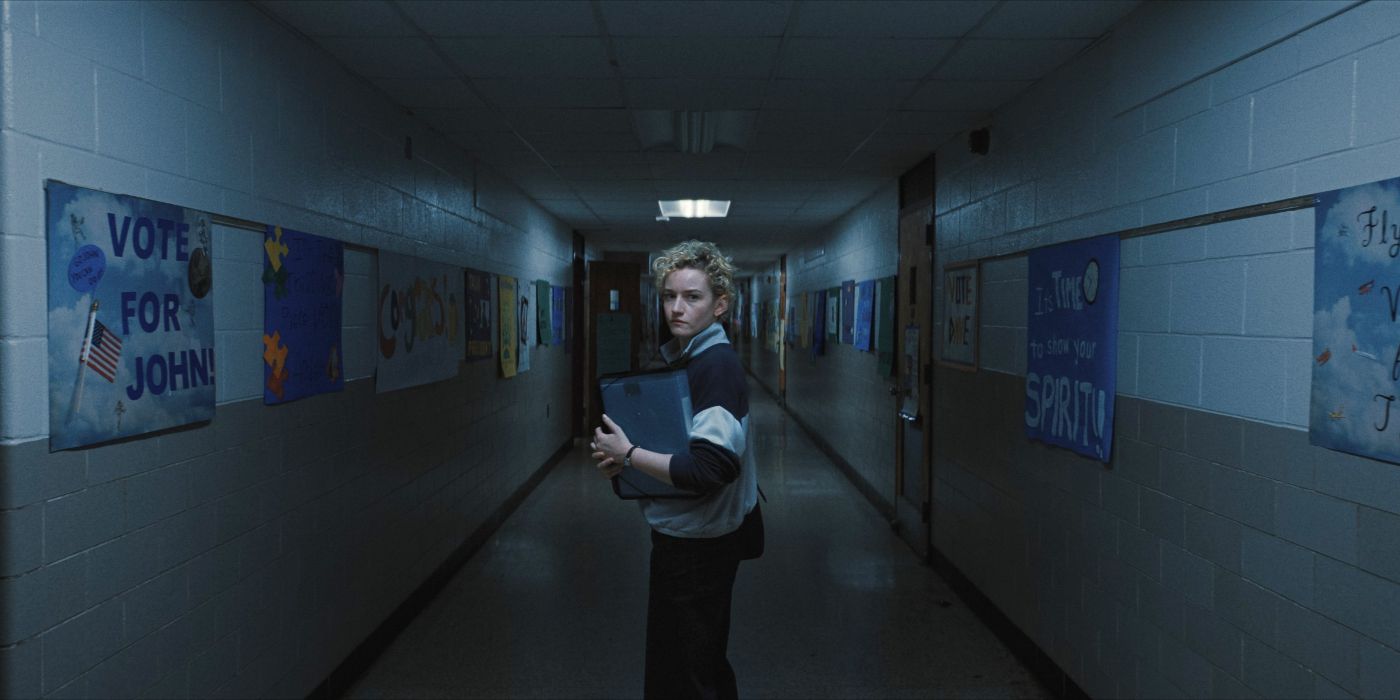
After the impact of Barbarian, it was no surprise that Weapons became one of the most anticipated horror films of the year. The film tells the story of a small town affected by a mysterious traumatic event: one night at 2:17 AM, every child except one from Ms. Justine Gandy’s class disappears. From the start, the film introduces an eerie mystery, and then gradually reveals the perspectives of each main character, like pieces of a puzzle.
Title cards display the names of the characters, signaling perspective shifts and preparing viewers for the narrative changes. The nonlinear storytelling is taken to an even more extreme level than in Barbarian, but it still works effectively. As the film progresses, the point of view shifts during moments of horror, creating anxiety and keeping viewers invested in what happens next.
For example, a lock of Justine’s hair is cut in her sleep before the story shifts to Archer (Josh Brolin), the father of one of the missing children. Other characters, including a local cop, a school principal, and a homeless drug addict, each get their own chapter in the film. These overlapping stories provide context or raise new questions, building suspense and intrigue.
The Ending of Weapons: Completing the Puzzle
The ending of Weapons feels like the missing piece of a twisted puzzle. Just as AJ’s story intersects with Tess’s in Barbarian, Alex, the only student who didn’t disappear, serves as the final piece that completes the picture. Cregger’s script masterfully juggles multiple characters, using each to convey different ways of processing grief while maintaining a high level of tension and jump scares.
By employing alternate angles of the same scenario, Cregger demonstrates his mastery over the horror genre. The result is a satisfying film that utilizes its ensemble cast to its fullest extent. While Cregger has mentioned that his next project, Resident Evil, will be unlike his previous work, fans can take comfort in knowing that he has already established a strong foundation in the horror genre.
With his effective use of alternating points of view, Weapons delivers intense thrills and suspense that stand out among recent horror films. Perspective plays a crucial role in the horror genre, and Cregger’s expert handling of it proves his deep understanding of what it takes to engage and terrify an audience. Weapons is now in theaters, offering a compelling and unforgettable experience for horror fans.

Post a Comment for "Zach Cregger's Horror Mastery Shines in 'Weapons'"
Post a Comment