Young Adults Disengage From Politics, AP Poll Reveals
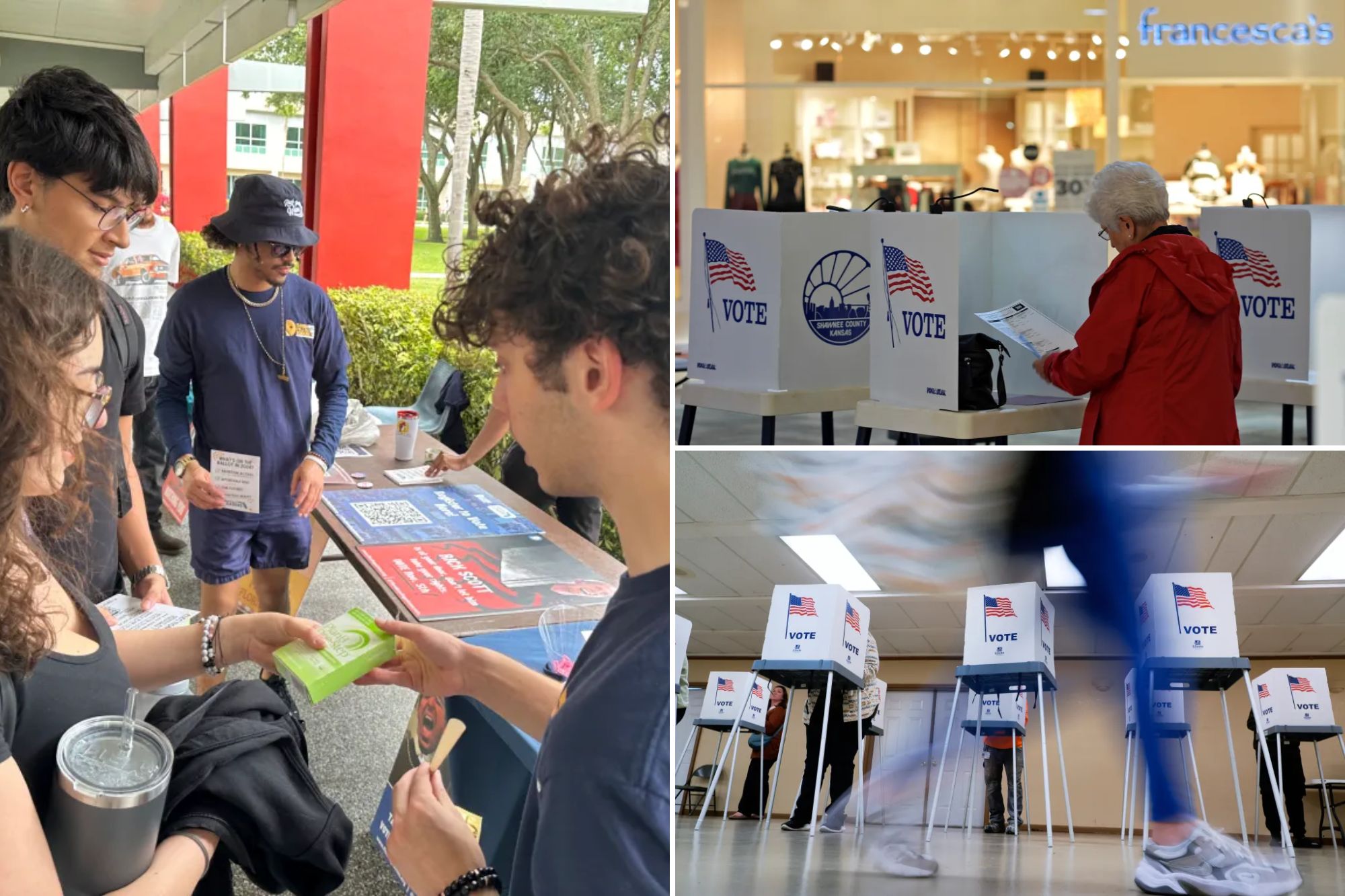
Young Americans and the Political Landscape
Mairekk Griffiths, a 26-year-old cook in a Denver suburb, doesn’t believe he will ever be deeply involved in U.S. politics unless there is a significant shift in the political landscape. “If another party was likely to win, I’d be interested in that,” he said. While he voted for Democrat Kamala Harris in last year’s presidential race, like many of his peers, he doesn’t view voting as particularly impactful.
“I can’t say either way that voting matters,” Griffiths explained. “It’s just picking the least bad option. That’s what I remember my whole life — both sides are bad, but this side is less bad.” This sentiment reflects a broader trend among young people, who are generally less engaged with U.S. politics than older Americans and less likely to see voting as crucial.
According to a new poll by The Associated Press-NORC Center for Public Affairs Research, younger individuals tend to have a more skeptical view of the political system. Even those who follow politics closely are less likely to consider issues such as the economy, government spending, and healthcare as extremely important compared to their older counterparts.
Disengagement from Politics
A key indicator of this disengagement is the growing number of young adults who reject traditional political party labels. About one-third of adults under 30 identify as political independents, compared to only 17% of Americans aged 60 or older. This trend highlights a general estrangement from the political process.
The poll also shows that young people are far less likely to follow politics closely than older adults. Only about 2 in 10 adults under 30 say they follow U.S. politics “extremely” or “very” closely, compared with about one-third of Americans overall. Among those aged 60 or older, 45% report following politics very closely.
For teenagers, the disengagement is even more pronounced. An AP-NORC poll from May found that 44% of teens ages 13 to 17 report following U.S. politics “not very closely” or “not closely at all.”
Despite this, about two-thirds of adults under 30 say it’s “extremely” or “very” important to vote, compared with almost 9 in 10 over age 45 who say it’s at least “very” important to vote.
Shifts in Engagement Over Time
Some of these habits may change as people grow older. Historically, younger people are less likely to vote than older individuals, and voter participation tends to increase with age. It’s possible that engagement with politics could follow a similar pattern.
Brittany Diaz, 28, is an exception to the norm. She follows politics closely because her 7-year-old son is fascinated by the news. Diaz, a Republican living in an Albuquerque suburb, acknowledges she is unusual among her age group. She began paying attention to politics when she had her first child at 20.
“Now that I have kids, I’m like, ‘I need to care,’” she said. However, women in her age group are less likely than young men to follow U.S. politics closely. About one-quarter of men under 30 say they follow politics “extremely” or “very” closely, compared with 16% of women in the same age group. Nearly 4 in 10 young women say they follow U.S. politics “not very closely” or “not closely at all,” compared with about a quarter of young men.
Lower Investment in Key Issues
On some issues, such as the economy and health care, the divide between the youngest and oldest Americans isn’t large. About 8 in 10 Americans under 30 say the economy is “extremely” or “very” important to them, compared with about 9 in 10 Americans age 60 or older.
However, older adults are much more likely to consider topics like immigration and government spending as extremely important. This is also true for issues such as the situation in the Middle East, which has become a rallying cry for young activists since the Israel-Hamas war broke out. Only about 4 in 10 adults under 30 say this is highly important to them personally, compared with about 6 in 10 Americans age 60 or older.
For some, this lack of interest could be linked to a sense that the political system does not respond to their needs. At 18, Blake Marlar is just beginning to pay attention to politics. As Trump’s tax cut and spending bill moved through the Republican-controlled Congress, the aspiring geology major at the University of Nebraska emailed his state’s two senators, both Republicans, objecting to its Medicaid cuts and increases in immigration enforcement funding.
“They didn’t seem to take me seriously,” Marlar said. “While I recognize they have to represent the whole state and the whole state doesn’t agree with me, it could have been a different experience.” Despite this, he remains determined to stay involved: “In the future,” he said, “I’ll do my part and vote.”

Post a Comment for "Young Adults Disengage From Politics, AP Poll Reveals"
Post a Comment