X-38B Spaceplane Readies for Eighth Secret Mission
U.S. Space Force to Launch X-37B for Eighth Mission
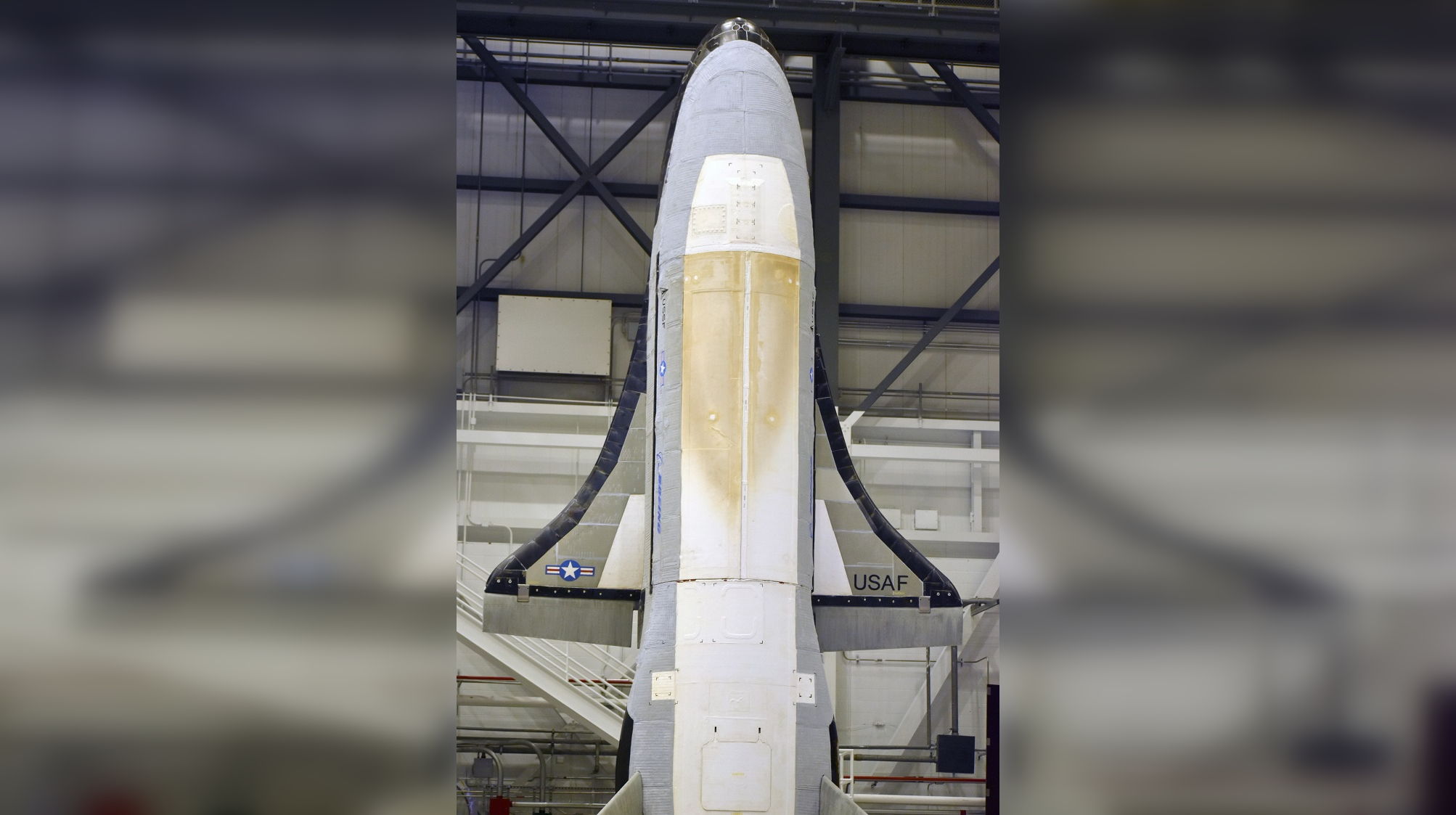
The U.S. Space Force has announced plans to launch the X-37B Orbital Test Vehicle (OTV-8) on August 21, 2025, from Kennedy Space Center in Florida. This mission marks the eighth flight of the X-37B and is being conducted in collaboration with several key organizations, including the Department of the Air Force Rapid Capabilities Office (DAF RCO), the Air Force Research Lab (AFRL), and the Defense Innovation Unit (DIU). The launch will take place aboard a SpaceX Falcon 9 rocket designated as USSF-36.
The X-37B spaceplane, developed by Boeing, recently completed its seventh mission, OTV-7, which lasted 434 days in orbit. This mission, known as USSF-52, was the fourth flight of the second X-37B and was launched atop a Falcon Heavy rocket into a Highly Elliptical Orbit. The new mission, OTV-8, will focus on testing next-generation technologies, including laser communications and advanced quantum inertial sensors.
Laser Communications Demonstrations
One of the primary objectives of OTV-8 is to conduct laser communications demonstrations using proliferated commercial satellite networks in Low Earth Orbit (LEO). LEO refers to orbits below 1,200 miles (2,000 km) above the Earth’s surface. While the specific commercial satellite network has not been disclosed, potential candidates include SpaceX’s Starlink and Starshield, the latter being a military variant of the former. These satellites are equipped with inter-satellite laser communication terminals and already support government operations.
Laser communications offer significant advantages over traditional radio frequency transmissions, including higher data transfer rates, improved security, and reduced power requirements. However, they also present challenges due to the high speeds of satellites in LEO, which limit the time available to establish and maintain a laser link. The Space Force emphasized that these demonstrations will enhance the resilience of U.S. space architectures by ensuring redundancy and eliminating single points of failure.
Gen. Chance Saltzman, Chief of Space Operations, highlighted the importance of this demonstration, stating that it will mark a critical step in leveraging proliferated space networks for diversified and redundant space architectures. This effort aims to strengthen the resilience, reliability, adaptability, and data transport speeds of U.S. satellite communications.
Quantum Inertial Sensor Testing
Another key component of OTV-8 is the demonstration of the world’s highest-performing quantum inertial sensor ever tested in space. This technology allows for accurate unaided navigation by detecting rotation and acceleration of atoms without relying on satellite networks like GPS. This capability is especially important given recent reports of GPS signal jamming in conflict zones, such as around Ukraine, which has affected satellites up to 1,200 miles above the Earth's surface.
Quantum inertial sensors provide an alternative to GPS, offering robust navigation capabilities in GPS-denied environments. They leverage the stable properties of atoms and subatomic particles for atomic accelerometers or gyroscopes, making them invulnerable to GPS jamming. Col. Ramsey Horn, commander of Space Delta 9, noted that this technology is essential for navigating beyond Earth-based orbits in cis-lunar space and for long-distance space travel.
About the X-37B Orbital Test Vehicle
The X-37B is a secretive, unmanned spaceplane designed to test new technologies and push the boundaries of reusable spacecraft. Originally developed by NASA and later transferred to the military, the X-37B has conducted classified missions for years, sparking speculation about its true purpose. The vehicle is launched vertically on a rocket, spends months or even years in orbit, and then lands like a conventional aircraft.
The program began in 1999 under the name X-37, with initial development by NASA. In 2004, the project was transferred to DARPA, which tested a smaller version called the X-40A. Although NASA’s original vision for an X-37 Orbital Vehicle never materialized, the design laid the foundation for what became the Air Force’s X-37B. Over the years, the X-37B has tested various technologies, including advanced thermal protection systems, autonomous flight controls, and potential propulsion methods.
The upcoming OTV-8 mission continues this legacy of innovation, aiming to enhance the resilience and flexibility of U.S. orbital systems while advancing the future of space exploration.

Post a Comment for "X-38B Spaceplane Readies for Eighth Secret Mission"
Post a Comment