Why the Fantastic Four Films Keep Misrepresenting Doctor Doom
The Struggles of Adapting Doctor Doom in Live-Action
The 2015 "Fantastic Four" film was a major disappointment for many comic book fans, particularly when it came to the portrayal of one of Marvel’s most iconic villains: Doctor Doom. Back in 2015, I read an article by writer Richard Newby on Audiences Everywhere that highlighted a persistent issue—while many comic book fans consider Doom their favorite villain, few moviegoers share that sentiment. This gap still exists today, and it's clear that bringing Doom to the big screen has been a challenge.
It's been 25 years since "X-Men" launched the superhero movie boom, yet we've still not seen a truly great live-action depiction of Doctor Doom. While there have been successful animated adaptations, the "Fantastic Four" films have struggled to capture the essence of this complex character. The 1994 version, which was never released, featured Joseph Culp as Doom, but the 2000s and 2015 films also failed to do justice to the character.
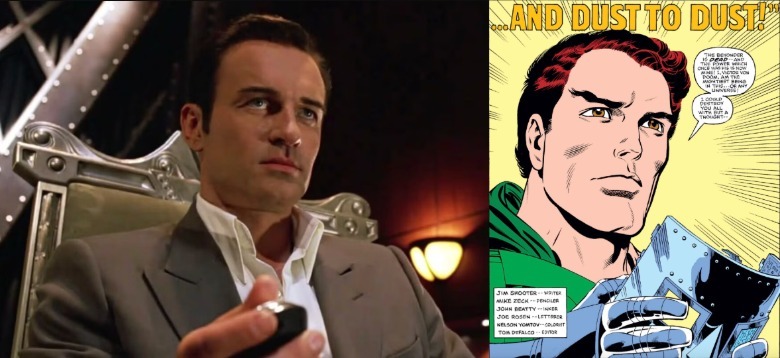
Julian McMahon's portrayal of Doom in the 2000s films was praised by some, but I found his performance lacking. He played Doom as smarmy and arrogant rather than theatrical. His portrayal lacked the depth and brilliance that makes Doom such a compelling villain. In the third act of "Fantastic Four," his transformation into a super-villain felt forced and unconvincing, reminiscent of a cheesy game of Marco Polo.
Even though the 2000s films got the costume right, the 2015 version had a disastrous take on Doom's look, with Toby Kebbell appearing wrapped in tinfoil and trash bags. The upcoming "Fantastic Four: First Steps" included a post-credits scene featuring Robert Downey Jr. as Doom, sparking hope that this time the character would be portrayed accurately.
Previous "Fantastic Four" movies have made the same mistake of trying to change Doom too much. In the comics, Doom is a perfect super-villain, with a Shakespearean complexity that deserves to be honored. He is a layered character who schemes and soliloquizes like Richard III, and his costume is a key part of his identity. Translating this into live-action risks making his monologues seem silly rather than captivating.
Doctor Victor von Doom was born to a Romani tribe in the fictional European country Latveria. His father, Werner, was a doctor, and his mother, Cynthia, was a witch. Doom follows in both their legacies, becoming a scientist and sorcerer. With genius and determination, he rose from childhood persecution to become the ruler of Latveria, driven by a desire to save the world in his own way.
Doom's main goal is to destroy the Fantastic Four. As a student at Empire State University, he was an unfriendly colleague of Reed Richards. Victor tried to build a machine to contact his mother's soul, but Reed warned him it wasn't ready. When Victor used the machine, it exploded, leaving him scarred and leading to his mask. He blames Reed for sabotaging his invention, believing he made a mistake and that Richards knew better.
Doctor Doom is a perfect recipe for a super-villain, combining science, sorcery, and a deep sense of vengeance and jealousy. However, previous films have often overlooked these elements, instead focusing on making him more relatable. This approach diminishes his character and reduces him to a supporting player in someone else's story.
Tying Doom's origin to the Fantastic Four's is a mistake. It undermines his pathos and makes him seem less formidable. Giving him powers through accidents or scientific experiments also lowers his status. It's essential that Doom stands toe-to-toe with the Four without relying on superpowers, showcasing his self-made brilliance.
Another recurring issue is showing Doom's face. Once he puts on the mask, he should never be seen without it. The mask represents the man he has become and his isolation from the world. Some writers, including Jack Kirby, have suggested that Doom only has a small scar, but he hides it due to his perfectionism. Seeing him without the mask removes that ambiguity.
Additionally, previous films have often portrayed Doom as infatuated with Sue Storm, reducing her to a prize in a tug of war between two men. This detail makes his grudge with Reed seem petty and undermines the depth of his character.
With the MCU's upcoming "Avengers: Doomsday," there's hope that the portrayal of Doom will finally get it right. Marvel Studios is already repeating a mistake by casting Robert Downey Jr. without showing his face, but the inclusion of magic and science in the franchise offers a promising avenue for Doom's story.
If the MCU can avoid the pitfalls of past films and honor the complexity of Doctor Doom, it could finally bring this iconic villain to life in a way that satisfies both comic book fans and moviegoers alike.

Post a Comment for "Why the Fantastic Four Films Keep Misrepresenting Doctor Doom"
Post a Comment