Why the Dream Chaser Spaceplane Faces Ongoing Delays
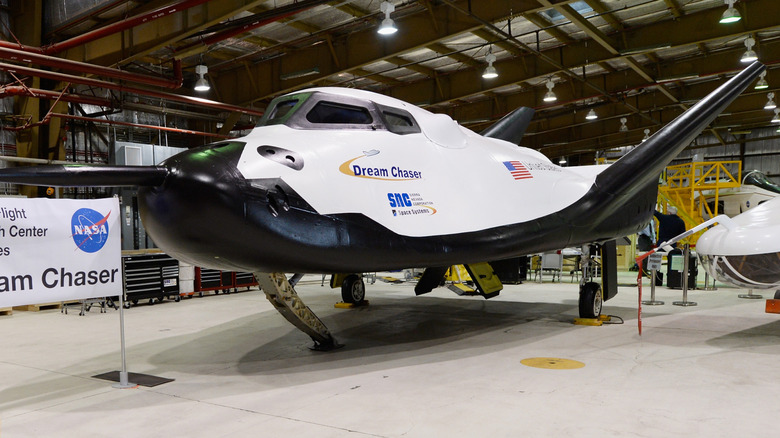
The Dream Chaser: A New Era in Space Travel
The Dream Chaser is the result of a collaborative effort between NASA and the private company Sierra Space. This innovative spacecraft is designed to be reusable, enabling multiple trips to and from Earth and the International Space Station (ISS). Its primary function is to transport cargo to and from the ISS, making it a vital asset for future space missions.
Development and Delays
Since its inception in 2004, the Dream Chaser has been in development, with an initial target launch date set for the autumn of 2024. However, this timeline has faced repeated delays, and there is currently no official date for its maiden voyage. Such setbacks are not uncommon in the aerospace industry, as seen with other projects that have struggled with technical challenges and schedule changes.
One notable example is China's mysterious space plane, which was spotted in orbit in 2024 but provided little information about its capabilities or timeline. This highlights the complexities involved in space exploration, where secrecy and technical hurdles often go hand in hand.
Technical Challenges
Several factors are contributing to the Dream Chaser's delayed launch. One significant issue is the use of a new propulsion system that requires extensive testing and certification. Unlike traditional systems, the Dream Chaser will utilize a mix of kerosene and hydrogen peroxide, avoiding the toxicity associated with hypergolic propellants. This system must be fully functional, tested, and certified before the spacecraft can proceed with any launches.
Additionally, NASA has increased its flight software testing requirements following the Boeing Starliner fiasco. This incident involved astronauts being stranded in space for nine months due to technical issues, including problems with the flight software. As a result, the Dream Chaser is undergoing additional safety tests and approvals, which have slowed down its progress.
Launch Vehicle Uncertainty
Another challenge is the availability of the launch vehicle for the Dream Chaser. The spacecraft is scheduled to use the Vulcan rocket, which was originally planned for the 2024 launch date. However, with the delay, the Vulcan's availability is now in question. The rocket has a busy schedule, with commitments to the U.S. Space Force, making it difficult to align schedules for both the Dream Chaser and the Vulcan.
Future Prospects
Despite these challenges, Sierra Space remains committed to launching the Dream Chaser as soon as it is safe to do so. In January 2025, the company successfully completed Joint Test 10B, which included cargo such as a cryogenic preservation system, a powered ascent utility locker, and NASA's single stowage locker. This test demonstrated the Dream Chaser's capability to handle specialized payloads, including vital scientific research.
Pablo Gonzalez, Vice President of Crew and Cargo Transportation Systems at Sierra Space, highlighted the significance of the test, stating, "Tests like these are critical demonstrations of the capabilities of the Dream Chaser spaceplane and confirms our ability to handle specialized payloads such as vital scientific research that will be integral to our mission to the ISS ... it brings us another step closer to launch."
Conclusion
The Dream Chaser represents a potential breakthrough in space exploration once it achieves its first launch. However, as seen with the Boeing Starliner, ensuring safety and reliability should take precedence over rushing a launch. With ongoing efforts to address technical challenges and secure launch opportunities, the Dream Chaser continues to move closer to its historic debut.

Post a Comment for "Why the Dream Chaser Spaceplane Faces Ongoing Delays"
Post a Comment