Why Do Tow Trucks Display 'Not For Hire' Signs?
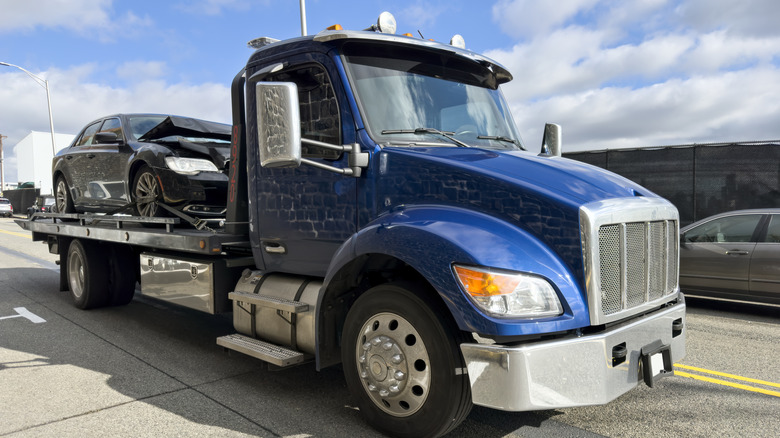
Understanding the "Not for Hire" Sign on Tow Trucks
Have you ever seen a "not for hire" sign on the side or rear of a tow truck and wondered what it means? This sign serves an important purpose: it informs the public that the vehicle is not used for commercial purposes. These trucks are typically owned and operated by businesses that transport their own goods, such as a construction company moving materials or a car dealership delivering new vehicles to its lot. While the transportation supports business operations, it is not offered as a service to the general public.
The Code of Federal Regulations (CFR) defines a for-hire motor carrier as an individual or entity that transports goods or passengers in exchange for compensation. In contrast, a private motor carrier performs similar tasks but without receiving payment. According to the CFR, services provided by a private motor carrier of passengers for business are "not available to the public at large." In this context, compensation refers to money received from external clients. However, the definitions do not clearly explain the technical differences between the two types of carriers.
One key distinction is that for-hire trucks must secure operating authority or a license from the Federal Motor Carrier Safety Administration (FMCSA). Private motor carriers are not required to obtain such licenses, though they still need to comply with safety standards, including regular truck maintenance inspections.
Other Differences Between For-Hire and Not-For-Hire Trucks
Beyond the licensing requirements, there are several other differences between for-hire and not-for-hire trucks. The "not for hire" sticker helps the Department of Transportation (DOT) officers quickly determine which set of rules applies to a towing vehicle crossing state lines. Since private trucks do not engage in commercial operations, they are generally subject to less stringent regulations compared to for-hire vehicles.
Some states have more lenient enforcement policies for not-for-hire towing vehicles. For example, in Indiana, a driver operating a private motor carrier within the state only needs a commercial driver's license (CDL) if the combined weight of the towing truck and the towed vehicle exceeds 26,000 pounds. For-hire carriers, on the other hand, are required to have a CDL when their gross combined weight exceeds 10,000 pounds. This difference highlights the importance of understanding the weight limits and how they relate to the vehicle's payload and towing capacity.
Another significant difference lies in insurance requirements. Private towing trucks are not required to maintain commercial auto liability insurance unless they transport hazardous materials. This means that their drivers are not liable for the cargo or the vehicles they transport in case of an accident, as they are only moving property owned by the business. For-hire trucks, however, are mandated to carry liability coverage to protect against financial losses in the event of damage or injury during transport.
What the Sign Means for Pedestrians
If you find yourself in a roadside emergency and a tow truck with a "not for hire" sign is nearby, you should not expect the driver to assist you. The sign clearly indicates that the vehicle is used solely for internal purposes by the private entity that owns it. It is not authorized to provide commercial towing services to the public, and offering payment to the driver would not change this, as towing your car falls outside the truck’s designated use.
Additionally, private towing vehicles often do not display a phone number on their exterior for a reason. Commercial tow trucks are generally required to show their USDOT number, company name, city of origin, and a contact number on the vehicle’s body. Private tow trucks are allowed to omit the city and phone number as long as they prominently display a "not for hire" sign for pedestrians to see.
Understanding the significance of the "not for hire" sign can help clarify the roles of different types of tow trucks and the regulations that govern them. Whether you're a driver, a business owner, or simply a curious observer, knowing these distinctions can provide valuable insight into the world of transportation and logistics.

Post a Comment for "Why Do Tow Trucks Display 'Not For Hire' Signs?"
Post a Comment