Why Coco Gauff's Second Serve Fails So Often
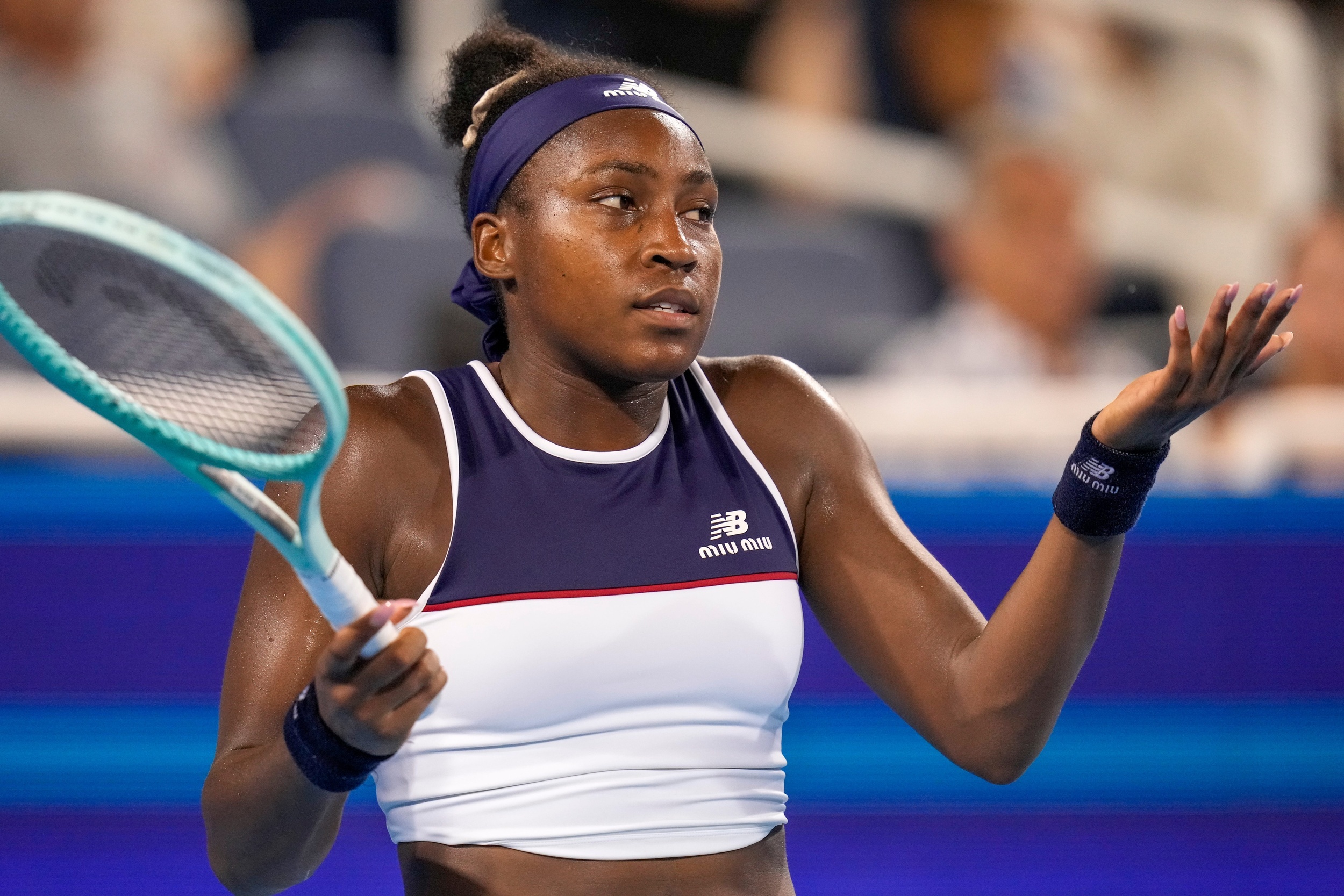
The Struggles of Coco Gauff's Serve
Coco Gauff, the American tennis star who made headlines by winning her first Roland Garros title in June, has faced a challenging period since then. Her performance has dipped, particularly after being eliminated in the Cincinnati quarter-finals. This has led to increased scrutiny over one key aspect of her game—the reliability of her serve.
Gauff’s grass court campaign was brief and disappointing, with losses in Berlin and Wimbledon. She tried to recover at the Canadian Open, where she managed to defeat fellow American Danielle Collins and Veronika Kudermetova. However, her progress came to an abrupt halt when she faced 18-year-old Victoria Mboko, who not only defeated her but also went on to win the tournament, drawing widespread attention from the tennis world.
With the U.S. Open approaching, Gauff needed a strong run to prepare for the Grand Slam where she claimed her first title as a 19-year-old. She advanced past Xinyu Wang and Lucia Bronzetti, though her performance in these matches was far from consistent.
A Troubling Trend in Serving
One significant issue that emerged during these matches was Gauff’s serving. In her victory over Wang, she recorded eight double faults, which was only the beginning of a troubling trend. In the quarter-final loss to Jasmine Paolini, she hit 16 double faults—a repeat of her performance in the Rome final earlier this year. The match featured 14 breaks of serve, with Paolini ultimately prevailing due to Gauff’s inconsistent serving.
This problem is not isolated. Throughout the season, Gauff has struggled with her second serve. She has recorded 293 double faults this year, averaging 6.11 per match. According to Sliding Backhand on X, she has played 19 matches where 10% of the points on her serve ended in a double fault. This issue has become more frequent, with 12 such instances in the last 17 matches.
Looking back at last year, Gauff’s serving problems were even more pronounced. She hit 430 double faults, ranking fourth in WTA history. Only Jelena Ostapenko, Marion Bartoli, and Camila Giorgi had higher totals. Gauff also led the tour in double faults, with 250 instances in 41 matches—57 more than the next player.
The Root of the Problem
So, what is causing Gauff’s unreliable serve? Part of the issue lies in her technique. Her preparation for the serve is inconsistent, whether due to a poor ball toss or improper racquet timing. Additionally, her body movement during the serve is not optimal, making it difficult for her to rotate properly or position her feet correctly.
Mental factors may also play a role. Gauff is acutely aware of her mistakes, which can lead to added pressure and further errors. This cycle of self-doubt and tension could be exacerbating the problem.
Despite these challenges, Gauff has shown that she can still compete at the top level. At the Roland Garros final, she hit eight double faults but still won 50% of her second service points. She went on to claim the title. Even last year, despite her serving issues, she reached the WTA finals and remains ranked number two in the world.
Looking Ahead
For Gauff, the key now is to find a way to improve her serve. If she continues to face players like Paolini, her results could suffer. As she prepares for the U.S. Open, addressing these issues will be crucial to maintaining her dominance on the court.
Tennis fans are watching closely, hoping to see Gauff return to her best form. With the right adjustments, she has the potential to once again prove herself as one of the sport’s top players.

Post a Comment for "Why Coco Gauff's Second Serve Fails So Often"
Post a Comment