What to Expect—and What Not To—at the Israel-Palestine UN Summit
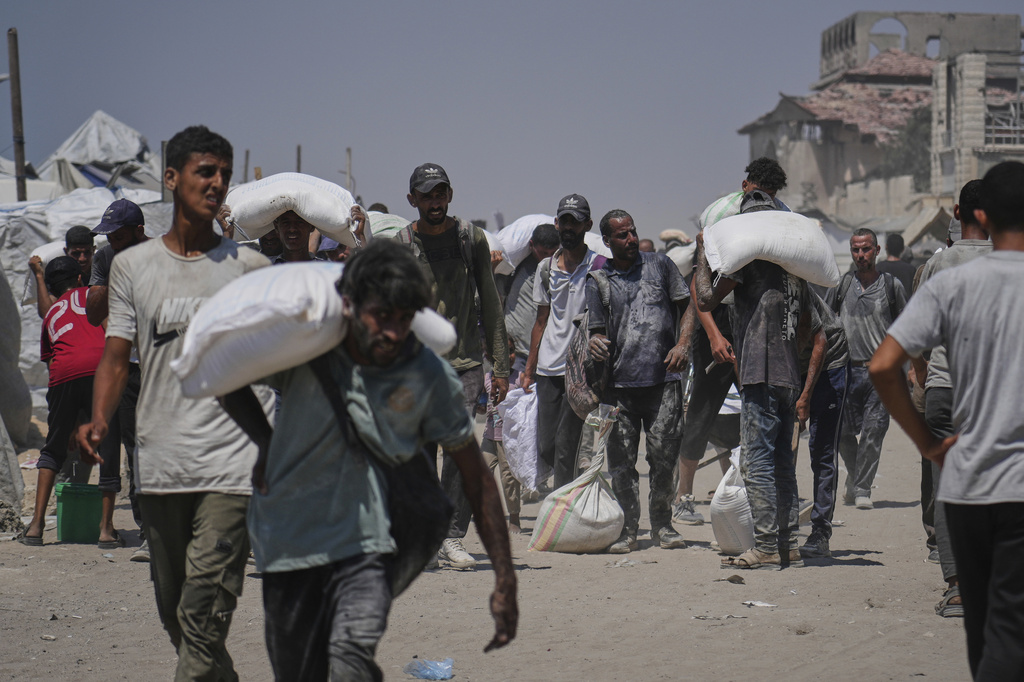
The U.N. General Assembly Convenes to Promote a Two-State Solution
The U.N. General Assembly is bringing together high-level officials this week to promote a two-state solution to the long-standing Israel-Palestinian conflict. This initiative aims to establish independent nations for both Israelis and Palestinians, allowing them to coexist in peace. However, the meeting has been met with resistance from key players such as Israel and its ally, the United States.
The two-day event, which began on Monday, will be co-chaired by the foreign ministers of France and Saudi Arabia. Israel’s right-wing government opposes the two-state solution, while the United States has criticized the meeting as counterproductive to efforts to end the war in Gaza. Despite these challenges, France and Saudi Arabia are determined to highlight the two-state solution as the only viable path to lasting peace in the region.
Why a Two-State Solution?
The concept of dividing the Holy Land dates back decades. Following the end of the British mandate over Palestine, the U.N. proposed a partition plan in 1947 that envisioned separate Jewish and Arab states. Although Israel accepted the plan, it was never implemented due to the subsequent war between Israel and its Arab neighbors. The 1949 armistice agreements left Jordan in control of the West Bank and east Jerusalem, while Egypt controlled Gaza.
In the 1967 Mideast war, Israel captured the West Bank, east Jerusalem, and Gaza. Since then, the idea of a two-state solution based on pre-1967 boundaries has been central to peace talks. This approach has gained widespread international support, as it allows for the creation of an independent Palestinian state alongside Israel. The logic behind it is that the populations of Israel, east Jerusalem, the West Bank, and Gaza are divided equally between Jews and Palestinians.
Why Hold a Conference Now?
France and Saudi Arabia have emphasized the need to focus on the two-state solution as the only viable path to peace in the Middle East. They want to see a clear roadmap with specific steps, starting with ending the war in Gaza. The co-chairs of the meeting have outlined the goal of identifying actions by “all relevant actors” to implement the two-state solution. They also aim to mobilize necessary efforts and resources through concrete and time-bound commitments.
Saudi diplomat Manal Radwan highlighted the importance of charting a course for action rather than just reflection. She stressed the need for a credible and irreversible political plan that addresses the root causes of the conflict and offers a real path to peace, dignity, and mutual security.
French President Emmanuel Macron has taken a strong stance in favor of the two-state solution. He announced that France will officially recognize the state of Palestine at the annual U.N. General Assembly gathering in late September. This move makes France one of the most significant Western powers to do so, amid growing global concern over the humanitarian crisis in Gaza.
Israel’s Perspective
Prime Minister Benjamin Netanyahu rejects the two-state solution, citing nationalistic and security concerns. His religious and nationalist base views the West Bank as the biblical homeland of the Jewish people, while many Israelis consider Jerusalem their eternal capital. Hard-line Israelis believe the Palestinians do not seek peace, pointing to past conflicts such as the second Palestinian uprising and the Hamas takeover of Gaza.
Netanyahu prefers the status quo, where Israel maintains control and settlers continue to expand into the West Bank. He condemned Macron’s recognition of Palestine, arguing that it rewards terrorism and risks creating another Iranian proxy.
The Palestinian View
Palestinians describe the current situation as “apartheid” and accuse Israel of undermining peace initiatives through settlement construction and threats of annexation. Ahmed Majdalani, a member of the PLO Executive Committee, stated that the meeting will prepare for a presidential summit expected in September. The summit could take place in France or at the U.N. during the high-level meeting.
The Palestinians aim for a serious international political process leading to the establishment of a Palestinian state. They also seek additional international recognition of their state and economic support for the Palestinian Authority. Reconstruction and recovery efforts in Gaza are among their top priorities.
What Will Happen — and Won’t Happen — at the Meeting?
All 193 U.N. member nations have been invited to attend, with about 40 ministers expected. However, the United States and Israel are the only countries boycotting the event. While the co-chairs have circulated an outcome document that could be adopted, there is no prospect of a breakthrough or resumption of stalled negotiations between Israel and the Palestinians.
U.N. Secretary-General António Guterres urged participants to keep the two-state solution alive and emphasized the need for the international community to support the conditions necessary for peace.

Post a Comment for "What to Expect—and What Not To—at the Israel-Palestine UN Summit"
Post a Comment