What happens just before lightning strikes? Scientists uncover the secret
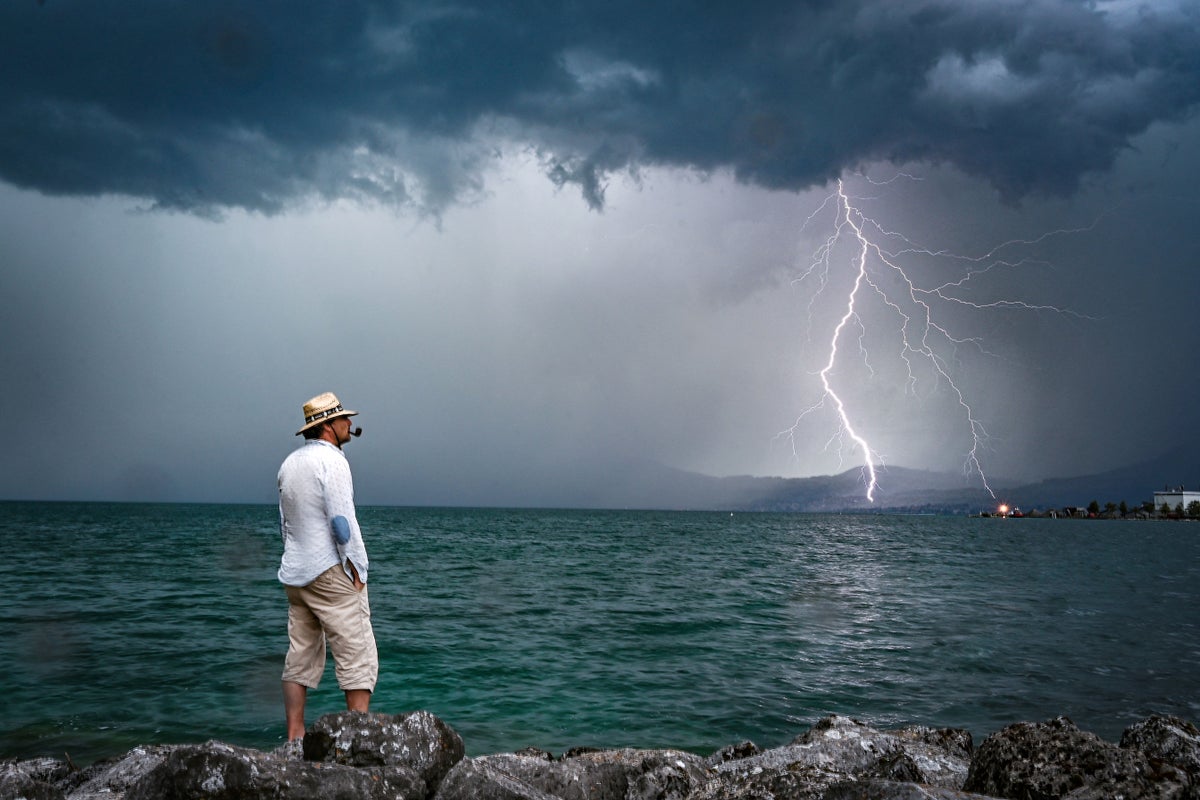
Understanding the Mystery of Lightning
For centuries, scientists have been fascinated by lightning, one of nature’s most powerful and dramatic phenomena. While Benjamin Franklin famously demonstrated the connection between lightning and electricity in 1752, the exact mechanisms that lead to a lightning strike remained a mystery for over two hundred years. Now, researchers at Penn State University have made a breakthrough in understanding the complex processes that occur just before lightning strikes.
Victor Pasko, a professor of electrical engineering at Penn State, described the findings as the first precise, quantitative explanation for how lightning initiates in nature. According to Pasko, the research connects the dots between X-rays, electric fields, and the physics of electron avalanches. This discovery marks a significant step forward in our understanding of atmospheric electricity.
The Science Behind Lightning Formation
Lightning is essentially a massive electrical discharge that occurs between clouds and the ground or within clouds themselves. To understand how this happens, it's important to look at the conditions inside storm clouds. Strong electric fields within these clouds accelerate electrons, which then collide with molecules like nitrogen and oxygen. These collisions produce electromagnetic radiation, commonly known as X-rays, as well as additional electrons and high-energy photons. Photons are the fundamental particles that make up light.
This process creates a chain reaction, similar to an invisible pinball machine, where each collision generates more particles and energy. As the process continues, the energy builds up until it reaches a critical point, leading to the formation of a lightning bolt.
The Role of Electric Charges
Atmospheric scientists have long understood that charged particles behave differently within clouds. Protons tend to rise, while electrons descend toward the ground, creating a positive electric charge on the surface. When this positive charge "reaches out" to the approaching negative charge from the cloud, the two channels connect, resulting in a rapid transfer of electricity—what we observe as lightning.
To validate their findings, the research team used mathematical modeling to simulate the physical conditions under which lightning is likely to form. Zaid Pervez, a doctoral student in electrical engineering, explained that they explored how photoelectric events occur, what conditions are necessary in thunderclouds to initiate electron cascades, and what causes the wide variety of radio signals observed before a lightning strike.
Explaining Dark Lightning
The researchers also sought to explain the phenomenon of "dark lightning," also known as terrestrial gamma-ray flashes. These are invisible X-ray bursts produced in the atmosphere without the usual visual and radio emissions associated with lightning. The study found that high-energy X-rays generated by relativistic electron avalanches can create new seed electrons through the photoelectric effect in air. This leads to a rapid amplification of the electron avalanche, explaining why some gamma-ray flashes occur in regions that appear optically dim and radio silent.
Implications of the Research
The international study was published in the Journal of Geophysical Research, marking a major contribution to the field of atmospheric science. The findings not only enhance our understanding of lightning but also provide insights into other high-energy atmospheric phenomena.
This research has the potential to impact various areas, including weather prediction, aviation safety, and the study of space weather. By unraveling the mysteries of lightning, scientists are taking a crucial step toward better predicting and mitigating the effects of severe weather events.

Post a Comment for "What happens just before lightning strikes? Scientists uncover the secret"
Post a Comment