What Georgia Officials Blame for the Wild Escalator Incident
Escalator Failure at MARTA Station: A Complex Chain of Events
An investigation into an escalator malfunction at a MARTA station in Atlanta has revealed a combination of mechanical and operational issues that led to multiple injuries. The incident occurred as people were exiting a Beyoncé concert at Mercedes-Benz Stadium, highlighting the critical need for safety measures in high-traffic areas.
The report from the Georgia Insurance and Safety Fire Commissioner’s Office identified several key factors contributing to the accident. One of the primary issues was the absence of four drive belts, with three found at the top of the drive motor and one at the bottom. These missing components significantly impacted the escalator's functionality, leading to unexpected behavior during peak usage times.
Escalator experts have weighed in on the incident, suggesting that there may be more to the story than what is currently reported. Anthony Boom, a former senior electrical engineer at KONE with over 35 years of experience, noted that a power cut to the motor could have been a contributing factor. He explained that if safety devices tripped and the break did not engage properly, it could have led to the escalator operating beyond normal parameters.
Dennis Olson, another experienced escalator and elevator expert, emphasized the importance of understanding why the unit failed to stop. His extensive experience, including inspecting and servicing over 1,000 escalators, underscores the complexity of such incidents. Olson pointed out that the report does not clarify whether the belts were missing before the incident or if they came off due to the malfunction itself.
The report also highlighted the role of high passenger volume in exacerbating the situation. With the motor drive belts missing, the escalator was likely operating at an over-normal speed, which could have contributed to the injuries sustained by passengers. Boom noted that the distribution of people on the escalator was uneven, with some steps having no one on them while others were overcrowded.
Despite these observations, Olson cautioned that without access to video footage, any conclusions drawn about the number of people on the escalator and their weight would remain speculative. This highlights the challenges in fully understanding the dynamics of such incidents without comprehensive data.
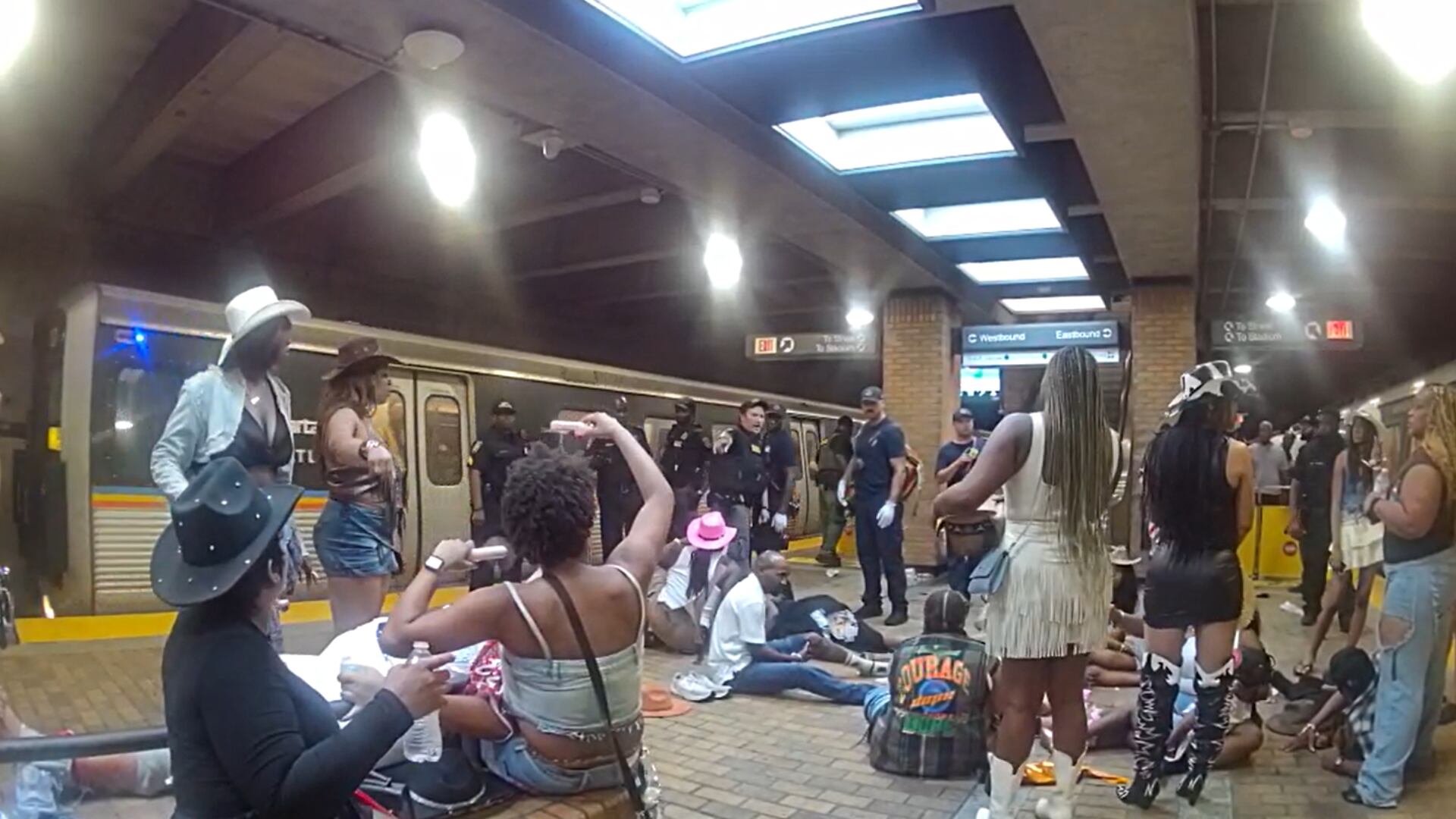
MARTA officials described the events following the incident, noting that a person began screaming and running inside the station, which triggered a stampede on the escalator. The escalator then sped up before suddenly stopping. Video footage captured victims lying on the ground, gripping various body parts, indicating the severity of the injuries.
According to officials, eight people were taken to the hospital, with seven suffering cuts and scrapes, one with a broken ankle, and another person declining treatment. A total of 21 individuals were injured, underscoring the impact of the incident on the community.
Britney Dogan, who was injured along with her husband and two children, expressed concerns about crowd control measures. She noted that despite the high volume of people, the flow on the escalators appeared normal. Both she and her husband emphasized that there was no pushing or shoving, suggesting that the issue may have been more related to the mechanical failure rather than crowd behavior.
Henry Dogan echoed these sentiments, calling for better crowd management and more staff presence at the escalator to prevent similar incidents. He stressed that there was no actual stampede, but rather a sudden malfunction that caught everyone off guard.
In the aftermath of the incident, Atlanta City Councilmember Byron Amos acknowledged the event as an "unfortunate accident." He noted that the movement and number of people were cited as factors in the incident. MARTA officials maintained that the escalators had undergone maintenance checks days before the malfunction, though the specifics of the inspection remain unclear.
Rhonda Allen, MARTA’s interim CEO, stated that the escalator itself was not at fault, emphasizing that it was overloaded, which led to the reaction observed during the incident. This statement reflects the ongoing debate about the responsibility and accountability in such situations.

Post a Comment for "What Georgia Officials Blame for the Wild Escalator Incident"
Post a Comment