Watergate Tapes Ordered by Supreme Court in 1974
The Watergate Scandal and the Supreme Court's Decision
Fifty-one years ago, the United States Supreme Court delivered a landmark ruling that significantly impacted the balance of power between the executive and judicial branches. The court ordered President Richard Nixon to hand over critical tape recordings related to the Watergate scandal, marking a pivotal moment in American political history. This decision not only underscored the limits of executive privilege but also set a precedent for future presidential accountability.
The Context of the Watergate Scandal
The Watergate scandal began in May 1972 with a break-in at the Democratic National Committee headquarters in Washington’s Watergate complex. What started as a minor incident quickly escalated into a major political crisis that would ultimately lead to the resignation of President Nixon. Despite winning a second term in November 1972 by a landslide, Nixon’s presidency was on the brink of collapse due to the scandal.
Nixon had not been directly involved in the break-in, but his administration’s attempts to cover up the incident led to further complications. The president faced pressure from his aides, including White House Chief of Staff Bob Haldeman and Presidential Advisor Chuck Colson, who were later convicted for their roles in the scandal. Nixon’s decision to allow the cover-up rather than disavow it proved to be a critical mistake.
The Taping System and the Legal Battle
One of the most significant elements of the Watergate scandal was the taping system installed in the Oval Office. Nixon had initially ordered the removal of similar devices used by previous presidents, but he later realized their value and had a new system installed in 1971. This system, which was voice-activated, captured every conversation and call made in the White House.
By 1973, the Senate committee investigating Watergate learned about the existence of these tapes. They requested the recordings, but Nixon refused, citing executive privilege and national security concerns. In April 1974, the House Judiciary Committee issued a subpoena for the tapes, dismissing Nixon’s proposal for edited transcripts. The matter eventually reached the Supreme Court.
The Supreme Court's Ruling
On July 24, 1974, the Supreme Court ruled unanimously in favor of the subpoena, stating that executive privilege based on a "generalized need for confidentiality" was insufficient to justify withholding the tapes. Nixon was required to release all the recordings, which would later prove to be instrumental in his downfall.
This ruling highlighted the importance of transparency and accountability in government. It emphasized that no president is above the law, even if they hold significant power.
A Comparison with Modern Politics
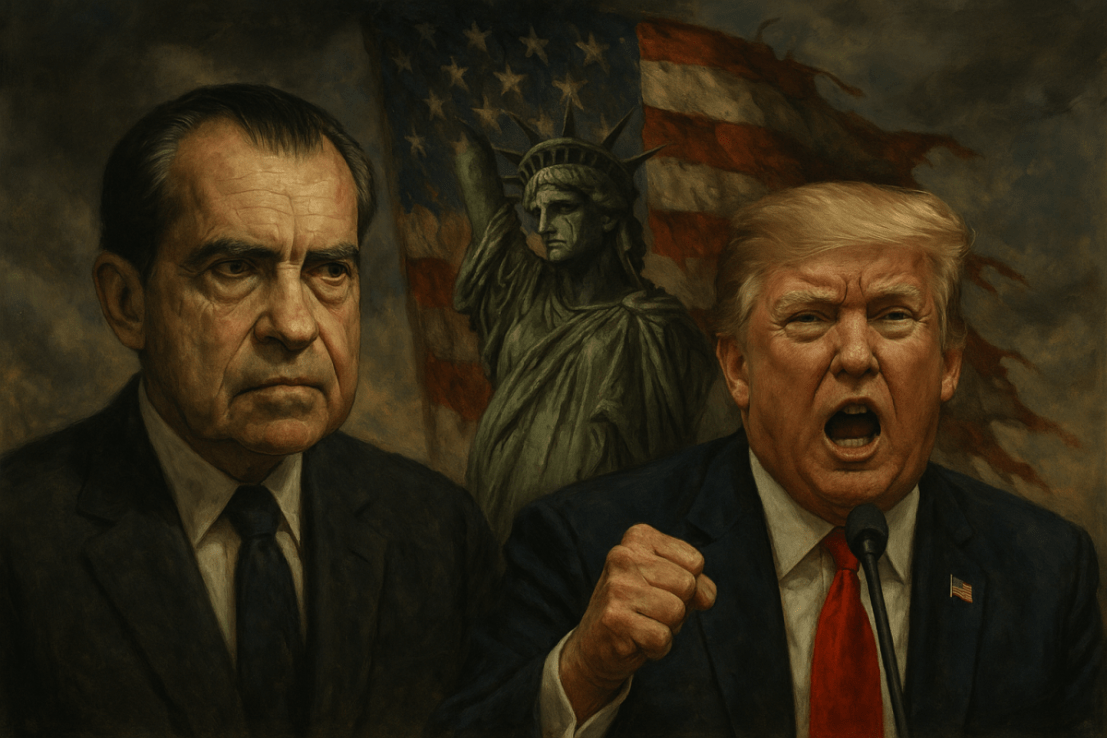
It is intriguing to consider how a modern president, such as Donald Trump, might have responded to a similar demand. Trump has often criticized the judiciary and has shown a tendency to challenge legal rulings. He might have dismissed the justices as “horrible people” and sought to replace them with loyalists. However, Nixon, despite his flaws, understood the importance of constitutional order and the potential consequences of defying the court.
The Aftermath and Legacy
The release of the tapes in August 1974 revealed that Nixon had been aware of the Watergate burglary and had approved plans to interfere with the FBI’s investigation. This led to widespread support for his impeachment, and four days later, Nixon became the only U.S. president in history to resign.
Since then, other presidents have faced similar challenges. Andrew Johnson was the only other president to be impeached, though he was not convicted. Bill Clinton was impeached but not convicted, while Donald Trump has been impeached twice without conviction. These events highlight the evolving nature of presidential accountability and the role of the judiciary in maintaining checks and balances.
Conclusion
The Supreme Court’s decision in the Watergate case remains a crucial moment in American history. It reinforced the principle that no one, not even the president, is immune from legal scrutiny. As the nation continues to grapple with issues of power, transparency, and accountability, the lessons from this period remain relevant and instructive.

Post a Comment for "Watergate Tapes Ordered by Supreme Court in 1974"
Post a Comment