Wasp Secrets Could Halt Aging's Clock
Understanding the Unique Aging Process of Jewel Wasps
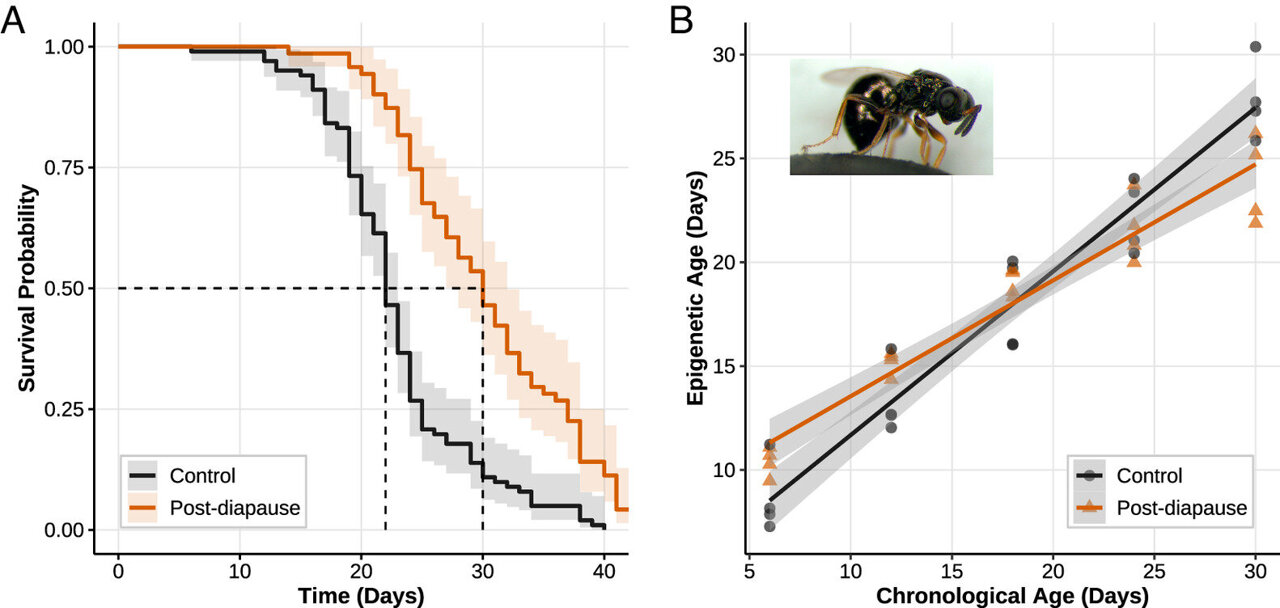
Scientists have made a groundbreaking discovery regarding the aging process in jewel wasps. These small insects, known for their striking metallic colors, have shown an extraordinary ability to slow down their biological aging. This finding comes from research conducted by scientists at the University of Leicester, which has been published in the journal Proceedings of the National Academy of Sciences. The study reveals that these wasps can enter a natural "time-out" during their larval stage, which leads to a significant extension of their lifespan and a deceleration of their molecular aging.
Aging is not just about the passage of time; it involves complex biological processes that leave molecular imprints on our DNA. One key indicator of this process is the epigenetic clock, which tracks chemical changes such as methylation that occur with age. The question arises: what happens if we alter the course of development itself? To explore this, researchers turned to Nasonia vitripennis, commonly known as the jewel wasp.
This tiny insect has become a powerful model for aging research due to its functioning DNA methylation system, similar to humans, and its short lifespan, making it ideal for studying aging mechanisms. The team, including Ph.D. student Erin Foley, Dr. Christian Thomas, Professor Charalambos Kyriacou, and Professor Eamonn Mallon, exposed jewel wasp mothers to cold and darkness, triggering a hibernation-like state in their offspring called diapause.
This natural pause extended the adult lifespan of the wasps by over one-third. More remarkably, those that went through diapause aged 29% more slowly at the molecular level. Their epigenetic clocks ticked more leisurely, providing the first direct evidence that the pace of biological aging can be developmentally tuned in an invertebrate.
Professor Eamonn Mallon, a senior author on the study, described the phenomenon as akin to the wasps taking a break early in life and coming back with extra time in the bank. He emphasized that aging isn't set in stone and can be influenced by the environment even before adulthood begins.
While some animals can slow aging in dormant states, this study is the first to show that the benefits can persist after development resumes. The molecular slowdown wasn't a random effect but was linked to changes in key biological pathways conserved across species, including those involved in insulin and nutrient sensing. These same pathways are being targeted by anti-aging interventions in humans.
What makes this study novel is its demonstration of a long-lasting, environmentally triggered slowdown of aging in a system that's both simple and relevant to human biology. It offers compelling evidence that early life events can influence the pace of biological aging itself.
Professor Mallon added that understanding how and why aging happens is a major scientific challenge. This study opens up new avenues for research, not just into the biology of wasps, but into the broader question of whether we might one day design interventions to slow aging at its molecular roots. With its genetic tools, measurable aging markers, and clear link between development and lifespan, Nasonia vitripennis is now a rising star in aging research.
In short, this tiny wasp may hold big answers to how we can press pause on aging. The findings from this research could lead to significant advancements in our understanding of aging and potentially pave the way for future anti-aging interventions.

Post a Comment for "Wasp Secrets Could Halt Aging's Clock"
Post a Comment