Wargaming's Moneyball Moment
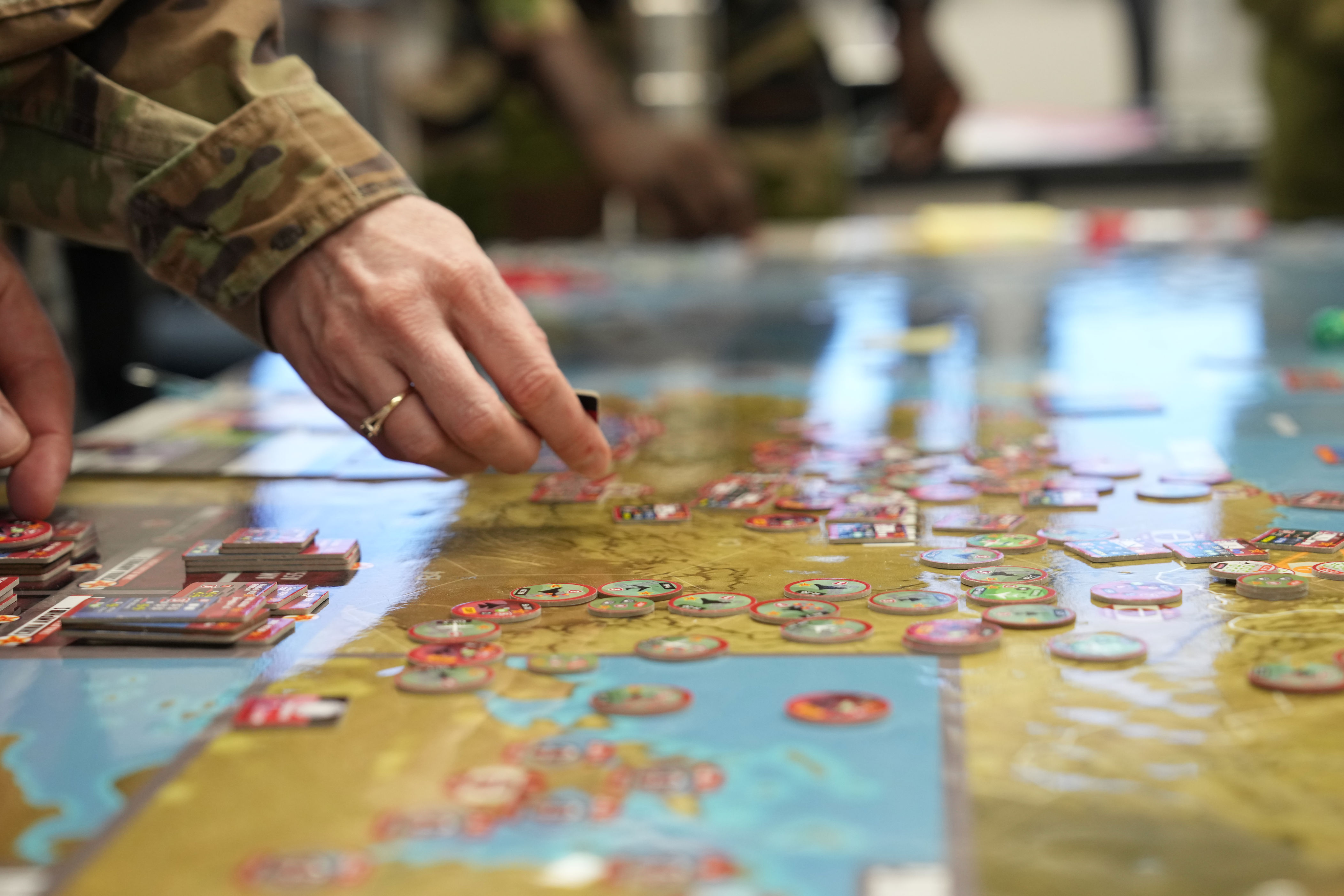
The Evolution of Wargaming: A New Era of Human and Machine Collaboration
The world of professional baseball has long been a battleground for tradition versus innovation. Twenty years ago, the sport witnessed a significant shift as traditional scouts, relying on decades of experience, faced off against data scientists who introduced new analytical methods. This clash sparked debates about whether human expertise or statistical analysis would ultimately prevail. In the end, the most successful teams found a balance between the two, creating a more comprehensive approach to evaluating talent.
Today, a similar transformation is taking place in the field of defense wargaming. Traditional wargamers, who have built their expertise through years of hands-on experience and custom game designs, are now navigating the rapid advancements in modeling, simulation, and artificial intelligence. At the Johns Hopkins Applied Physics Laboratory (APL), this dynamic tension is being explored and integrated into the development of modern wargaming techniques. The result? A fusion of human insight and technological power that promises to redefine how we approach national security challenges.
The Value of Traditional Wargaming
Wargaming has always been rooted in the study of human decision-making. Its strength lies in the experiential learning it provides, allowing participants to explore complex scenarios where perfect information is rarely available. War is inherently unpredictable, and wargames simulate these uncertainties to understand how humans make decisions under pressure and how others respond to those choices.
Psychologists have spent years trying to decode the intricacies of human behavior, but capturing this complexity in numbers and equations remains a challenge. The nuances of decision-making are often conveyed through conversation, discussion, and debate—elements that technology has yet to fully replicate. Despite these limitations, wargames have proven invaluable in training and preparing leaders for real-world conflicts.
However, traditional wargaming is not without its drawbacks. It often requires extensive planning by experienced wargamers who deeply understand the issues at hand. It also demands skilled players who can simulate the roles of various stakeholders in a conflict. These factors mean that wargames are typically held on an annual cycle and can only cover a limited number of potential scenarios.
The Role of Generative AI in Modern Wargaming
With the rise of generative AI, the landscape of wargaming is beginning to change. AI can now simulate human language and approximate decision-making processes, opening up new possibilities for expanding the reach and scope of wargames. This advancement allows for the creation of scenarios that were previously impractical due to the need for human players in every role.
When combined with physics-based modeling and simulation, which can track interactions between military platforms, AI enables wargames to be conducted with fewer human participants across a broader range of scenarios. The digital nature of these games also makes it easier to analyze outcomes quickly, something that is time-consuming in traditional wargaming.
While some may argue that AI has been overhyped, the reality is that it is already proving to be a valuable tool in the wargaming arsenal. With AI and simulation tools, new scenarios can be developed in days, allowing for multiple iterations and variations of a conflict. This flexibility is essential for exploring a wide array of possible outcomes.
The Future of Wargaming: Collaboration, Not Competition
Despite the capabilities of AI, it is far from infallible. However, its ability to rapidly iterate through different scenarios means that users can explore a variety of human and AI behaviors. This process helps identify critical situations that require human judgment and decision-making. When these moments arise, traditional wargaming still plays a vital role in facilitating discussions and debates among national security leaders.
The future of wargaming is not about choosing between tradition and technology. It’s about finding a way to integrate both, much like the evolution seen in professional baseball. There is no need for a 20-year debate to recognize the value of this collaboration. Instead, the focus should be on leveraging the strengths of each approach to create more effective and efficient wargaming practices.
Andrew Mara, head of the National Security Analysis Department at APL, leads a team focused on assessing the capabilities needed to address pressing national security challenges. Kelly Diaz oversees the Advanced Concepts and Capabilities program, which aims to tackle complex security issues through innovative and data-driven solutions. Kevin Mather leads a team developing advanced modeling and simulation tools, including AFSIM and AI techniques, to support national security analysis and decision-making. Together, they represent the future of wargaming—a future where human expertise and technology work hand in hand.

Post a Comment for "Wargaming's Moneyball Moment"
Post a Comment