US Sides With Israel in Accusing Starmer of Rewarding Hamas
The UK's Conditional Recognition of Palestine and International Reactions
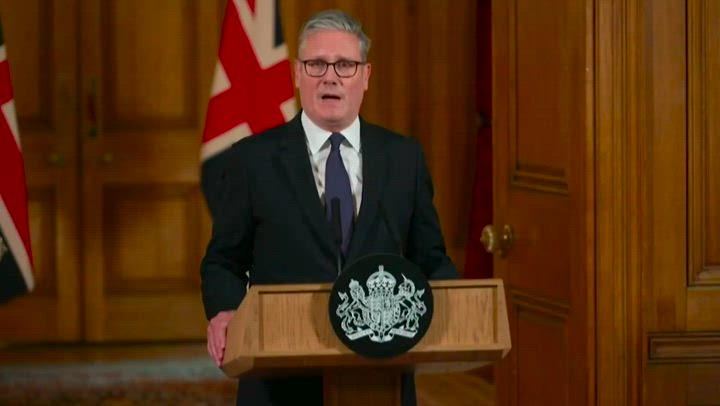
The United Kingdom has made a significant move in its foreign policy by announcing that it will recognize Palestine as a state in September, provided that the Israeli government takes specific steps to address the ongoing humanitarian crisis in Gaza. This decision comes after an emergency meeting of the UK Cabinet, where Prime Minister Sir Keir Starmer outlined his conditions for recognition.
Starmer stated that the UK will recognize Palestine unless Israel agrees to a ceasefire, allows the UN to restart aid deliveries into Gaza at a rate of 500 trucks per day, makes clear there will be no annexations in the West Bank, and commits to a long-term sustainable peace based on a two-state solution. The Prime Minister emphasized that this move is not just symbolic but a necessary step to ensure a lasting peace in the region.
International Responses
The announcement has drawn mixed reactions from various international actors. The United States has expressed concern, with Tammy Bruce, a spokesperson for the US State Department, stating that recognizing Palestine "rewards Hamas" and is a "slap in the face for the victims of October 7." She argued that such recognition would give hope to Hamas and undermine efforts to achieve a ceasefire.
Israel’s foreign ministry also criticized the UK’s decision, calling it a "reward for Hamas" and claiming that it would harm efforts to achieve a ceasefire in Gaza and secure the release of hostages. The Israeli government has been under pressure from both domestic and international sources to find a resolution to the conflict, but their stance remains firm against any recognition of Palestine without a comprehensive peace agreement.
France, on the other hand, welcomed the UK's decision, as President Emmanuel Macron had already announced France's recognition of Palestine. This move by the UK and France signals a shift in European support for a two-state solution, which has been a long-standing goal of the international community.
Domestic Political Pressure
The decision to recognize Palestine has been influenced by internal pressures within the UK government. Many members of Starmer’s own Cabinet and MPs have been advocating for immediate recognition of Palestine, citing the need to address the humanitarian crisis in Gaza. However, some critics argue that the conditions attached to the recognition are too lenient and may not be met by the Israeli government.
Jeremy Corbyn, the former Labour leader and co-founder of a new hard-Left party, has criticized the decision, arguing that Palestinian statehood should not be used as a "bargaining chip." He called for an end to arms sales to Israel and the imposition of sanctions, emphasizing that the right to statehood is an inalienable right of the Palestinian people.
Reform UK, a political party led by Nigel Farage, has also criticized the decision, claiming that it rewards Hamas for its actions on October 7. They argue that the timing of the decision is inappropriate and that it may embolden extremist groups.
Humanitarian Concerns
The humanitarian situation in Gaza has been a major factor in the UK's decision. David Lammy, the Foreign Secretary, highlighted the devastation in Gaza, stating that the situation is "heartbreaking" and that Israel limiting aid to the region has "horrified the world." He emphasized the need for a sustainable ceasefire and a long-term peace process that includes the recognition of a Palestinian state.
Lammy also pointed out that the UK has taken several steps to address the crisis, including restoring funding to UNRWA, suspending arms exports that could be used in Gaza, and providing humanitarian assistance. However, he acknowledged that the situation on the ground continues to worsen, and the two-state solution is in peril.
The Path Forward
Sir Keir Starmer has reiterated that the UK's primary aim is to change the situation on the ground for those who desperately need change. He emphasized the importance of getting aid into Gaza at speed and volume, as well as securing a ceasefire that can lead to a long-term peaceful outcome. The Prime Minister also stressed that the UK will continue to work with its international partners to end the suffering and deliver a more stable future for the Middle East.
Despite the challenges ahead, Starmer remains committed to his vision of a two-state solution, believing that it is the only way to ensure lasting peace between Israelis and Palestinians. He has called on all parties to come together and work towards a resolution that addresses the needs of both communities.
Conclusion
The UK's conditional recognition of Palestine marks a significant moment in the ongoing conflict between Israel and Hamas. While the decision has been met with both support and criticism, it highlights the complex nature of the issue and the need for a comprehensive approach to achieving peace. As the situation in Gaza continues to evolve, the international community will be watching closely to see how this decision impacts the broader efforts to resolve the conflict.

Post a Comment for "US Sides With Israel in Accusing Starmer of Rewarding Hamas"
Post a Comment