US Sends 33,000 Advanced Strike Kits to Boost Ukrainian Drones
The Rise of Autonomous Drones in Modern Warfare
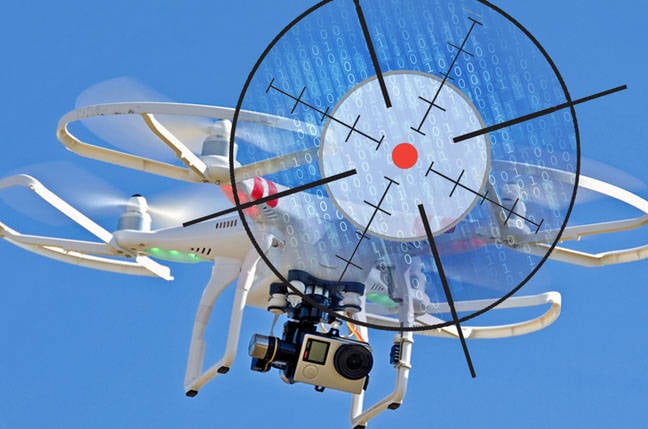
The ongoing conflict in Ukraine has highlighted a significant shift in military technology, with drones becoming a central element of modern warfare. Defense software company Auterion has entered the fray by securing a $50 million contract from the Pentagon to supply 33,000 AI-powered "strike kits" designed to enhance the capabilities of Ukrainian unmanned aerial vehicles (UAVs). These strike kits are expected to play a critical role in pushing drones further into combat zones and increasing their effectiveness.
How the Strike Kits Work
The strike kits are based on Auterion's Skynode S system, which includes a circuit board equipped with custom software that provides autonomy to drones once a target is selected. This system uses a proprietary software-defined radio controller to avoid jamming, offering a fast hopping link that is encrypted. According to Auterion CEO Lorenz Meier, this technology allows drones to operate beyond line-of-sight, giving operators more flexibility in targeting.
Once a target is identified, the drone can be sent on its mission without direct operator control for the final stretch. This capability is particularly valuable because many Russian jamming systems are limited in range and can only interfere during the last mile of a drone’s flight. By allowing drones to operate autonomously, the strike kits effectively negate such interference.
Testing and Production
Ukrainian forces have already tested around 3,000 drones using the circuit boards and software provided by Auterion. However, the country claims to have produced approximately two million drones last year and aims for four million this year. While 33,000 strike kits represent a small portion of this total, they could still make a meaningful impact in enhancing drone operations.
These drones are domestically produced in Ukraine and are retrofitted with the strike kits using standard connection ports. The custom operating system developed by Auterion enables the use of AI vision systems for targeting and navigation, a feature that Meier has been developing for years through both academic research and business ventures.
Strategic Use of Drones
Drones have already proven their value in operations like Operation Spiderweb, where over 100 drones were reportedly smuggled close to five Russian airbases, thousands of miles from the front line. These drones allegedly destroyed or damaged more than 40 aircraft. However, Meier did not confirm whether his software was used in these attacks.
On the other side of the conflict, Russia has significantly increased its drone production after initially underestimating their combat potential. It has secured manufacturing rights for Iran's Shahed 136 drone and modified it into the Geran-2 model. Recent footage shows teenagers building these drones, some of which are equipped with Starlink antennas for command and control.
The Future of Drone Warfare
Meier argues that traditional first-person drone operations, where operators wear helmets to view what the drone sees, will become obsolete. He emphasizes the need for automation to reduce the risk to soldiers and increase efficiency in combat. Mass-drone swarms, he believes, will overwhelm human operators due to the sheer number of targets involved.
In contrast to manual control, Meier advocates for drones with varying levels of autonomy. This approach aligns with the broader trend in military strategy, where cost-effective solutions are preferred over expensive, vulnerable hardware. For example, a Russian T-90 tank or an American M1A1 unit costs around $4.5 million, but a drone equipped with Auterion's kit costs roughly $1,000 per unit.
NATO's Growing Interest in Drones
NATO countries such as the UK, Germany, and the Netherlands are increasingly investing in drone technology, not just through Auterion's kits but also through their own initiatives. The future of warfare is shifting away from large, expensive battalions toward smaller, more agile drone operations that do not require extensive supply lines.
The Drone Defense Arms Race
As both sides continue to develop their drone capabilities, they are also investing in countermeasures. Defensive strategies include deploying fishing nets over key supply routes to disable incoming drones, a tactic reminiscent of the barrage balloons used in World War II. This dynamic reflects what evolutionary scientists call a "Red Queen race," where each side must continuously advance to maintain an advantage.
In this rapidly evolving landscape, the integration of AI and autonomous systems is set to redefine the nature of warfare, making drones not just tools of reconnaissance but powerful weapons capable of shaping the outcome of conflicts.

Post a Comment for "US Sends 33,000 Advanced Strike Kits to Boost Ukrainian Drones"
Post a Comment