US Export Controls Spur Chinese Innovation
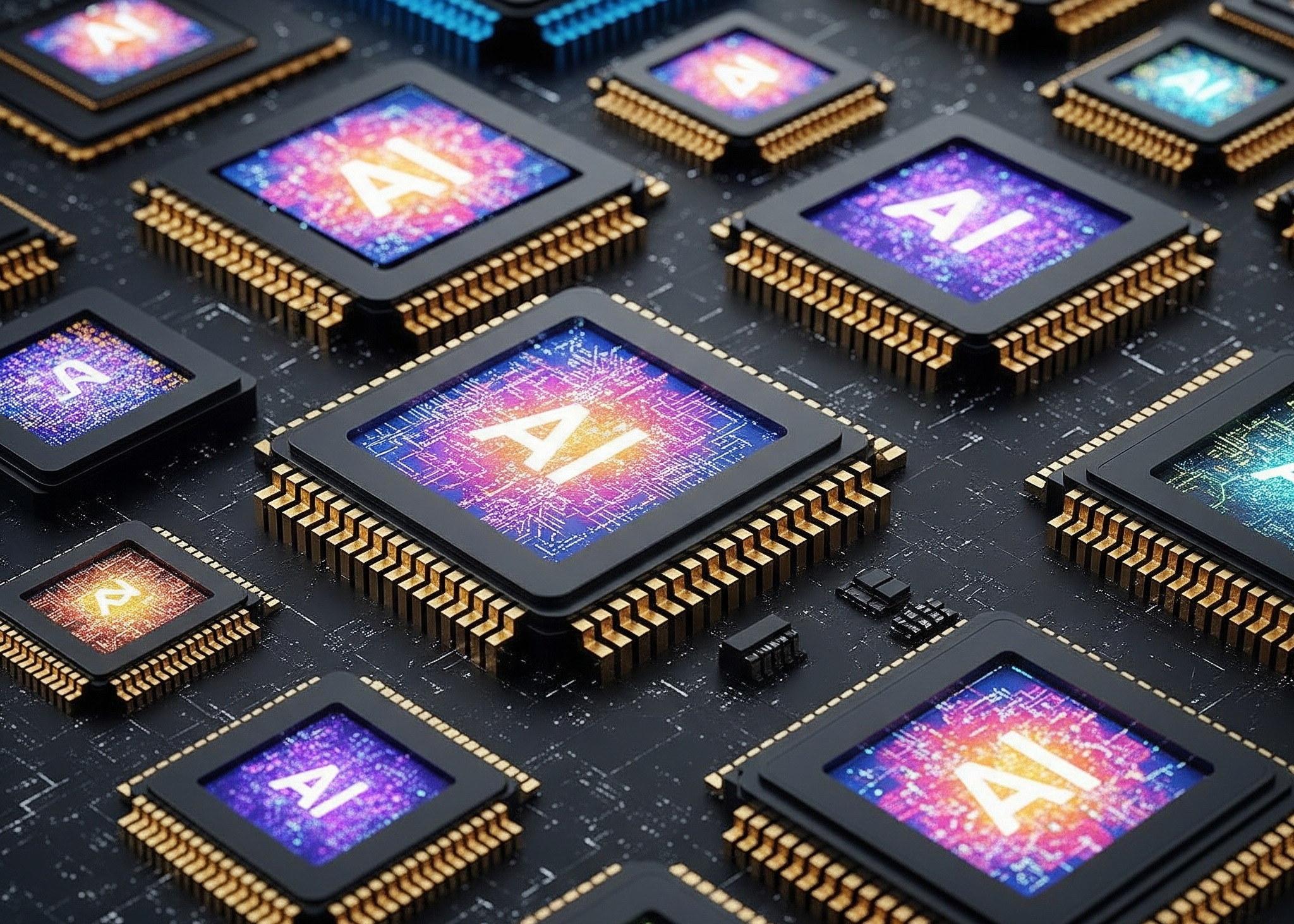
The Growing Competition in AI Chip Development
The race for advanced artificial intelligence (AI) chips has intensified, driven by massive investments and the pursuit of artificial general intelligence (AGI). This competition is not only about technological advancement but also involves significant political concerns over national security. As a result, nations are increasingly vying for dominance in this critical sector.
In 2024, NVIDIA reported revenues exceeding $80 billion from data center GPUs alone. However, a substantial portion of these sales goes to countries outside the United States, prompting the U.S. government to implement stringent measures to curb this flow, citing national security as a primary concern. China has been particularly affected by these restrictions, facing limited access to both GPUs and advanced tools necessary for manufacturing cutting-edge semiconductor technologies.
These restrictions have created challenges for companies across the entire supply chain, but they have also spurred innovation. Chinese companies have already demonstrated their ability to innovate despite these obstacles. IDTechEx has explored various innovations within the AI chip landscape, including a comprehensive analysis of the regulatory environment and an evaluation of international players and technologies in its report titled “AI Chips for Data Centers and Cloud 2025-2035: Technologies, Market, Forecasts.”
The Role of AI in Modern Technology
Artificial Intelligence is becoming increasingly integrated into workflows, both for enterprises and consumers. It is often seen through generative AI language bots and smart AI agents, but this is just the surface. Behind the scenes, there are tens of gigawatts of data center capacity, with millions of GPUs and other AI accelerators supporting these systems. Governments and hyperscalers are investing heavily in building out AI data centers to support the growing size of AI models required to deliver advanced AI applications like ChatGPT, Claude, and Gemini.
The demand for computing power has surpassed the traditional scaling predicted by Moore’s Law. Since 2010, floating point operations per second (FLOPS) have increased at a rate of four and a half times per year. For example, Llama 3.1-405B, a leading AI model from Meta, requires 3.8×10^25 FLOPS of training compute, which necessitates 16,384 NVIDIA H100 SXM5 80GB nodes. Training this model takes 2,142 hours and consumes 25,280 W of power, equivalent to powering 2,085 U.S. households for a year when running at 40.42% hardware utilization.
This demand is expected to continue growing, with governments striving to lead in areas such as autonomous infrastructure, drug discovery, and military capabilities. IDTechEx forecasts that the AI Chips market will reach $453 billion by 2030, with a compound annual growth rate (CAGR) of 14% between 2025 and 2030.
U.S. Strategies to Limit China's Access
Despite U.S.-based fabless chip designers like NVIDIA and AMD leading in AI chip sales, the semiconductor supply chain remains international. Semiconductor manufacturing is dominated by production in Taiwan, with TSMC leading the way. Advanced memory technologies are split between the U.S. and South Korea, with high bandwidth memory (HBM) designed by SK Hynix, Samsung, and Micron Technology. Lithography equipment, specifically extreme ultra-violet (EUV) lithography, is dominated by the Netherlands’ ASML.
However, the U.S. has implemented strategies to limit China's access to advanced chips and equipment. These controls have become more rigid over time. In October 2022, during Biden’s presidency, the Bureau of Industry and Security (BIS) introduced restrictions on China's ability to obtain advanced computing chips, develop supercomputers, and manufacture advanced semiconductors. These controls were updated in October 2023 to close loopholes and enhance effectiveness, particularly targeting countries of concern like China.
In December 2024, the BIS further strengthened these controls by adding 24 types of semiconductor manufacturing equipment and three types of software tools to the restricted list. Additionally, 140 Chinese entities were added to the Entity List, requiring special licenses for U.S. businesses to supply them. This move creates a chokehold on Chinese manufacturers trying to produce advanced chips for AI.
Implications for China
For China, these restrictions and ongoing tariff disputes have been major roadblocks in its AI development. While NVIDIA has produced chips that comply with trade restrictions, such as the H800 and H20, these have been denied access to China. Despite efforts to bypass these restrictions, domestic innovation has accelerated. Companies like SMIC, Huawei, CXMT, Wuhan Xinxin, and Tongfu Microelectronics have grown in their ability to design and manufacture advanced chip logic and memory technologies. Chip designers such as Huawei, Cambricon, and Moore Threads are also bringing innovative solutions to market.
Although challenges persist, the decline in revenue from China to U.S. firms since 2022 has led to a shrinking client base. However, innovation continues to thrive, and competition remains strong, driving the progress of new chips from various players. IDTechEx provides an in-depth explanation and analysis of the ongoing trade wars, as well as technology breakdowns and trends among AI chip players from the U.S., China, and other countries in its report.

Post a Comment for "US Export Controls Spur Chinese Innovation"
Post a Comment