US Accused of Provoking Tensions in South China Sea as Xi Invites Trump to Beijing
China's Accusations Against the US in the South China Sea
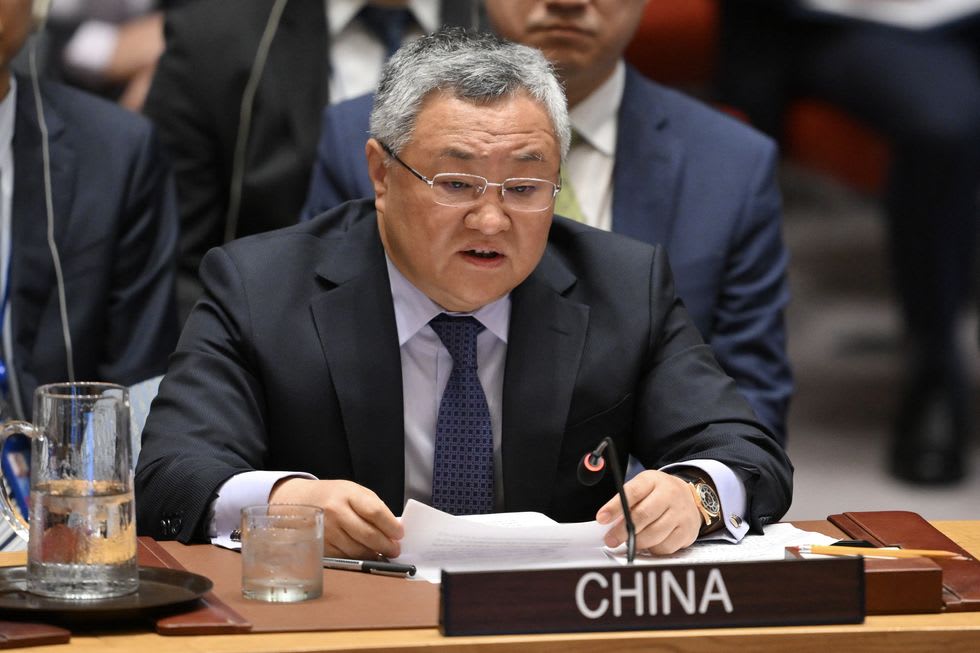
China has recently accused the United States of "stirring up trouble" in the South China Sea, a move that highlights its ongoing efforts to assert control over vast areas of international waters. This accusation comes from Fu Cong, China’s ambassador to the United Nations, who launched a series of criticisms against the U.S. during a recent session at the UN Security Council.
Fu Cong emphasized that China's territorial and maritime claims in the region are supported by both historical and legal grounds. He reiterated China's stance that it does not accept or recognize the South China Sea arbitration, a legal case initiated by the Philippines against China 12 years ago in The Hague. The arbitration concluded that Beijing's claims lacked legal foundation.
Despite acknowledging that the South China Sea has remained relatively stable in recent years, Fu Cong did not hold back in his criticism of the United States. He pointed out that the U.S. has not ratified the United Nations Convention on the Law of the Sea (UNCLOS), yet he accuses the country of acting as a self-appointed judge by interfering in other nations' affairs.
Criticisms of U.S. Military Activities
Fu Cong also criticized American military exercises conducted in the South China Sea, accusing the U.S. Armed Forces of intruding into Chinese-claimed waters and airspace. He questioned who is responsible for creating tension in the region and who is coercing and endangering freedom of navigation. According to him, these issues are clear to everyone.
These remarks were made just hours before former U.S. President Donald Trump announced that he might visit China soon. Trump mentioned that President Xi Jinping had invited him to China, and he expected the visit to happen in the near future. He noted that while the timing was still being determined, the meeting would occur "not too distant."
Trump was speaking alongside Philippine President Ferdinand Marcos Jr., whom he claimed had been steered away from China's influence. He stated that the country had previously leaned towards China but that this shift had been quickly reversed. Trump added that he didn’t mind if Marcos Jr. maintained good relations with China, as the U.S. was also doing so.
U.S.-China Relations and Regional Tensions
The U.S. and China have seen a complex relationship marked by both cooperation and competition. Recent developments include a tariff deal between the two countries, with Trump praising the improved relationship with Xi Jinping. Additionally, British Prime Minister Keir Starmer granted Trump a "veto" over Chinese investment in Britain, highlighting the political intricacies involved.
Meanwhile, the Philippines has sought American support in the South China Sea for years. Although the country has avoided direct confrontation with China, it maintains a defense treaty with the U.S., which could bring American involvement if a conflict arises.
No official plans have been announced for a Trump-Xi meeting, but there are possibilities for such a meeting to take place in late October or early November. One potential date is September 3, when a ceremony in Beijing will commemorate the 80th anniversary of the end of World War II, an event also attended by Russian President Vladimir Putin.
Ongoing Geopolitical Dynamics
The situation in the South China Sea remains a focal point of international concern. With competing claims and strategic interests at play, the region continues to be a hotspot for diplomatic and military tensions. As global powers navigate their relationships, the balance of power in the South China Sea remains a critical issue for regional stability.

Post a Comment for "US Accused of Provoking Tensions in South China Sea as Xi Invites Trump to Beijing"
Post a Comment