Upcoming Long Assignments for Troops Headed to South Korea
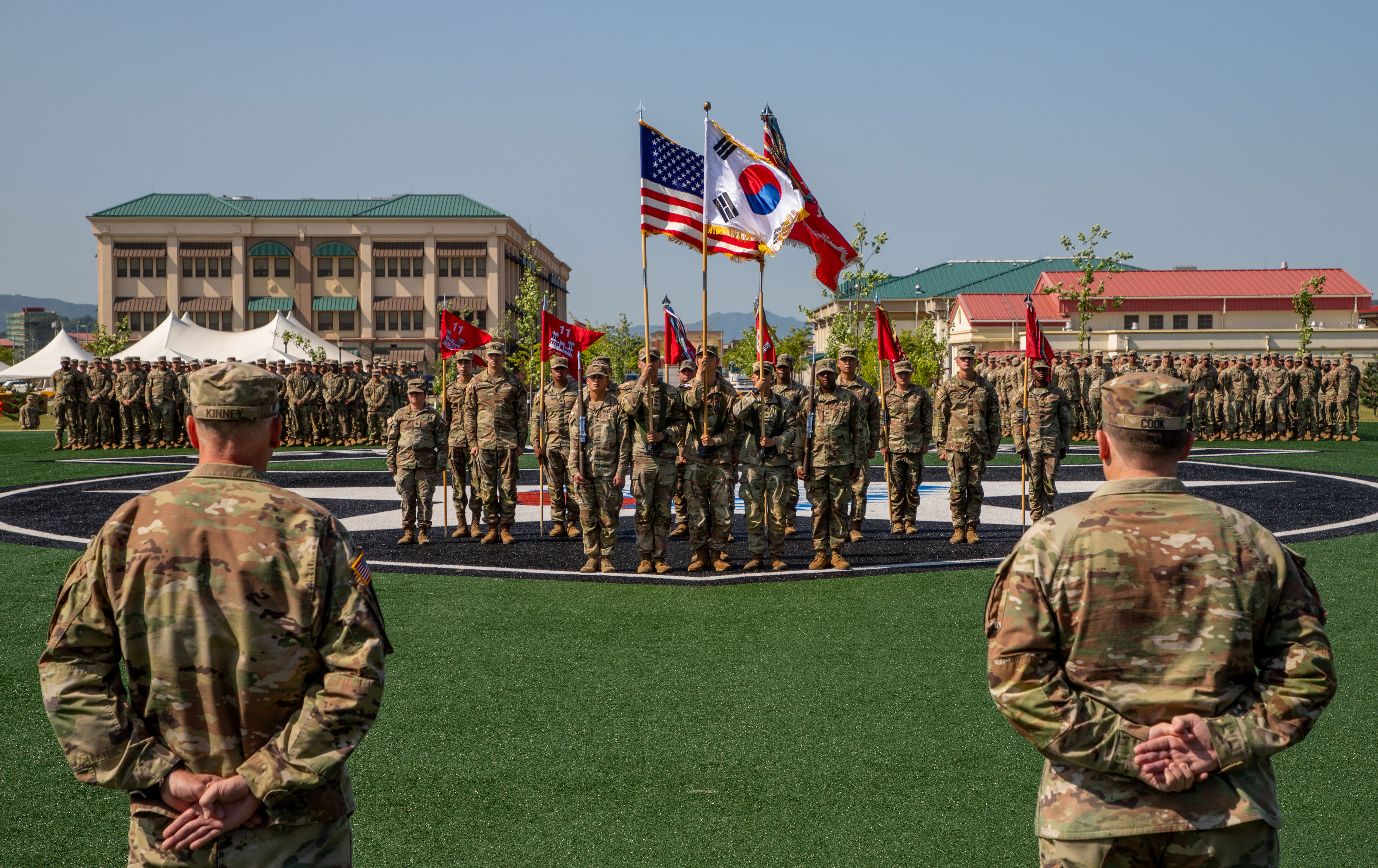
New Pentagon Directive Aims to Enhance Stability and Readiness in South Korea
A new directive from the Pentagon is set to change the way U.S. military personnel are stationed in South Korea. This policy, which extends the length of tours for unaccompanied service members, is expected to improve force stability, support the quality of life for service members, and enhance readiness in the face of regional threats.
The directive, announced recently, increases the tour duration for unaccompanied service members from 12 months to 24 months. The policy will take effect on October 1, 2025, and applies to all service members receiving orders on or after that date. However, implementation timelines may vary by service branch. This follows a previous announcement that extended tours for military families moving to South Korea from 24 months to 36 months.
Currently, there are approximately 28,500 military personnel stationed in South Korea, with the Army having the largest contingent at around 14,000 personnel. For over a decade, officials have considered extending tour lengths in South Korea. Air Force Col. William Parker, director of personnel for U.S. Forces Korea, described the change as a "tour normalization policy." While this policy differs slightly from those in other overseas locations like Germany and Japan, the goal is to align it as closely as possible with those policies.
Under the "3-2-1 Tour Normalization Policy," accompanied tours will be 36 months, and unaccompanied tours will be 24 months. Twelve-month unaccompanied tours will only be available as an exception when a service member requests to bring their family but the request cannot be supported due to operational or infrastructure constraints.
"There's no desire to separate service members who have dependents from their family members any longer than we have to," said Parker. He noted that while there is sufficient housing, limitations at schools and medical support are the two main challenges. Medical capacity varies by installation, with some areas like Camp Humphreys seeing improvements, such as a new hospital, but still requiring more medical providers.
The new policy does not affect service members currently stationed in South Korea. They will not be required to involuntarily extend their tours, though they can choose to do so. The services are also reviewing their policies on Korea assignment incentive pay, which provides incentives for troops to extend their tours.
Although the initiative began before the Pentagon's May directive to halve spending on permanent change of station (PCS) moves, it supports broader Department of Defense efforts to reduce the frequency of PCS moves and enhance readiness, family stability, and quality of life. According to Parker, the initiative will save about $90 million annually.
"This will obviously save a lot of money, but that's not the driving factor here. It's hard to quantify the savings and benefits from a readiness and team cohesion perspective. It's a challenge for our commanders here to have constant turnover of their teams," he said.
With regional threats from North Korea, China, and Russia, continuity of service members is crucial for maintaining expertise and readiness. Parker emphasized the importance of retaining experienced personnel to provide regional expertise.
Quality of life for many service members has improved, with a recent increase in Cost of Living Allowance for about three-fourths of the personnel on the peninsula. Some remote areas saw significant increases. South Korea is also investing in infrastructure, with 80% of the infrastructure at Camp Humphreys being 10 years old or less, including new medical facilities, commissaries, and barracks.
Officials have also been working to increase the number of command-sponsored families who can come to South Korea. From the end of fiscal 2024 to the beginning of fiscal 2026, the command sponsorship capacity across the peninsula will increase by 27%. Currently, there are roughly 5,400 to 5,700 families, with plans to grow that number to around 6,500 families over the next year.
In addition to family stability, the policy also benefits spouses by providing a more stable environment for employment. A two-year tour is a short period for finding and maintaining employment, and some feedback suggests this will make spouses more employable.
Service members should contact their respective personnel offices for specific guidance on the new policy. Parker expressed confidence in the changes, acknowledging that there may be challenges but emphasizing that the timing is right. He highlighted the high quality of life in South Korea and the critical nature of the mission in the region.

Post a Comment for "Upcoming Long Assignments for Troops Headed to South Korea"
Post a Comment