Upcoming Long Assignments for Troops Bound for South Korea
New Pentagon Directive Enhances Stability and Readiness in South Korea
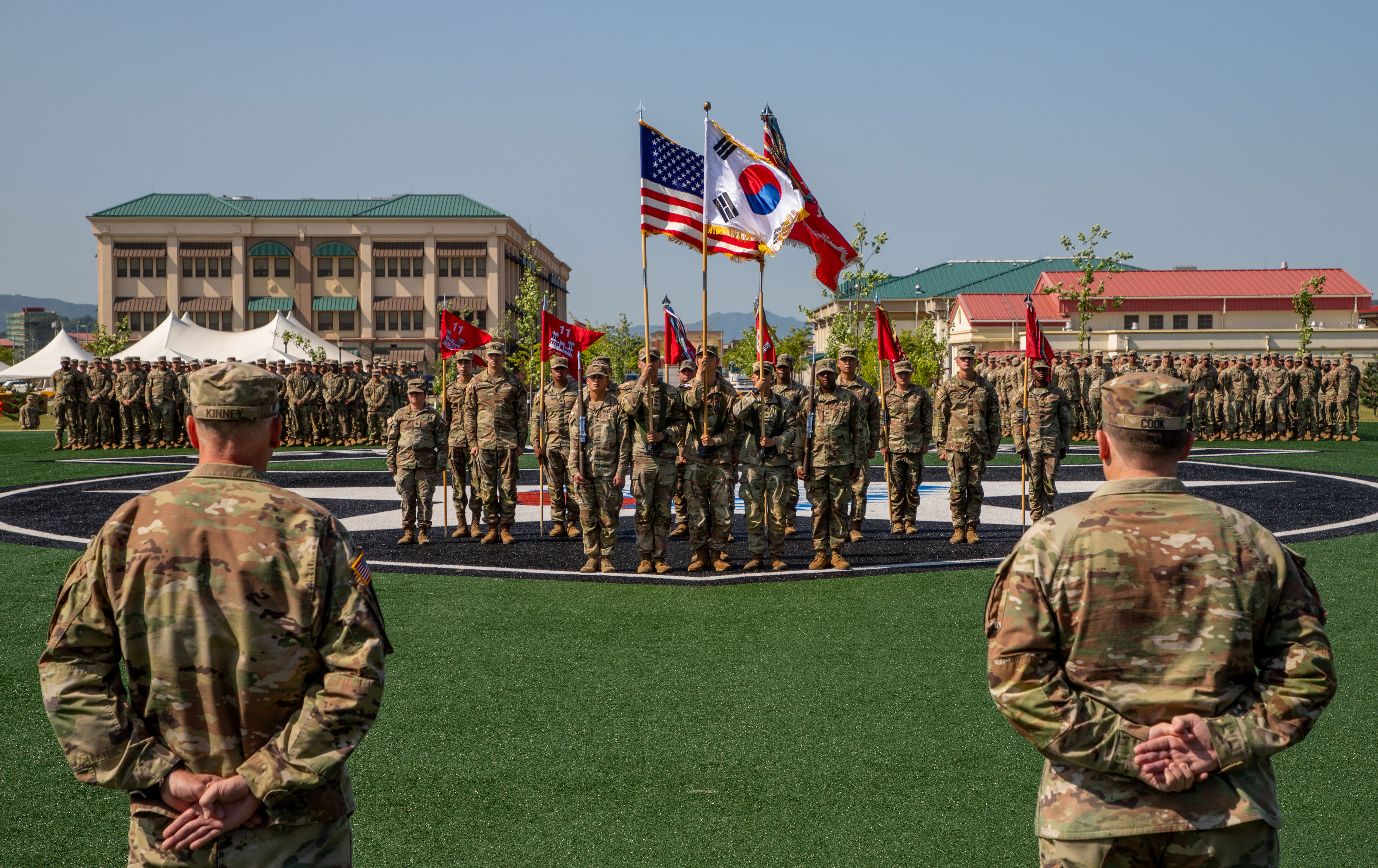
The U.S. military has introduced a new directive aimed at increasing the length of tours for service members stationed in South Korea. This change is expected to improve force stability, support the quality of life for service members, and enhance readiness in response to regional threats, according to officials with U.S. Forces Korea.
The directive, announced on Tuesday, extends the tour length for unaccompanied service members from 12 months to 24 months. The policy will take effect on October 1, 2025, and will apply to all service members receiving orders on or after that date. However, the implementation timeline may vary by service branch, as noted by officials.
This move follows a previous announcement in February that extended the tour lengths for military families moving to South Korea from 24 months to 36 months. The changes are part of a broader effort to align policies with those in other overseas locations like Germany and Japan, while still addressing unique challenges in South Korea.
Tour Normalization Policy
Under the "3-2-1 Tour Normalization Policy," accompanied tours will last 36 months, while unaccompanied tours will be 24 months. Twelve-month unaccompanied tours will only be available in exceptional cases, such as when a service member requests to bring their family but operational or infrastructure constraints prevent it.
Air Force Col. William Parker, director of personnel for U.S. Forces Korea, described the policy as a "tour normalization policy." He emphasized that the goal is to minimize separation between service members and their families whenever possible. While there is sufficient housing, limitations at schools and medical facilities remain significant challenges. For example, although Camp Humphreys has a new hospital, more medical providers are needed to meet demand.
Impact on Current Personnel
The new policy does not affect service members currently stationed in South Korea. They will not be required to extend their tours involuntarily, but they can choose to do so, as has been the case in the past. The services are also reviewing their policies on Korea assignment incentive pay, which provides financial incentives for troops who extend their tours.
Although the initiative began before the Pentagon's May directive to reduce spending on permanent change of station (PCS) moves, it supports the Department of Defense’s broader goals of reducing the frequency of PCS moves and enhancing readiness, family stability, and quality of life.
According to Parker, the policy is expected to save approximately $90 million annually. However, he stressed that cost savings are not the primary motivation. Instead, the focus is on the benefits of improved readiness and team cohesion. Constant turnover of teams poses challenges for commanders, and longer tours help maintain continuity and expertise in the region.
Regional Threats and Quality of Life
With ongoing threats from North Korea and the presence of China and Russia nearby, the need for experienced and stable service members is critical. The continuity provided by longer tours allows service members to develop and retain regional expertise, which is essential for effective operations.
In addition to these strategic benefits, quality of life for many service members in South Korea has improved. On July 1, the Cost of Living Allowance index was reset for the first time in over nine years, resulting in increased pay for about three-fourths of the personnel on the peninsula. Some remote areas saw particularly significant increases.
Infrastructure and Family Support
South Korea has made significant infrastructure investments, including upgrades at Camp Humphreys. Approximately 80% of the infrastructure at the base is 10 years old or newer, featuring a new medical facility, commissary, and barracks. More developments are underway to further support service members and their families.
Officials have also worked to increase the number of command-sponsored families who can relocate to South Korea. From the end of fiscal 2024 to the start of fiscal 2026, the capacity for command sponsorship across the peninsula will increase by 27%. Currently, there are around 5,400 to 5,700 families, with numbers fluctuating due to seasonal moves. This number is expected to grow to about 6,500 families in the coming year.
Spouse Employment and Future Outlook
The longer tours also offer benefits for spouses, as a two-year tour is a short period to secure and maintain employment. Parker noted that some feedback indicates this change could make spouses more employable.
Service members are encouraged to consult their respective personnel offices for specific guidance on the new policy. Parker expressed confidence in the decision, acknowledging that while some concerns may arise, the timing is right for this change.
"The quality of life is fantastic here both on and off post," he said. "The mission is more important than ever in this region, so it's the right thing."

Post a Comment for "Upcoming Long Assignments for Troops Bound for South Korea"
Post a Comment