Unveiling the Truth: Men Discover Real Paternity Through Home DNA Tests
The Power of Family History and the Surprises It Can Uncover
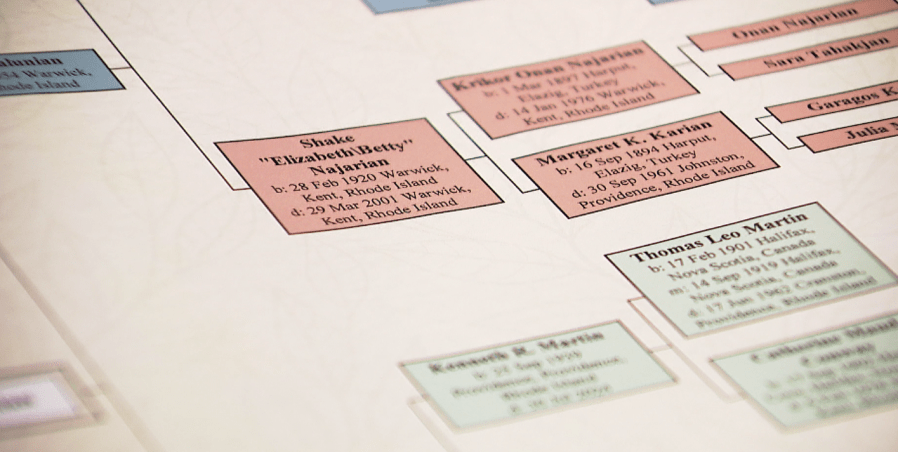
When someone asks, “Who are you?” how do you respond? For many people, the answer is deeply tied to their family history. The Rhode Island Genealogical Society has been helping residents uncover their roots for over 50 years, offering a valuable resource for those seeking to understand their heritage.
Maureen Taylor, the president of the society, has had a lifelong passion for genealogy. Her interest began as a child when she sat with her only living grandparent and asked about her family tree. “Every family tells a story, and every person in your family tree tells a story,” she said. This curiosity has driven her to assist dozens of people over the years in their own quests for answers.
But not everyone finds out their family history through traditional methods. Some turn to at-home DNA tests, which have become increasingly popular in recent years. Two men from different families discovered something startling through these tests: the men who raised them were not their biological fathers. Both men chose to remain anonymous, but their stories highlight the emotional impact of such revelations.
One man described the experience as a “complete shock.” Learning that his father was not his biological parent led to a deep sense of despair. “I was suicidal,” he recalled. “I had to go in for two stints of treatment I was so depressed.” The DNA test also revealed that he was mostly Italian, not German as he believed, and that he had half-brothers. These discoveries left him overwhelmed with questions about his identity and who else might know the truth.
The second man faced similar challenges. “That led, of course, to the question of who is my biological father?” he said. He emphasized the importance of being prepared for unexpected results when exploring one’s family history. “Curiosity is a very powerful thing,” he noted. “But if you do that, you have to be prepared to find out things you may not want to hear about.”
Maureen Taylor understands the significance of these discoveries. She explained that genealogy can provide a sense of identity and connection. “It tells you who you are, and it’s important for everyone, from adoptees to biological relatives, to understand the patterns of your family,” she said.
However, modern DNA technology isn’t always sufficient. The second man found that his DNA test didn’t yield any matches, forcing him to seek help from a professional genealogist. “I decided to hire a genealogist to look into this further,” he said. The genealogist identified a group of brothers who could potentially be his biological father, but the most likely candidate passed away at 42 without any known children.
For the first man, the journey was one of healing and acceptance. While the revelation was painful, he eventually came to appreciate the man who raised him. “It was a beautiful thing for me at the end of the day,” he said. “He always will be [my dad], and that’s what he said. He’s like, ‘You know what? I don’t care, it doesn’t matter. You’ll always be my boy, you’ll always be my son.’”
These stories underscore the complex emotions that come with uncovering family secrets. Whether through traditional research or modern technology, the pursuit of identity can be both enlightening and challenging.
If you or someone you know is struggling with the emotional impact of such discoveries, there are resources available. The Crisis Text Line offers support by texting HOME to 741741. The 988 Suicide and Crisis Lifeline provides immediate assistance through phone, text, or chat. In Rhode Island, individuals can call BH Link at 401-414-LINK (5465) or Kids’ Link RI at 1-855-543-5465 for additional support.
For more news, weather, and updates, follow local outlets and download their apps. Stay informed and connected with the latest information in your community.

Post a Comment for "Unveiling the Truth: Men Discover Real Paternity Through Home DNA Tests"
Post a Comment