Ukraine's First Major Anti-Government Protests Since War Start as Zelensky Targets Anti-Corruption Agencies
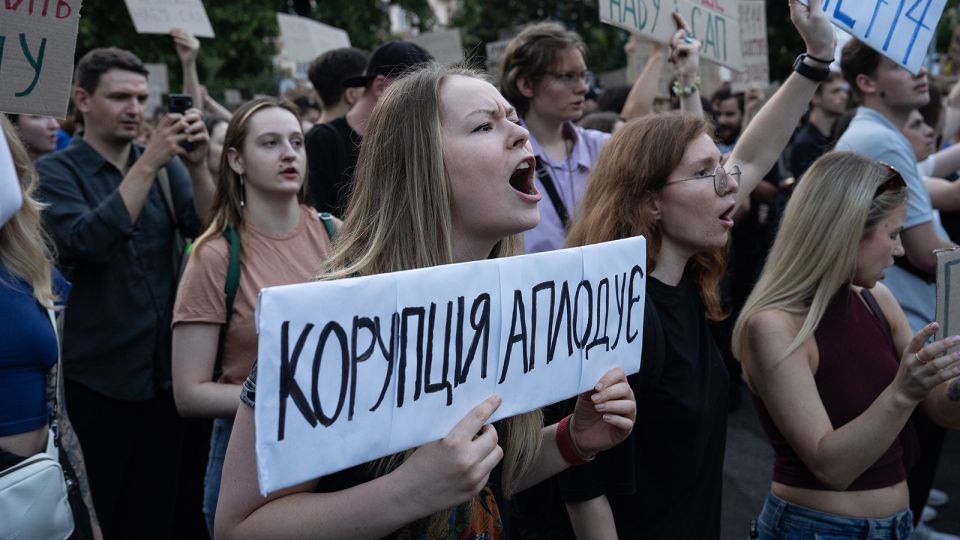
Protests Erupt in Ukraine Over New Anti-Corruption Law
Ukraine has witnessed its first major anti-government protests since the beginning of Russia’s full-scale invasion over three years ago. These demonstrations were sparked by a controversial move from President Volodymyr Zelensky, who sought to grant oversight of two key anti-corruption agencies to the prosecutor general—a politically appointed figure.
The unrest began after Ukraine’s Parliament, known as the Verkhovna Rada, approved a bill that transferred control of the National Anti-Corruption Bureau of Ukraine (NABU) and the Specialized Anti-Corruption Prosecutor’s Office (SAPO) to the prosecutor general. Defiant crowds gathered in Kyiv, Lviv, Dnipro, and Odesa, expressing their outrage over what they see as a threat to Ukraine’s anti-corruption efforts.
Critics argue that this move undermines the independence of NABU and SAPO, which have been instrumental in fighting corruption in Ukraine. The European Union has made it clear that strong anti-graft measures are essential for Ukraine’s aspirations to join the bloc. Similarly, the Biden administration has urged the Ukrainian government to take more steps to combat corruption.
A Nation Struggling with Corruption
Ukraine has long been regarded as one of the most corrupt countries in Europe. High-profile allegations of corruption have targeted several top officials, including close allies of Zelensky, such as former Deputy Prime Minister Oleksiy Chernyshov. The new law, which was fast-tracked through parliament and signed into law by Zelensky, has raised concerns about the future of these institutions.
Zelensky defended the move, claiming it was necessary to remove “Russian influence” from the two agencies. This came after Ukrainian authorities raided one of the bodies and arrested two employees on suspicion of working for Russian special services. He also criticized the previous system, stating that cases had been stalled for years.
However, opponents argue that the new law gives the prosecutor general too much power to influence investigations and even shut them down. This has led to fears that the agencies will no longer be able to operate independently.
Broad-Based Criticism
The criticism has come from all corners of society, including former Foreign Minister Dmytro Kuleba, who called the move a “bad day for Ukraine.” Military personnel on the front lines have also expressed frustration, with some questioning how the government can address corruption while the country is at war.
Yegor Firsov, a chief sergeant in a drone strike platoon, said on social media: “This is not a question of NABU or SAP. This is a question of barbarism.” He added that nothing is more demoralizing than seeing that while soldiers are risking their lives, others are robbing the country.
In response to the backlash, Zelensky announced plans to submit a new bill aimed at protecting the independence of anti-corruption agencies. He stated that the new legislation would strengthen the law enforcement system and ensure that the agencies remain independent.
Despite this, protests continued on Wednesday evening, with hundreds of young people gathering in Kyiv to voice their disapproval. Protesters held signs asking questions like “Why do I need a system that doesn’t protect me?” and “Have you gone completely mad?”
International Concerns
The controversy has drawn attention beyond Ukraine’s borders. Transparency International, a leading anti-corruption watchdog, urged Zelensky to veto the law, calling it a step backward for the country’s anti-corruption efforts. The organization highlighted that NABU and SAPO were among the greatest achievements following the 2014 Revolution of Dignity.
Marta Kos, the European Union’s top official overseeing new member states, expressed serious concern over the law, stating that the dismantling of safeguards for NABU’s independence is a major setback. She emphasized that independent anti-corruption bodies are crucial for Ukraine’s EU accession process.
The American Chamber of Commerce also voiced disappointment, saying the law threatens the independence of Ukraine’s anti-corruption infrastructure and undermines trust in the country’s efforts.
A Shift in Direction?
The Agency for Legislative Initiatives (ALI), a prominent Ukrainian think tank, described the law as a “180-degree turn” in European integration efforts. It argued that the law grants the prosecutor general nearly unlimited powers, including the ability to block investigations and transfer cases to other prosecutors.
While the law claims to respond to the war and current circumstances, ALI pointed out that the oversight of the top prosecutor would continue for three years after martial law is lifted.
Zelensky’s Anti-Corruption Pledge
Fighting corruption was a central promise of Zelensky’s 2019 campaign. As a former comedian with no political experience, he tapped into public frustration over the issue. During the war, he has fired numerous senior officials over corruption allegations and implemented anti-corruption measures, including the National Anti-Corruption Strategy.
International organizations, including the EU, the United Nations, and the G7, have previously praised Zelensky’s anti-corruption efforts. However, many now criticize the new law, with some arguing that his campaign promises were empty.
As protests continue and international pressure mounts, the future of Ukraine’s anti-corruption institutions remains uncertain.

Post a Comment for "Ukraine's First Major Anti-Government Protests Since War Start as Zelensky Targets Anti-Corruption Agencies"
Post a Comment