UK to Recognize Palestine as a State if Ceasefire Fails, PM Says
UK's Recognition of Palestine as a State in September
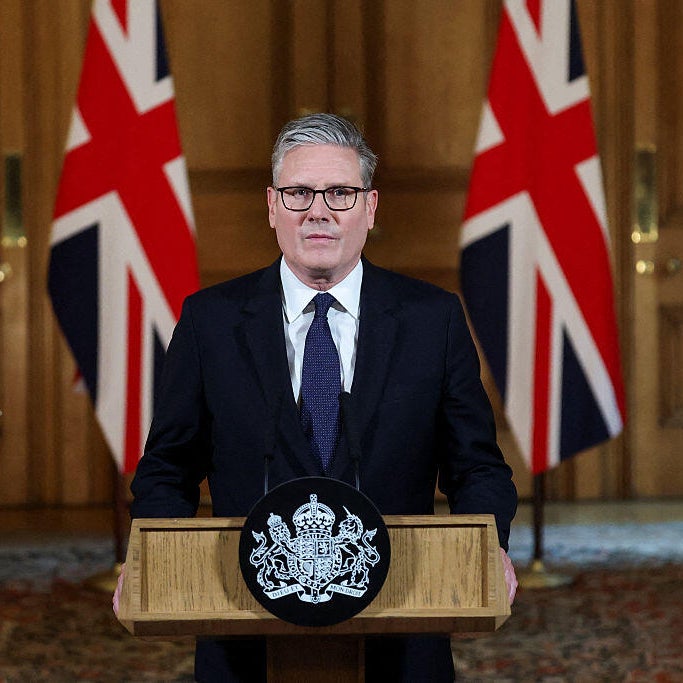
The United Kingdom has announced its intention to recognize Palestine as a state during the United Nations General Assembly in September, provided that Israel takes "substantive steps" to address the ongoing crisis in Gaza. This decision was made by British Prime Minister Keir Starmer, who emphasized that the U.K. will proceed with the recognition unless specific actions are taken by Israel.
At a press conference at Downing Street, Starmer outlined several conditions for the recognition. These include the establishment of a ceasefire in Gaza, a commitment to halt the annexation of territory in the West Bank, and a pledge to work toward a peace process that includes a two-state solution. The prime minister also reiterated the U.K.'s stance on Hamas, stating that the group must immediately release all hostages, sign a ceasefire, disarm, and accept that they will not play a role in the governance of Gaza.
A Call for a Two-State Solution
British Foreign Minister David Lammy echoed these sentiments during a speech at the U.N. headquarters in New York. He stated that the U.K. made this decision because the two-state solution is under threat. Lammy criticized the Netanyahu government for rejecting the two-state solution, calling it both morally and strategically wrong. He argued that this approach harms the interests of the Israeli people by closing off the only path to a just and lasting peace.
In response to the U.K.'s decision, Israeli Prime Minister Benjamin Netanyahu expressed strong opposition. He accused Starmer of rewarding Hamas's terrorism and punishing its victims. Netanyahu warned that a jihadist state on Israel's border could pose a threat to Britain. He also claimed that appeasement towards terrorist groups would fail, emphasizing that it would not happen again.
International Reactions and Pressure on Israel
The Israeli Foreign Ministry condemned the U.K.'s decision, calling it a reward for Hamas and stating that it undermines efforts to achieve a ceasefire in Gaza and secure the release of hostages. Meanwhile, U.S. President Donald Trump addressed the situation in Gaza during a press conference on Air Force One. He mentioned that the U.S. would provide food to the people of Gaza and work to remove barriers to humanitarian aid. Trump also suggested that Israel might need to take a different approach to address the crisis.
A Downing Street spokeswoman confirmed that Starmer had spoken with Israeli Prime Minister Netanyahu about the announcement. She stated that Starmer conveyed the urgency of the situation in Gaza and urged Netanyahu to lift restrictions on aid access to help those in need. Additionally, Starmer engaged in discussions with Palestinian Authority President Mahmoud Abbas, Canadian Prime Minister Mark Carney, and King Abdullah II of Jordan regarding the U.K.'s plan to recognize Palestinian statehood.
France Joins the Effort
France's President Emmanuel Macron recently announced that his country would also recognize Palestine as a state, formalizing the decision at the U.N. General Assembly in September. Macron emphasized that this move aligns with France's historic commitment to a just and lasting peace in the Middle East. He called for an immediate end to the war in Gaza and relief for the civilian population.
Netanyahu strongly opposed France's decision, arguing that it rewards terror and risks creating another Iranian proxy, similar to how Gaza became. He claimed that a Palestinian state under current conditions would be a threat to Israel rather than a path to peace.
Global Pressure and Humanitarian Concerns
Recent images of starving Palestinian children have intensified global pressure on Israel to allow more aid into Gaza. In response, Israel announced measures such as daily humanitarian pauses in fighting and airdrops over the weekend. These steps reflect growing international concern over the humanitarian crisis in the region.
French diplomat Jean-Noël Barrot praised the U.K.'s decision, highlighting its importance in breaking the cycle of violence and opening the prospect of peace in the region. Currently, 149 countries recognize Palestine as a state. If the U.K. and France proceed with their plans, this number will increase to 151.
The conflict between Israel and Hamas has resulted in the deaths of at least 60,000 Palestinians, according to the most recent figures from the Hamas-run Gaza Health Ministry. The situation remains dire, with ongoing calls for a resolution that addresses the needs of all parties involved.

Post a Comment for "UK to Recognize Palestine as a State if Ceasefire Fails, PM Says"
Post a Comment