UK Recognition of Palestine: What It Truly Means
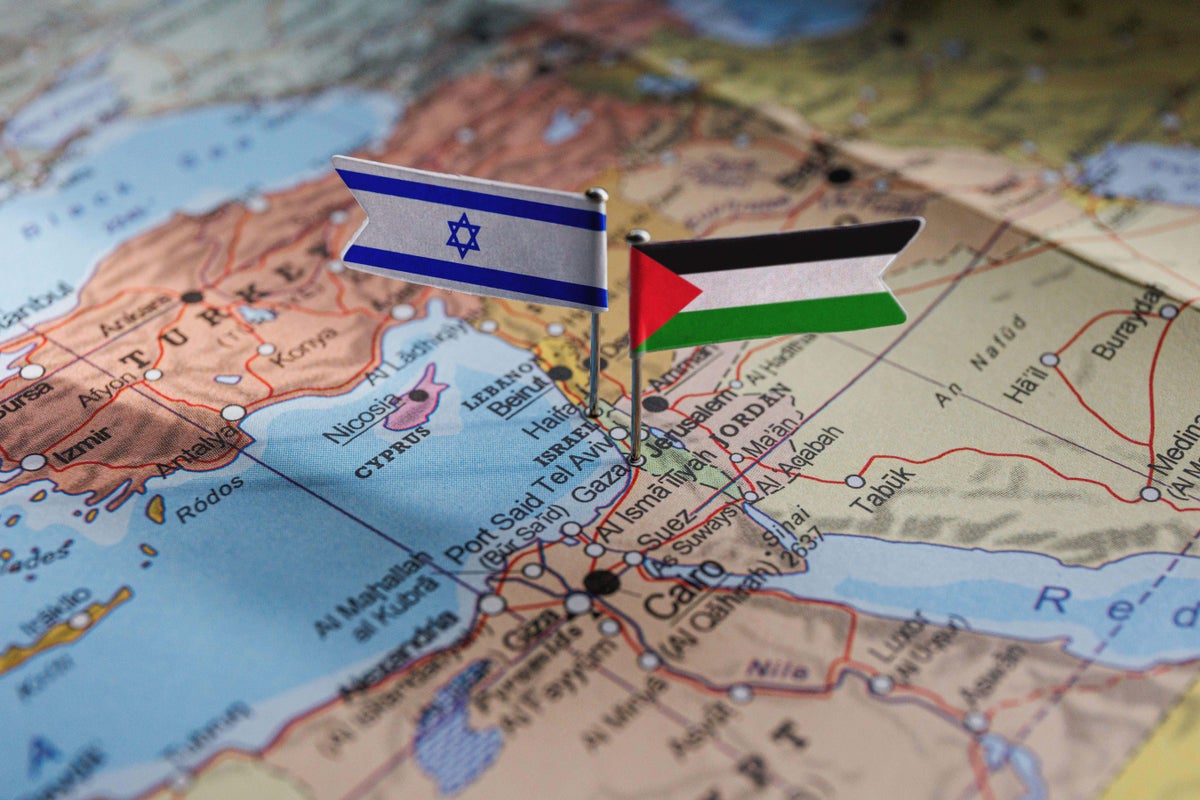
UK's Potential Recognition of Palestinian Statehood: A Shift in Diplomatic Stance
The United Kingdom is considering recognizing Palestine as a state, with Prime Minister Sir Keir Starmer indicating that this decision could be made in September unless Israel agrees to a ceasefire and a two-state solution in Gaza. This announcement follows an emergency virtual cabinet meeting where Starmer outlined his vision for peace in the Middle East, which was agreed upon over the weekend with French President Emmanuel Macron and German Chancellor Friedrich Merz.
Starmer has faced increasing pressure from within his own party to recognize a Palestinian state, a demand that has intensified since France announced its intention to do so by September. In addition, Britain’s foreign secretary, David Lammy, is attending a United Nations conference in New York to advocate for a two-state solution between Israel and the Palestinians.
What Would UK Recognition Mean?
Dr. Julie Norman, an associate professor at UCL specializing in Middle Eastern politics, believes it is likely that the UK will recognize Palestine as a state, which would involve voting for this recognition at the United Nations. However, she notes that the UN is unlikely to recognize Palestinian statehood due to the potential for the United States to block the move. Despite this, she emphasizes that the UK and France voting for recognition at the UN would be a significant step.
According to Dr. Norman, even if the reality on the ground does not change immediately, the UK’s recognition of Palestinian statehood would hold value. It would represent a strong moral commitment to Palestine during a time of heightened tension in Gaza and the West Bank. In the short term, it would serve as a diplomatic stance and create space for policy changes. If parties return to discussions about the long-term conflict, it would place Palestine in a stronger position.
The Two-State Solution
The concept of dividing the Holy Land dates back decades. After the British mandate over Palestine ended, the UN partition plan in 1947 envisioned dividing the territory into Jewish and Arab states. When Israel declared independence the following year, war erupted with its Arab neighbors, and the plan was never implemented. Over half of the Palestinian population fled or was forced to flee. Under a 1949 armistice, Jordan controlled the West Bank and east Jerusalem, while Egypt controlled Gaza.
Israel captured the West Bank, east Jerusalem, and Gaza in the 1967 six-day war. The Palestinians seek these lands for a future independent state, and the idea of a two-state solution based on Israel’s pre-1967 boundaries has been the foundation of peace talks since the 1990s. While the two-state solution has wide international support, there is disagreement on how it would be implemented. Israel’s creation and expansion of settlements in the Occupied West Bank, which are illegal under international law, are seen as major obstacles.
Impact on Refugees
Sir Vincent Fean, a former British consul general to Jerusalem and trustee of the charity Britain Palestine Project, explained that recognition of Palestine as a state would mean that if Palestinian passports were issued, they would be recognized by the UK. However, he noted that this would not affect the UK’s refugee system, as the visa regime between the UK and Palestine would remain unchanged. He also emphasized that Palestinian statehood would not particularly change the right of return for Palestinians to their homeland, which is a long-standing right requiring negotiation with Israel.
Communication Between the UK and Palestine
Sir Vincent highlighted the distinction between recognizing the entity of Palestine and recognizing factions of government. He stressed that the British government recognizes states, not governments, and that it does not recognize the Palestinian Authority or its leadership. However, he noted that the UK has already proscribed Hamas as a terrorist group, and this would not change. Dr. Norman added that the Palestinian Authority is currently the main governing entity for Palestinians in the West Bank, and the UK has had lines of communication with it for a long time. If the UK were to recognize Palestinian statehood, this would continue.
International Recognition of Palestinian Statehood
France has become the latest country to announce its intention to recognize Palestinian statehood, drawing criticism from Israel and the United States. Spain, Ireland, and Norway have also officially recognized Palestine, with borders defined as they were before the 1967 war. About 144 of the 193 UN member states recognize Palestine as a state, including most of the global South as well as Russia, China, and India. However, only a handful of European Union members do so, mostly former communist countries as well as Sweden and Cyprus.
Global Implications
Dr. Norman emphasized that the recognition of Palestinian statehood by the UK and France would be significant. It could pave the way for conversations on the issue elsewhere, such as in Canada. This move could isolate the United States as the main major power backing Israel to the exclusion of Palestine, highlighting the rest of the world’s commitment to Palestinian self-determination. She noted that while the UK does not have as much military weight as the US, it still holds diplomatic influence and should use it to show Europe’s commitment to a two-state solution.

Post a Comment for "UK Recognition of Palestine: What It Truly Means"
Post a Comment