UCLA to Pay $6.45 Million in Settlement Over Pro-Palestinian Protest Lawsuit
UCLA Settles Lawsuit Over Alleged Antisemitism During Pro-Palestinian Encampment
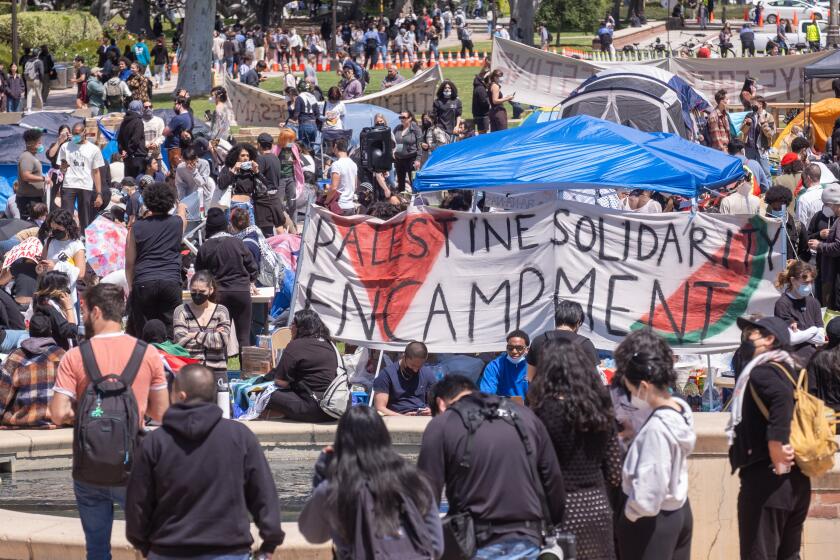
UCLA has agreed to pay $6.45 million to settle a federal lawsuit brought by three Jewish students and a medical school professor, who claimed the university violated their civil rights and allowed antisemitism during a pro-Palestinian encampment in spring 2024. The settlement marks a significant step in addressing concerns about the treatment of Jewish individuals on campus during the protests.
The lawsuit alleged that by not promptly removing the encampment, UCLA indirectly supported pro-Palestinian activists who created what was described as a "Jew Exclusion Zone." This area reportedly prevented Jewish students and staff from passing through the makeshift barricades. Each plaintiff will receive $50,000, with approximately $2.3 million allocated to eight organizations that support Jewish communities. Another $320,000 will go toward a UCLA initiative aimed at combating antisemitism, while the remaining funds will cover legal expenses.
As part of the agreement, UCLA has committed to ensuring that Jewish students, faculty, and staff are not excluded from any parts of the campus or its programs. This provision applies to all actions taken on campus, including measures intended to de-escalate tensions during protests. It specifically prohibits exclusion based on religious beliefs concerning the Jewish state of Israel.
This settlement is considered one of the largest payouts from private plaintiffs against universities over allegations of antisemitism since October 7, 2023, when Hamas attacked Israel, leading to widespread campus protests and an increase in hate incidents targeting Jewish, Muslim, and Arab American students.
The agreement is currently pending approval from U.S. District Judge Mark C. Scarsi, who is overseeing the case. If approved, it will remain in effect for 15 years.
Organizations Receiving Funds
Several organizations will benefit from the settlement, including Hillel at UCLA, the Academic Engagement Network, the Anti-Defamation League, the Jewish Federation Los Angeles Campus Impact Network, Chabad of UCLA, the Jewish Graduate Organization, the Orthodox Union's Jewish Learning Initiative on Campus, and the Film Collaborative, Inc., which will use the funds to produce the Holocaust-related film "Lost Alone."
In a joint statement, both parties expressed that the settlement represents "real progress in the fight against antisemitism." Mark Rienzi, a lawyer representing the students and professor, criticized campus leaders for their handling of the situation. He stated that administrators across the country had "willingly bent the knee to antisemites" during the encampments and warned that treating Jews as second-class citizens is illegal and costly.
UC regents chair Janet Reilly emphasized that the agreement reflects a shared goal of fostering a safe, secure, and inclusive environment for all members of the UC community. She reiterated the university’s commitment to eliminating antisemitism and other forms of harassment.
Background of the 2024 Encampment
The lawsuit stemmed from a pro-Palestinian encampment that protesters set up on the UCLA quad in late April 2024. Activists were demanding the university divest from companies linked to Israel’s war in Gaza. The encampment became a global news story after a violent clash between pro-Israel counter-demonstrators and pro-Palestinian protesters erupted.
UCLA and law enforcement faced criticism for failing to quickly stop the violence, which involved the use of objects, irritants, and fireworks. Before the violence, some Jewish students reported feeling excluded from the encampment due to their support for Israel. Some students defended the restrictions, claiming they were necessary to prevent "agitators" from entering and endangering protesters.
The lawsuit alleged that the encampment violated the students' civil rights by blocking their access to parts of the campus. It also claimed that UCLA's failure to ensure unfettered access to educational opportunities violated their freedom of speech and other rights. The university maintained that its actions were aimed at de-escalation and safety.
Key Figures Involved
Among the six individual defendants in the case are former UCLA Chancellor Gene D. Block, who stepped down at the end of July 2024, and Michael V. Drake, president of the University of California. The plaintiffs included recent UCLA law graduates Yitzchok Frankel and Eden Shemuelian, and undergraduate Joshua Ghayoum.
Frankel criticized the university for defending the actions of those who excluded Jews from campus, stating that the settlement brings justice back to the campus and ensures Jewish students will be treated equally.
Legal and Institutional Responses
A year ago, the federal judge overseeing the case, Mark C. Scarsi, admonished campus leaders for their handling of the encampment. He ordered UCLA to ensure equal access to Jewish students. The university faced additional scrutiny after the presidential election, as President Trump threatened to withdraw federal research grants from institutions accused of antisemitism.
In March, the U.S. Department of Justice filed court documents supporting the students, arguing that UCLA had attempted to "evade liability" for events on campus. The department's filing highlighted that Jewish students were excluded from parts of the campus because they refused to denounce their faith, calling this "abhorrent to our constitutional guarantee of religious freedom."
Pro-Palestinian groups also submitted briefs, arguing that the encampment was anti-Zionist rather than antisemitic and that many of its members were Jewish. They also claimed that UCLA's response to the case limited academic freedom by restricting discussions about Palestinians.
New Protest Rules and Campus Changes
Following the unrest, UCLA and the University of California implemented several changes to security and protest policies. Protesters can no longer block paths or wear masks to conceal their identity while breaking campus rules. Demonstration areas are now restricted, and UCLA hired LAPD veteran Steve Lurie to lead the new Office of Campus Safety.
Lurie recently announced Craig Valenzuela as the new police chief, effective September 1. Valenzuela, a UCLA alumnus, will take over a department that has not had a permanent chief since May 2024, when then-UCLA Police Chief John Thomas was reassigned and later resigned.
Despite increased security and stricter protest rules, many on campus have expressed concerns that these policies are unevenly enforced. These concerns have been raised at UC and campus forums by both pro-Israel and pro-Palestinian groups.
Leadership Changes and Initiatives
Another major change on campus was the appointment of Julio Frenk as chancellor. Frenk, whose German Jewish father fled Nazi Germany in the 1930s, became chancellor on January 1. Three months later, he banned Students for Justice in Palestine as a campus organization after a protest at a UC regent’s house was vandalized. Frenk also launched a campuswide initiative to combat antisemitism.
Future of the Case
The settlement may not mark the end of the case. Judge Scarsi has indicated that there will be a 45-day period during which he could reopen the case if there is a "showing of good cause why the settlement cannot be completed."
Pro-Palestinian individuals who were part of the encampment have asked the judge to allow them to join the case, arguing that the settlement is inappropriate and will harm students and faculty. They claim that the allegations about the encampment being a "Jew exclusion zone" are false and that the relief sought violates free expression rights.
A hearing on the matter is scheduled for August 11.

Post a Comment for "UCLA to Pay $6.45 Million in Settlement Over Pro-Palestinian Protest Lawsuit"
Post a Comment